
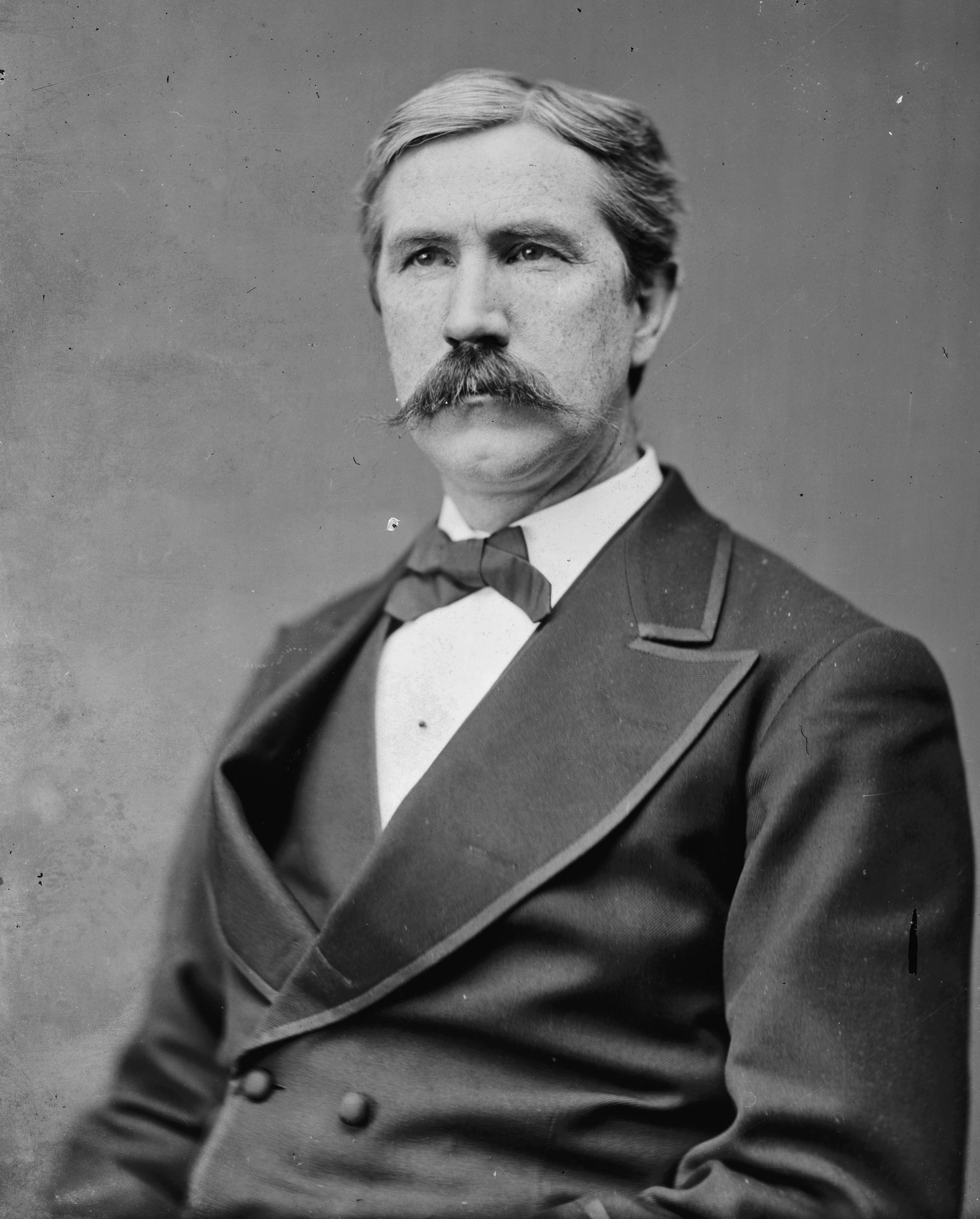
Historical · U.S. House · New York · District 26
Clinton MacDougall
Former U.S. Representative · New York District 26 · 1873–1877 · Republican
Clinton MacDougall represented New York's District 26 in the United States House of Representatives (1873–1877) for the Republican party. The page below collects sourced biographical facts, term history, committee roles, and provenance for MacDougall.
Bioguide ID: M000007
Key facts
- Full name
- Clinton MacDougall
- State
- New York
- District
- District 26
- Party
- Republican
- House service
- 1873–1877
- First House term
- 1873
- Status
- Left office
- Current term ends
- —
- Born
- 1839
- Bioguide ID
- M000007
- Committee assignments
- —
- Dataset version
- 1.20260606
Biographical narrative
928 words · sourced from the Wikipedia REST extract
Clinton MacDougall was a U.S. Representative from New York, serving in the House of Representatives during the 43rd and 44th Congresses as a member of the Republican Party. His political career spanned from 1873 to 1877, during which he represented both the 25th and 26th congressional districts of New York. Prior to his tenure in Congress, MacDougall had a diverse career that included military service, law, and banking. His life and work reflect the complexities of American society during the post-Civil War era.
Early life and career
Clinton MacDougall was born on June 14, 1839, near Glasgow, Scotland. His early life was marked by significant transitions, as he immigrated to Canada with his parents in 1842. The family eventually settled in Auburn, New York, where MacDougall would spend much of his formative years. His education included an academic course that prepared him for a career in law, which he pursued alongside various business interests. From 1856 to 1869, he was actively engaged in the banking sector, a period that likely provided him with valuable experience in finance and management.
MacDougall's career took a notable turn when he enlisted in the military during the American Civil War. He was commissioned as a captain in the 75th New York Volunteer Infantry on September 16, 1861. His leadership abilities were quickly recognized, and he was promoted to lieutenant colonel of the 111th New York Volunteer Infantry Regiment on August 20, 1862. By January 3, 1863, he had risen to the rank of colonel, and he was later honored with the title of brevet brigadier general of Volunteers on February 25, 1865. His military service concluded with an honorable discharge on June 4, 1865, following the end of the war. This experience not only shaped his character but also likely influenced his later political career, as many veterans sought to leverage their military service into public office during this period.
After the war, MacDougall returned to civilian life and was appointed as the postmaster of Auburn in 1869. This role allowed him to engage with the community and further establish his reputation as a public servant. His involvement in local governance and public affairs set the stage for his entry into national politics.
House tenure
Clinton MacDougall's political career in the U.S. House of Representatives began when he was elected as a Republican to the Forty-third Congress, which convened on March 4, 1873. He represented New York's 25th congressional district, a position that required him to address the needs and concerns of his constituents during a time of significant national change. His tenure in the House was marked by the challenges of post-Civil War reconstruction and the ongoing debates surrounding civil rights and economic policy.
During his time in Congress, MacDougall was involved in various legislative efforts. Notably, he co-sponsored a bill alongside Gerry W. Hazelton of Wisconsin, which sought to provide financial compensation to Harriet Tubman for her contributions to the Union Army as a scout, nurse, and spy. This bill, designated as H.R. 2711/3786, aimed to recognize Tubman's significant role in the war effort, although it ultimately did not pass. This initiative illustrates MacDougall's engagement with issues of social justice and his willingness to advocate for the recognition of individuals who played crucial roles in American history.
MacDougall's congressional career was relatively short-lived. He served two terms in the House, concluding his service on March 3, 1877. Following his time in Congress, he sought renomination in 1876 but was unsuccessful. This defeat marked the end of his direct involvement in legislative affairs, although his public service continued in other capacities.
Legislative focus and committees
During his time in the House of Representatives, Clinton MacDougall's legislative focus reflected the priorities and concerns of his constituents, as well as the broader national context of the time. The post-Civil War era was characterized by significant social and economic challenges, including the integration of formerly enslaved individuals into society, the rebuilding of the Southern economy, and the establishment of civil rights protections. MacDougall's support for the bill aimed at compensating Harriet Tubman indicates his awareness of these issues and his commitment to addressing the historical injustices faced by African Americans.
While specific details regarding the committees on which MacDougall served are not provided, it is common for members of Congress during this period to have been involved in committees that addressed issues such as military affairs, finance, and social welfare. Given his military background, it is plausible that he may have had a particular interest in issues related to veterans and military service, as well as the economic implications of post-war policies.
After leaving Congress, MacDougall continued to serve the public in different capacities. He was appointed as the United States Marshal for the northern judicial district of New York, a role he held from 1877 to 1885 and again from 1901 to 1910. This position allowed him to remain active in public service and to contribute to the enforcement of federal laws in his region.
Clinton MacDougall passed away on May 24, 1914, in Paris, France. His remains were interred at Arlington National Cemetery, a site that honors the service and sacrifice of military personnel. His life and career reflect the complexities of American society during a transformative period in the nation's history, characterized by the aftermath of the Civil War and the ongoing struggle for civil rights and social justice. Through his various roles, MacDougall contributed to the political landscape of his time, leaving a legacy as a public servant dedicated to the needs of his community and country.
Notable legislation
Sponsored and co-sponsored legislation for Clinton MacDougall is pending operator curation. The biographical narrative above carries the same provenance trail until per-bill rows are written.
Sources
- [1]https://en.wikipedia.org/wiki/Clinton_D._MacDougallWikipedia · retrieved 2026-06-06
Notable quotes
Sourced quotes for Clinton MacDougall are pending operator curation. Narrative-scope provenance remains attached below.
Sources
- [1]https://en.wikipedia.org/wiki/Clinton_D._MacDougallWikipedia · retrieved 2026-06-06
Key positions
Curated policy positions for Clinton MacDougall are pending operator review. The biographical narrative above carries the same provenance trail until per-topic positions are written.
Sources
- [1]https://en.wikipedia.org/wiki/Clinton_D._MacDougallWikipedia · retrieved 2026-06-06
Terms served
- 1873–1875U.S. House · Term 1 · Republican
- 1875–1877U.S. House · Term 2 · Republican
Sources & provenance
Every attributable claim above carries a per-section [N] marker that resolves to the corresponding URL below. Each entry records the upstream provider, the canonical URL, and the timestamp at which the source was retrieved by the ingest pipeline.
Key facts
- https://bioguide.congress.gov/search/bio/M000007bioguide · retrieved 2026-06-06
- https://www.govtrack.us/congress/members/407037govtrack · retrieved 2026-06-06
Biographical narrative
- https://en.wikipedia.org/wiki/Clinton_D._MacDougallwikipedia · retrieved 2026-06-06
Find your representative
Every U.S. state elects representatives by district. Browse New York’s delegation, the full former-representative roster, or explore the role and term length.
Related on The Candidate
- Preceded by Milo GoodrichEarlier holder of the New York District 26 House seat · Republican.Open
- Succeeded by John CampLater holder of the New York District 26 House seat · Republican.Open
- Abel HuntingtonFormer U.S. Representative · New York District 1 · JacksonOpen
- Alfred ChapinFormer U.S. Representative · New York District 1 · DemocraticOpen
- Cadwallader ColdenFormer U.S. Representative · New York District 1 · FederalistOpen
- Charles FloydFormer U.S. Representative · New York District 1 · DemocraticOpen