
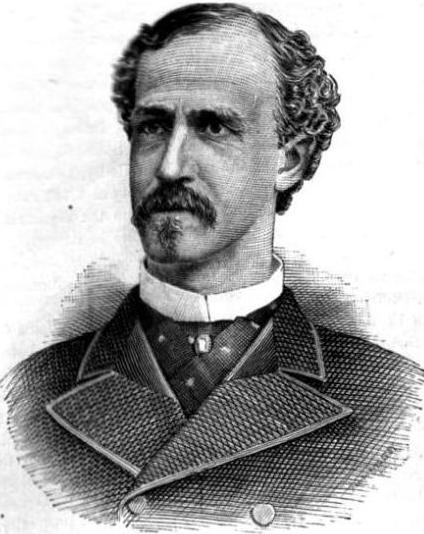
Historical · U.S. House · New York · District 26
John Camp
Former U.S. Representative · New York District 26 · 1877–1883 · Republican
John Camp represented New York's District 26 in the United States House of Representatives (1877–1883) for the Republican party. The page below collects sourced biographical facts, term history, committee roles, and provenance for Camp.
Bioguide ID: C000072
Key facts
- Full name
- John Camp
- State
- New York
- District
- District 26
- Party
- Republican
- House service
- 1877–1883
- First House term
- 1877
- Status
- Left office
- Current term ends
- —
- Born
- 1840
- Bioguide ID
- C000072
- Committee assignments
- —
- Dataset version
- 1.20260606
Biographical narrative
932 words · sourced from the Wikipedia REST extract
John Camp was a notable figure in American politics during the late 19th century, serving as a U.S. Representative from New York. A member of the Republican Party, he represented New York's 26th congressional district across three terms in the House of Representatives. His political career spanned from 1877 to 1883, during which he contributed to various legislative discussions and initiatives. Following his time in Congress, Camp returned to his legal practice until his death in 1892.
Early life and career
John Camp was born on April 4, 1840, in Ithaca, New York. His early education took place in the local common schools, which provided him with a foundational understanding of various subjects. Demonstrating a strong interest in law, Camp pursued higher education at Albany Law School, where he graduated in 1860. This academic achievement marked the beginning of his professional journey in the legal field.
Upon completing his education, Camp was admitted to the bar in the same year, allowing him to commence his legal practice in Lyons, New York. His early career in law was marked by a commitment to public service. In 1863, he took on the role of clerk of the surrogate court, a position that involved managing legal documents and assisting in the administration of justice. This experience likely enhanced his understanding of legal processes and court operations, which would later inform his work as a legislator.
Camp's legal career continued to flourish as he assumed the position of prosecuting attorney for Wayne County from 1867 to 1870. In this role, he was responsible for representing the government in criminal cases, which further solidified his reputation as a capable attorney. His work in this capacity would have provided him with valuable insights into the legal system and the challenges faced by communities, experiences that would later influence his legislative priorities.
House tenure
John Camp's political career took a significant turn when he was elected to the United States House of Representatives as a member of the Republican Party. He began his first term on March 4, 1877, representing New York's 26th congressional district. His election to the Forty-fifth Congress marked the beginning of a three-term tenure in the House, during which he served in the Forty-sixth and Forty-seventh Congresses as well.
Throughout his time in Congress, Camp participated in various legislative activities and discussions that were pertinent to his constituents and the nation. His service in the House coincided with a period of significant political and social change in the United States, including the aftermath of the Civil War and the ongoing challenges of Reconstruction. These events shaped the political landscape and influenced the priorities of lawmakers, including Camp.
During his tenure, Camp was involved in the legislative process, contributing to debates and discussions on a range of issues. While specific details regarding the bills he sponsored or voted on are not provided, it is understood that members of Congress typically engage in a variety of legislative matters, including economic policies, social issues, and national security. Camp's background in law likely informed his approach to these discussions, as he brought a legal perspective to the legislative process.
After serving three consecutive terms, Camp chose not to seek reelection in 1882. This decision marked the end of his formal political career in the House of Representatives, concluding his service on March 3, 1883. Following his departure from Congress, he returned to his legal practice in Lyons, New York, where he continued to apply his legal expertise until his death.
Legislative focus and committees
While specific details about John Camp's legislative focus and committee assignments during his time in Congress are not extensively documented, it can be inferred that his background as an attorney and prosecuting attorney would have influenced his areas of interest. Members of Congress often align their legislative efforts with their professional experiences and the needs of their constituents. Given Camp's legal background, it is likely that he engaged with issues related to the legal system, public safety, and governance.
The late 19th century was a time of significant transformation in the United States, characterized by rapid industrialization, urbanization, and social change. These broader societal trends would have shaped the legislative agenda during Camp's tenure. Issues such as labor rights, economic policy, and civil rights were at the forefront of national discussions, and Camp's contributions to these debates would have reflected the concerns of his constituents in New York's 26th district.
As a member of the Republican Party, Camp would have aligned with the party's platform during this period, which often emphasized economic growth, infrastructure development, and a commitment to maintaining the Union. His legislative focus may have included support for policies that promoted economic development and addressed the needs of his district, which was likely experiencing the effects of the broader economic changes occurring across the nation.
In summary, John Camp's career as a U.S. Representative from New York was marked by a commitment to public service and a dedication to the legal profession. His early experiences in law and local government shaped his approach to governance and legislative priorities. Although his time in Congress was relatively brief, it occurred during a pivotal era in American history, and his contributions to the legislative process reflected the complexities and challenges of the time. After concluding his congressional service, Camp returned to his legal practice, where he continued to serve his community until his passing on October 12, 1892. His interment took place at Grove Cemetery in Trumansburg, New York, marking the end of a life dedicated to public service and the legal profession.
Notable legislation
Sponsored and co-sponsored legislation for John Camp is pending operator curation. The biographical narrative above carries the same provenance trail until per-bill rows are written.
Sources
- [1]https://en.wikipedia.org/wiki/John_H._CampWikipedia · retrieved 2026-06-06
Notable quotes
Sourced quotes for John Camp are pending operator curation. Narrative-scope provenance remains attached below.
Sources
- [1]https://en.wikipedia.org/wiki/John_H._CampWikipedia · retrieved 2026-06-06
Key positions
Curated policy positions for John Camp are pending operator review. The biographical narrative above carries the same provenance trail until per-topic positions are written.
Sources
- [1]https://en.wikipedia.org/wiki/John_H._CampWikipedia · retrieved 2026-06-06
Terms served
- 1877–1879U.S. House · Term 1 · Republican
- 1879–1881U.S. House · Term 2 · Republican
- 1881–1883U.S. House · Term 3 · Republican
Sources & provenance
Every attributable claim above carries a per-section [N] marker that resolves to the corresponding URL below. Each entry records the upstream provider, the canonical URL, and the timestamp at which the source was retrieved by the ingest pipeline.
Key facts
- https://bioguide.congress.gov/search/bio/C000072bioguide · retrieved 2026-06-06
- https://www.govtrack.us/congress/members/402229govtrack · retrieved 2026-06-06
Biographical narrative
- https://en.wikipedia.org/wiki/John_H._Campwikipedia · retrieved 2026-06-06
Find your representative
Every U.S. state elects representatives by district. Browse New York’s delegation, the full former-representative roster, or explore the role and term length.
Related on The Candidate
- Preceded by Clinton MacDougallEarlier holder of the New York District 26 House seat · Republican.Open
- Succeeded by George RayLater holder of the New York District 26 House seat · Republican.Open
- Abel HuntingtonFormer U.S. Representative · New York District 1 · JacksonOpen
- Alfred ChapinFormer U.S. Representative · New York District 1 · DemocraticOpen
- Cadwallader ColdenFormer U.S. Representative · New York District 1 · FederalistOpen
- Charles FloydFormer U.S. Representative · New York District 1 · DemocraticOpen