
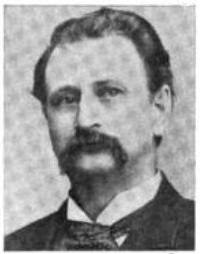
Historical · U.S. House · New York · District 26
George Ray
Former U.S. Representative · New York District 26 · 1883–1903 · Republican
George Ray represented New York's District 26 in the United States House of Representatives (1883–1903) for the Republican party. The page below collects sourced biographical facts, term history, committee roles, and provenance for Ray.
Bioguide ID: R000076
Key facts
- Full name
- George Ray
- State
- New York
- District
- District 26
- Party
- Republican
- House service
- 1883–1903
- First House term
- 1883
- Status
- Left office
- Current term ends
- —
- Born
- 1844
- Bioguide ID
- R000076
- Committee assignments
- —
- Dataset version
- 1.20260606
Biographical narrative
840 words · sourced from the Wikipedia REST extract
George Ray was a prominent political figure in the late 19th and early 20th centuries, serving as a U.S. Representative from New York. A member of the Republican Party, Ray's congressional career spanned seven terms, during which he held various leadership positions and contributed to significant legislative efforts. After concluding his service in the House of Representatives, he transitioned to the judiciary, where he served as a federal judge until his death.
Early life and career
George Ray was born on February 3, 1844, in Otselic, a town located in Chenango County, New York. He received his early education in local common schools and furthered his studies at Norwich Academy. His formative years were marked by the tumultuous events of the American Civil War, during which he enlisted as a private in Company B of the 90th New York Volunteers. Ray's military service included a role as a brigade clerk for the First Brigade, First Division, Nineteenth Army Corps. He was discharged from military service at the conclusion of the war, having participated in a significant chapter of American history.
Following the war, Ray pursued a legal career. He studied law independently and was admitted to the bar in November 1867. His professional life began in Norwich, New York, where he engaged in private legal practice while also managing agricultural interests as a farmer. Ray's involvement in local politics was notable; he served as the Chairman of the Republican County Committee of Chenango County and was a member of the Republican State Committee in 1880. These roles helped establish his political credentials and laid the groundwork for his future congressional career.
House tenure
Ray's entry into the U.S. House of Representatives began with his election as a Republican from New York's 21st congressional district. He served in the 48th Congress, with his term commencing on March 4, 1883, and concluding on March 3, 1885. After completing his first term, he continued to engage with educational institutions, taking on a role as a member of the board of education for Norwich Academy and Union Free School.
In 1891, Ray was elected to represent New York's 26th congressional district, a position he held for six consecutive terms until September 11, 1902. His tenure in the House was marked by significant legislative responsibilities. He chaired the Committee on Levees and Improvements of the Mississippi River during the 54th Congress, a role that involved overseeing critical infrastructure projects aimed at flood control and river management. In subsequent Congresses, he served as Chairman of the Committee on Invalid Pensions and later as Chairman of the Committee on the Judiciary, positions that placed him at the center of important legislative discussions regarding veterans' benefits and judicial matters.
Ray's legislative influence extended beyond committee leadership. Throughout his time in Congress, he participated in various debates and initiatives that shaped national policy. His ability to navigate the complexities of congressional proceedings and his leadership roles contributed to his reputation as a significant figure in the legislative landscape of his time.
Legislative focus and committees
During his congressional career, George Ray's legislative focus encompassed a range of issues, particularly those related to infrastructure, veterans' affairs, and judicial matters. As Chairman of the Committee on Levees and Improvements of the Mississippi River, he played a crucial role in addressing the challenges posed by flooding and the need for effective river management. This committee was vital in shaping policies that aimed to protect communities along the Mississippi River, reflecting Ray's commitment to infrastructure development and public safety.
In his subsequent role as Chairman of the Committee on Invalid Pensions, Ray was involved in discussions and legislation concerning the welfare of veterans. This committee was responsible for overseeing the pension system for disabled veterans, a critical issue in the post-Civil War era as many veterans sought assistance for injuries sustained during their service. Ray's leadership in this area underscored his dedication to supporting those who had served the nation.
Later, as Chairman of the Committee on the Judiciary, Ray's influence expanded into the realm of legal and constitutional matters. This committee handled a wide array of issues, including civil rights, federal regulations, and judicial appointments. His tenure in this role allowed him to engage with significant legal questions of the day, further establishing his reputation as a knowledgeable and capable legislator.
Ray's legislative contributions were characterized by a focus on practical solutions to pressing issues, reflecting the concerns of his constituents and the broader American public. His ability to lead committees effectively and navigate the complexities of congressional legislation positioned him as a respected figure within the House of Representatives.
In conclusion, George Ray's career as a U.S. Representative was marked by significant contributions to American legislative processes and a commitment to public service. His transition from Congress to the federal judiciary further exemplified his dedication to the law and governance. Ray's legacy is remembered through his service in both the legislative and judicial branches, highlighting the diverse roles he played in shaping the political landscape of his time.
Notable legislation
Sponsored and co-sponsored legislation for George Ray is pending operator curation. The biographical narrative above carries the same provenance trail until per-bill rows are written.
Sources
- [1]https://en.wikipedia.org/wiki/George_W._RayWikipedia · retrieved 2026-06-06
Notable quotes
Sourced quotes for George Ray are pending operator curation. Narrative-scope provenance remains attached below.
Sources
- [1]https://en.wikipedia.org/wiki/George_W._RayWikipedia · retrieved 2026-06-06
Key positions
Curated policy positions for George Ray are pending operator review. The biographical narrative above carries the same provenance trail until per-topic positions are written.
Sources
- [1]https://en.wikipedia.org/wiki/George_W._RayWikipedia · retrieved 2026-06-06
Terms served
- 1883–1885U.S. House · Term 1 · Republican
- 1891–1893U.S. House · Term 2 · Republican
- 1893–1895U.S. House · Term 3 · Republican
- 1895–1897U.S. House · Term 4 · Republican
- 1897–1899U.S. House · Term 5 · Republican
- 1899–1901U.S. House · Term 6 · Republican
- 1901–1903U.S. House · Term 7 · Republican
Sources & provenance
Every attributable claim above carries a per-section [N] marker that resolves to the corresponding URL below. Each entry records the upstream provider, the canonical URL, and the timestamp at which the source was retrieved by the ingest pipeline.
Key facts
- https://bioguide.congress.gov/search/bio/R000076bioguide · retrieved 2026-06-06
- https://www.govtrack.us/congress/members/409056govtrack · retrieved 2026-06-06
Biographical narrative
- https://en.wikipedia.org/wiki/George_W._Raywikipedia · retrieved 2026-06-06
Find your representative
Every U.S. state elects representatives by district. Browse New York’s delegation, the full former-representative roster, or explore the role and term length.
Related on The Candidate
- Preceded by John CampEarlier holder of the New York District 26 House seat · Republican.Open
- Succeeded by William FlackLater holder of the New York District 26 House seat · Republican.Open
- Abel HuntingtonFormer U.S. Representative · New York District 1 · JacksonOpen
- Alfred ChapinFormer U.S. Representative · New York District 1 · DemocraticOpen
- Cadwallader ColdenFormer U.S. Representative · New York District 1 · FederalistOpen
- Charles FloydFormer U.S. Representative · New York District 1 · DemocraticOpen