
Historical · U.S. House · New York · District 29
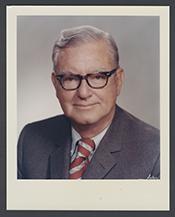
Carleton King
Former U.S. Representative · New York District 29 · 1961–1975 · Republican
Carleton King represented New York's District 29 in the United States House of Representatives (1961–1975) for the Republican party. The page below collects sourced biographical facts, term history, committee roles, and provenance for King.
Bioguide ID: K000195
Key facts
- Full name
- Carleton King
- State
- New York
- District
- District 29
- Party
- Republican
- House service
- 1961–1975
- First House term
- 1961
- Status
- Left office
- Current term ends
- —
- Born
- 1904
- Bioguide ID
- K000195
- Committee assignments
- —
- Dataset version
- 1.20260605
Biographical narrative
848 words · sourced from the Wikipedia REST extract
Carleton J. King was a prominent American attorney and politician who served as a U.S. Representative for New York's 29th congressional district from 1961 until 1974. A member of the Republican Party, King was known for his legal career in Saratoga Springs, New York, where he held various positions, including District Attorney of Saratoga County. His legislative tenure in Congress was marked by his alignment with the conservative wing of the Republican Party, and he was involved in several significant legislative discussions during a transformative period in American politics.
Early life and career
Carleton James King was born on June 15, 1904, in Saratoga Springs, New York. He was the son of James Henry King and Anna Louise (Rose) King. King pursued his education at Albany Law School, where he graduated in 1926. During his time at law school, he was an active member of the Phi Sigma Kappa fraternity and received the Corporation Prize, an accolade awarded to the student who achieved the highest standing in corporation law.
Following his admission to the bar in 1926, King began his legal practice in Saratoga Springs. His early career included a brief foray into politics; in 1936, he sought the Republican nomination for Congress but was unsuccessful, losing to E. Harold Cluett. From 1936 to 1941, he served as the acting city court judge in Saratoga Springs, which provided him with valuable experience in the judicial system.
In 1942, King was appointed as the Deputy District Attorney of Saratoga County, a position he held until 1950. His legal expertise and involvement in local government led to his election as District Attorney in 1950, a role he maintained until the end of 1960. During his tenure as District Attorney, King was recognized for his leadership within the legal community, serving as president of the New York State District Attorneys Association in 1955. He was also involved in significant events, such as advising Governor Averell Harriman on legislation following the notorious Apalachin meeting, a gathering of organized crime figures that was disrupted by law enforcement in 1957.
House tenure
Carleton J. King was elected to the United States House of Representatives in 1960, marking the beginning of his congressional career. He officially took office on January 3, 1961, and was subsequently reelected six times, serving until his resignation on December 31, 1974. His tenure in Congress spanned a period of considerable political change in the United States, including the civil rights movement, the Vietnam War, and the Watergate scandal.
King's political career in Congress was characterized by his affiliation with the conservative faction of the Republican Party. He was known for advocating for lower taxes and fiscal conservatism. In 1962, he proposed a significant tax reform that included an across-the-board income tax rate of at least 25 percent, arguing that individual and corporate tax rates should not exceed 47 percent. These proposals reflected the broader conservative economic principles that were gaining traction during his time in office.
Despite his electoral successes, King faced challenges in his later years in Congress. In 1974, he ran for reelection but was defeated by Democratic nominee Edward W. Pattison. This loss was attributed to a broader electoral shift favoring Democrats, influenced by public discontent with the Republican Party amid the Watergate scandal. Following his defeat, King resigned just days before the conclusion of his final term.
Legislative focus and committees
During his time in the House of Representatives, Carleton J. King was involved in various legislative initiatives and served on several important committees. His focus on fiscal policy and tax reform was a hallmark of his legislative agenda. King was particularly vocal about the need for tax reductions and the promotion of conservative economic policies, which resonated with his constituents and aligned with the Republican Party's platform during the 1960s and early 1970s.
In addition to his work on tax policy, King served on the United States Naval Academy board of visitors, where he contributed to discussions regarding military education and training. His involvement in this capacity highlighted his interest in national defense and military affairs, areas that were increasingly significant during the Cold War era.
After leaving Congress, King continued to engage with military education by being appointed to the board of visitors of the United States Military Academy in 1975. This appointment reflected his ongoing commitment to public service and his interest in the development of future military leaders.
Following his retirement from public office, Carleton J. King relocated to Florida, where he lived until his passing. He died on November 19, 1977, in Bradenton, Florida. His remains were cremated, and his ashes were scattered in the Gulf of Mexico. King was survived by his wife, Constance M. Roddy, whom he married in 1933, and their two children, Carleton J. King Jr. and Constance King.
Carleton J. King's legacy is marked by his contributions to both the legal and political landscapes of New York and the nation. His career reflects the complexities of mid-20th century American politics and the evolution of the Republican Party during a time of significant change.
Notable legislation
Sponsored and co-sponsored legislation for Carleton King is pending operator curation. The biographical narrative above carries the same provenance trail until per-bill rows are written.
Sources
- [1]https://en.wikipedia.org/wiki/Carleton_J._KingWikipedia · retrieved 2026-06-05
Notable quotes
Sourced quotes for Carleton King are pending operator curation. Narrative-scope provenance remains attached below.
Sources
- [1]https://en.wikipedia.org/wiki/Carleton_J._KingWikipedia · retrieved 2026-06-05
Key positions
Curated policy positions for Carleton King are pending operator review. The biographical narrative above carries the same provenance trail until per-topic positions are written.
Sources
- [1]https://en.wikipedia.org/wiki/Carleton_J._KingWikipedia · retrieved 2026-06-05
Terms served
- 1961–1963U.S. House · Term 1 · Republican
- 1963–1965U.S. House · Term 2 · Republican
- 1965–1967U.S. House · Term 3 · Republican
- 1967–1969U.S. House · Term 4 · Republican
- 1969–1971U.S. House · Term 5 · Republican
- 1971–1973U.S. House · Term 6 · Republican
- 1973–1975U.S. House · Term 7 · Republican
Sources & provenance
Every attributable claim above carries a per-section [N] marker that resolves to the corresponding URL below. Each entry records the upstream provider, the canonical URL, and the timestamp at which the source was retrieved by the ingest pipeline.
Key facts
- https://bioguide.congress.gov/search/bio/K000195bioguide · retrieved 2026-06-05
- https://www.govtrack.us/congress/members/406356govtrack · retrieved 2026-06-05
Biographical narrative
- https://en.wikipedia.org/wiki/Carleton_J._Kingwikipedia · retrieved 2026-06-05
Find your representative
Every U.S. state elects representatives by district. Browse New York’s delegation, the full former-representative roster, or explore the role and term length.
Related on The Candidate
- Preceded by Augustus BennetEarlier holder of the New York District 29 House seat · Republican.Open
- Succeeded by Edward PattisonLater holder of the New York District 29 House seat · Democratic.Open
- Abel HuntingtonFormer U.S. Representative · New York District 1 · JacksonOpen
- Alfred ChapinFormer U.S. Representative · New York District 1 · DemocraticOpen
- Cadwallader ColdenFormer U.S. Representative · New York District 1 · FederalistOpen
- Charles FloydFormer U.S. Representative · New York District 1 · DemocraticOpen