
Historical · U.S. House · New York · District 29
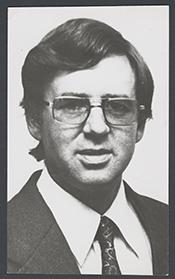
Edward Pattison
Former U.S. Representative · New York District 29 · 1975–1979 · Democratic
Edward Pattison represented New York's District 29 in the United States House of Representatives (1975–1979) for the Democratic party. The page below collects sourced biographical facts, term history, committee roles, and provenance for Pattison.
Bioguide ID: P000134
Key facts
- Full name
- Edward Pattison
- State
- New York
- District
- District 29
- Party
- Democratic
- House service
- 1975–1979
- First House term
- 1975
- Status
- Left office
- Current term ends
- —
- Born
- 1932
- Bioguide ID
- P000134
- Committee assignments
- —
- Dataset version
- 1.20260605
Biographical narrative
868 words · sourced from the Wikipedia REST extract
Edward W. Pattison was an American attorney and politician who served as a Democratic U.S. Representative for New York's 29th congressional district from 1975 to 1979. Born on April 29, 1932, in Troy, New York, Pattison's career spanned various roles in public service and law, including his notable tenure as the last elected treasurer of Rensselaer County. His political career was marked by his involvement in significant reforms in the House of Representatives, particularly in the wake of the Watergate scandal, which reshaped the dynamics of congressional leadership and committee assignments.
Early life and career
Edward W. Pattison, often referred to as Ned, was born to Edward H. Pattison and Elisabeth Royce Pattison in Troy, New York. He received his early education in the public schools of Troy and attended The Albany Academy, graduating in 1949. Pattison continued his education at Cornell University, where he earned a Bachelor of Arts degree in 1953. During his time at Cornell, he participated in the Reserve Officers' Training Corps, which prepared him for military service.
Following his graduation, Pattison served in the United States Army from 1954 to 1956, achieving the rank of First Lieutenant in the Field Artillery Branch. After completing his active duty, he fulfilled his service obligation in the United States Army Reserve. In 1957, Pattison obtained his LL.B. degree from Cornell Law School and subsequently gained admission to the bar, beginning his legal practice in Troy.
Pattison became known for his commitment to public service, particularly through his pro bono work for low-income clients. His political involvement began in earnest during the 1960 presidential campaign, where he served as chairman of the Rensselaer County Citizens for Kennedy-Johnson. He later became the chairman of the Sand Lake Democratic Committee in 1961 and was active in various Democratic campaigns, including Eugene McCarthy's presidential bid in 1968. Pattison's early political aspirations included an unsuccessful run for town supervisor of Sand Lake in 1963 and a bid for delegate to the Democratic National Convention in 1968.
In 1969, Pattison successfully ran for the position of Rensselaer County Treasurer, a role he held until 1974. He was reelected in 1972, serving during a period when the county underwent a charter change that eliminated the treasurer's position in favor of a chief financial officer appointed by the county executive. Despite this change, Pattison was allowed to complete his term as treasurer.
House tenure
Pattison's congressional career began when he was elected to the U.S. House of Representatives in 1974, succeeding in a campaign that capitalized on the Democratic wave resulting from the Watergate scandal. He defeated the incumbent Republican Carleton J. King and took office on January 3, 1975. Pattison was part of a larger class of Democratic freshmen, which included 75 new members, and he was reelected in 1976.
During his time in Congress, Pattison was an advocate for reforming House operations, particularly in diminishing the influence of seniority in committee assignments and leadership roles. This shift allowed newer members, including Pattison, to secure more favorable committee positions and encouraged greater responsiveness from committee chairmen to the needs of House members. He served on the Judiciary Committee, where he played a significant role in reforming national copyright law.
Pattison's tenure in the House was characterized by his commitment to progressive policies and his active engagement in legislative matters. However, by 1978, the political landscape in his district began to shift, with increasing support for Republican candidates. Pattison's liberal stance, combined with controversies surrounding his admission of past marijuana use, contributed to his defeat in the general election that year. He lost to Republican Gerald B. H. Solomon, marking the end of his congressional career on January 3, 1979.
Legislative focus and committees
Throughout his congressional tenure, Pattison was involved in various legislative initiatives, with a particular focus on reforming the House's operational procedures. His participation in the Judiciary Committee allowed him to engage deeply with issues related to copyright law, where he sought to modernize and improve the legal framework governing intellectual property.
Pattison's approach to governance was influenced by the political climate of the 1970s, particularly the aftermath of the Watergate scandal, which prompted a wave of reform-minded politicians to seek office. As a member of the House, he contributed to efforts aimed at increasing transparency and accountability within the legislative process. His advocacy for reducing the emphasis on seniority in committee assignments was a notable achievement, as it aimed to empower newer members and enhance the overall functionality of the House.
After leaving Congress, Pattison returned to his legal practice and continued to engage in public discourse as a political commentator for various media outlets, including newspapers, television, and radio. He also took on an educational role, teaching politics and government at several universities. In 1980, he was the Democratic nominee for the New York State Senate in the 41st district, although he did not secure the position.
Pattison's legacy includes his contributions to local governance, his role in the reform of congressional practices, and his commitment to public service throughout his career. He passed away on August 22, 1990, leaving behind a record of civic engagement and political involvement that reflected the values of his time.
Notable legislation
Sponsored and co-sponsored legislation for Edward Pattison is pending operator curation. The biographical narrative above carries the same provenance trail until per-bill rows are written.
Sources
- [1]https://en.wikipedia.org/wiki/Edward_W._PattisonWikipedia · retrieved 2026-06-05
Notable quotes
Sourced quotes for Edward Pattison are pending operator curation. Narrative-scope provenance remains attached below.
Sources
- [1]https://en.wikipedia.org/wiki/Edward_W._PattisonWikipedia · retrieved 2026-06-05
Key positions
Curated policy positions for Edward Pattison are pending operator review. The biographical narrative above carries the same provenance trail until per-topic positions are written.
Sources
- [1]https://en.wikipedia.org/wiki/Edward_W._PattisonWikipedia · retrieved 2026-06-05
Terms served
- 1975–1977U.S. House · Term 1 · Democratic
- 1977–1979U.S. House · Term 2 · Democratic
Sources & provenance
Every attributable claim above carries a per-section [N] marker that resolves to the corresponding URL below. Each entry records the upstream provider, the canonical URL, and the timestamp at which the source was retrieved by the ingest pipeline.
Key facts
- https://bioguide.congress.gov/search/bio/P000134bioguide · retrieved 2026-06-05
- https://www.govtrack.us/congress/members/408540govtrack · retrieved 2026-06-05
Biographical narrative
- https://en.wikipedia.org/wiki/Edward_W._Pattisonwikipedia · retrieved 2026-06-05
Find your representative
Every U.S. state elects representatives by district. Browse New York’s delegation, the full former-representative roster, or explore the role and term length.
Related on The Candidate
- Preceded by Carleton KingEarlier holder of the New York District 29 House seat · Republican.Open
- Succeeded by Amo Houghton Jr.Later holder of the New York District 29 House seat · Republican.Open
- Abel HuntingtonFormer U.S. Representative · New York District 1 · JacksonOpen
- Alfred ChapinFormer U.S. Representative · New York District 1 · DemocraticOpen
- Cadwallader ColdenFormer U.S. Representative · New York District 1 · FederalistOpen
- Charles FloydFormer U.S. Representative · New York District 1 · DemocraticOpen