
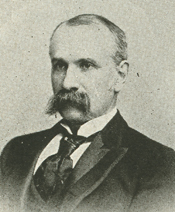
Historical · U.S. House · New York · District 3
Francis Wilson
Former U.S. Representative · New York District 3 · 1895–1899 · Republican
Francis Wilson represented New York's District 3 in the United States House of Representatives (1895–1899) for the Republican party. The page below collects sourced biographical facts, term history, committee roles, and provenance for Wilson.
Bioguide ID: W000579
Key facts
- Full name
- Francis Wilson
- State
- New York
- District
- District 3
- Party
- Republican
- House service
- 1895–1899
- First House term
- 1895
- Status
- Left office
- Current term ends
- —
- Born
- 1844
- Bioguide ID
- W000579
- Committee assignments
- —
- Dataset version
- 1.20260606
Biographical narrative
843 words · sourced from the Wikipedia REST extract
Francis Wilson was a notable American politician who served as a U.S. Representative for New York's 3rd congressional district. A member of the Republican Party, Wilson's congressional career spanned two terms from 1895 to 1897. Following his time in the House of Representatives, he held the position of postmaster in Brooklyn, New York, until 1901. His life and career reflect a commitment to public service and the legal profession, as well as a connection to the political landscape of late 19th-century America.
Early life and career
Francis Henry Wilson was born on February 11, 1844, in Clinton, New York. His early years were spent in Utica, New York, where he lived until the age of ten. At that point, his family relocated to a farm in Westmoreland, New York. This rural upbringing likely influenced his values and perspectives as he grew into adulthood. Wilson's education began in local district schools, where he laid the foundation for his academic pursuits. He later attended Dwight's Preparatory School in Clinton, which prepared him for higher education.
In 1867, Wilson graduated from Yale College, an achievement that marked the beginning of his professional journey. After completing his undergraduate studies, he spent four years teaching in a preparatory school, an experience that would have contributed to his understanding of education and community engagement. His commitment to furthering his education led him to Columbia College Law School in New York City, where he graduated in 1875. This legal training would become instrumental in his later career as a practicing attorney.
Wilson was admitted to the bar in 1882, allowing him to begin his legal practice in New York City. His legal career was marked by a dedication to the profession and a desire to serve his community. In addition to his work as an attorney, Wilson was actively involved in civic organizations. He was one of the founders of the Union League Club, a prominent social and political organization in New York City. His leadership capabilities were recognized when he served as the club's president in 1888 and 1889, further establishing his reputation in both social and political circles.
House tenure
Francis Wilson's political career began in earnest when he was elected as a Republican to the Fifty-fourth Congress, which commenced on March 4, 1895. He served in this capacity until September 30, 1897, when he resigned from Congress to accept the position of postmaster in Brooklyn. During his time in the House of Representatives, Wilson participated in the legislative process during a period characterized by significant political and social changes in the United States. His tenure coincided with the rise of various reform movements and the ongoing discussions surrounding issues such as economic policy, labor rights, and immigration.
As a member of Congress, Wilson was involved in the legislative activities of the time, contributing to debates and discussions that shaped the direction of national policy. His decision to resign from Congress to become postmaster indicates a shift in his career focus, reflecting his interest in public service beyond the legislative arena. The postmaster role allowed him to engage with the community in a different capacity, overseeing postal operations in one of New York's largest cities.
Legislative focus and committees
While specific details regarding Wilson's legislative focus during his time in Congress are not extensively documented, it can be inferred that his background in law and his involvement in civic organizations influenced his approach to governance. As a Republican representative, he would have aligned with the party's priorities, which during this period often included support for business interests, infrastructure development, and maintaining a strong national defense.
Wilson's legal expertise likely informed his contributions to discussions on legislative matters, particularly those related to commerce and regulatory policies. His experience as a practicing attorney may have provided him with insights into the implications of proposed laws and their potential impact on constituents. Furthermore, his involvement in the Union League Club suggests that he was engaged with issues of social and political importance, which may have shaped his legislative priorities.
After resigning from Congress, Wilson continued to serve the public as the postmaster of Brooklyn from October 1897 until December 1901. This role allowed him to manage postal services in a bustling urban environment, further solidifying his commitment to public service. Following his tenure as postmaster, Wilson returned to the legal profession, resuming his practice in New York City. This transition reflects a common trajectory for many politicians of the era, who often moved between public service and private sector roles.
Francis Wilson passed away on September 25, 1910, in Brooklyn, New York. His contributions to public service, both as a U.S. Representative and as postmaster, are part of his legacy. He was interred in Greenwood Cemetery, a resting place for many notable figures in New York's history. Wilson's life and career exemplify the interconnectedness of law, politics, and community service during a transformative period in American history. His experiences and roles reflect the broader narrative of civic engagement and the evolution of political representation in the United States.
Notable legislation
Sponsored and co-sponsored legislation for Francis Wilson is pending operator curation. The biographical narrative above carries the same provenance trail until per-bill rows are written.
Sources
- [1]https://en.wikipedia.org/wiki/Francis_H._WilsonWikipedia · retrieved 2026-06-06
Notable quotes
Sourced quotes for Francis Wilson are pending operator curation. Narrative-scope provenance remains attached below.
Sources
- [1]https://en.wikipedia.org/wiki/Francis_H._WilsonWikipedia · retrieved 2026-06-06
Key positions
Curated policy positions for Francis Wilson are pending operator review. The biographical narrative above carries the same provenance trail until per-topic positions are written.
Sources
- [1]https://en.wikipedia.org/wiki/Francis_H._WilsonWikipedia · retrieved 2026-06-06
Terms served
- 1895–1897U.S. House · Term 1 · Republican
- 1897–1899U.S. House · Term 2 · Republican
Sources & provenance
Every attributable claim above carries a per-section [N] marker that resolves to the corresponding URL below. Each entry records the upstream provider, the canonical URL, and the timestamp at which the source was retrieved by the ingest pipeline.
Key facts
- https://bioguide.congress.gov/search/bio/W000579bioguide · retrieved 2026-06-06
- https://www.govtrack.us/congress/members/411734govtrack · retrieved 2026-06-06
Biographical narrative
- https://en.wikipedia.org/wiki/Francis_H._Wilsonwikipedia · retrieved 2026-06-06
Find your representative
Every U.S. state elects representatives by district. Browse New York’s delegation, the full former-representative roster, or explore the role and term length.
Related on The Candidate
- Preceded by Joseph HendrixEarlier holder of the New York District 3 House seat · Democratic.Open
- Succeeded by Frank WilsonLater holder of the New York District 3 House seat · Democratic.Open
- Abel HuntingtonFormer U.S. Representative · New York District 1 · JacksonOpen
- Alfred ChapinFormer U.S. Representative · New York District 1 · DemocraticOpen
- Cadwallader ColdenFormer U.S. Representative · New York District 1 · FederalistOpen
- Charles FloydFormer U.S. Representative · New York District 1 · DemocraticOpen