
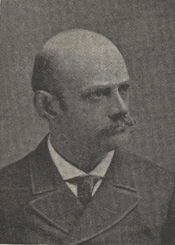
Historical · U.S. House · New York · District 3
Joseph Hendrix
Former U.S. Representative · New York District 3 · 1893–1895 · Democratic
Joseph Hendrix represented New York's District 3 in the United States House of Representatives (1893–1895) for the Democratic party. The page below collects sourced biographical facts, term history, committee roles, and provenance for Hendrix.
Bioguide ID: H000496
Key facts
- Full name
- Joseph Hendrix
- State
- New York
- District
- District 3
- Party
- Democratic
- House service
- 1893–1895
- First House term
- 1893
- Status
- Left office
- Current term ends
- —
- Born
- 1853
- Bioguide ID
- H000496
- Committee assignments
- —
- Dataset version
- 1.20260606
Biographical narrative
862 words · sourced from the Wikipedia REST extract
Joseph Hendrix was an American educator and politician who served as a U.S. Representative for New York's 3rd congressional district from 1893 to 1895. A member of the Democratic Party, Hendrix's political career was marked by various roles in local governance and education prior to his election to Congress. His contributions to public service extended beyond his time in the House, as he held significant positions in banking and education, reflecting a diverse professional background that combined both civic engagement and financial acumen.
Early life and career
Joseph Hendrix was born on May 25, 1853, in Fayette, Missouri. His early education took place in private schools, which laid the foundation for his academic pursuits. He attended Central College in Fayette, where he likely developed a strong educational background that would serve him throughout his career. Hendrix furthered his studies at Cornell University in Ithaca, New York, from 1870 to 1873. This period of education was significant, as it not only equipped him with knowledge but also introduced him to the intellectual and political currents of the time.
In 1873, Hendrix relocated to New York City, where he began his professional career as a journalist with the New York Sun. His work in journalism would have provided him with insights into the political landscape and public opinion, skills that would later benefit him in his political endeavors. Hendrix's involvement in public service began to take shape in the early 1880s when he was appointed to the Board of Education of Brooklyn in 1882. This role marked the beginning of his commitment to educational governance and community service.
Hendrix's political ambitions became more pronounced when he ran as a Democratic candidate for mayor of Brooklyn in 1883, although he was unsuccessful in this bid. Despite this setback, he continued to engage in public service, being appointed as a trustee of the New York and Brooklyn Bridge in 1884. His leadership skills were recognized when he was elected secretary of the board of bridge trustees in 1885, a position that underscored his growing influence in local governance.
In 1886, Hendrix was appointed postmaster of Brooklyn by President Grover Cleveland, a significant role that he held until July 1, 1890. This position not only enhanced his public profile but also allowed him to further contribute to the community's infrastructure and services. His leadership capabilities were further demonstrated when he was elected president of the Board of Education of Brooklyn in 1887, a role that emphasized his commitment to educational reform and oversight.
Hendrix's professional trajectory continued to evolve as he took on the presidency of the Kings County Trust Company from 1889 to 1893. This position in the banking sector provided him with valuable experience in finance and management, which would later inform his work in Congress. In 1893, he transitioned to serve as president of the National Union Bank of New York City, a role he held until 1900. His diverse career in education, public service, and banking laid a solid foundation for his subsequent political career.
House tenure
Hendrix's political career reached a new height when he was elected as a Democrat to the 53rd United States Congress, representing New York's 3rd congressional district. His term in the House of Representatives began in 1893 and lasted until 1895. During this time, he participated in the legislative process and contributed to discussions and decisions that shaped national policy. His election to Congress was a culmination of his previous public service experiences and reflected the trust placed in him by his constituents.
While in Congress, Hendrix engaged with various issues pertinent to his district and the nation. However, he did not seek renomination in 1894, concluding his congressional career after a single term. This decision may have been influenced by various factors, including the political climate of the time and his ongoing commitments in other areas of public service and business.
Legislative focus and committees
During his time in the House of Representatives, Joseph Hendrix was involved in legislative matters that aligned with his background in education and finance. Although specific details of his legislative focus and committee assignments are not documented, it is reasonable to infer that his experiences in education and banking informed his perspectives on issues related to public education, fiscal policy, and infrastructure development.
Following his departure from Congress, Hendrix continued to engage in public service and leadership roles. He served as president of the National Bank of Commerce in 1900, further solidifying his influence in the banking sector. His commitment to education remained evident as he took on the role of trustee for the Brooklyn Institute of Arts and Sciences and Cornell University, reflecting his dedication to fostering educational opportunities and supporting cultural institutions.
Joseph Hendrix passed away on November 9, 1904, in Brooklyn, New York. His contributions to public service, education, and banking left a lasting impact on the communities he served. He was interred in Green-Wood Cemetery, a resting place for many notable figures in New York's history. Hendrix's life and career exemplify the interconnectedness of education, public service, and civic responsibility, highlighting the role of individuals in shaping their communities through various avenues of engagement.
Notable legislation
Sponsored and co-sponsored legislation for Joseph Hendrix is pending operator curation. The biographical narrative above carries the same provenance trail until per-bill rows are written.
Sources
- [1]https://en.wikipedia.org/wiki/Joseph_C._HendrixWikipedia · retrieved 2026-06-06
Notable quotes
Sourced quotes for Joseph Hendrix are pending operator curation. Narrative-scope provenance remains attached below.
Sources
- [1]https://en.wikipedia.org/wiki/Joseph_C._HendrixWikipedia · retrieved 2026-06-06
Key positions
Curated policy positions for Joseph Hendrix are pending operator review. The biographical narrative above carries the same provenance trail until per-topic positions are written.
Sources
- [1]https://en.wikipedia.org/wiki/Joseph_C._HendrixWikipedia · retrieved 2026-06-06
Terms served
- 1893–1895U.S. House · Term 1 · Democratic
Sources & provenance
Every attributable claim above carries a per-section [N] marker that resolves to the corresponding URL below. Each entry records the upstream provider, the canonical URL, and the timestamp at which the source was retrieved by the ingest pipeline.
Key facts
- https://bioguide.congress.gov/search/bio/H000496bioguide · retrieved 2026-06-06
- https://www.govtrack.us/congress/members/405359govtrack · retrieved 2026-06-06
Biographical narrative
- https://en.wikipedia.org/wiki/Joseph_C._Hendrixwikipedia · retrieved 2026-06-06
Find your representative
Every U.S. state elects representatives by district. Browse New York’s delegation, the full former-representative roster, or explore the role and term length.
Related on The Candidate
- Preceded by William WallaceEarlier holder of the New York District 3 House seat · Republican.Open
- Succeeded by Francis WilsonLater holder of the New York District 3 House seat · Republican.Open
- Abel HuntingtonFormer U.S. Representative · New York District 1 · JacksonOpen
- Alfred ChapinFormer U.S. Representative · New York District 1 · DemocraticOpen
- Cadwallader ColdenFormer U.S. Representative · New York District 1 · FederalistOpen
- Charles FloydFormer U.S. Representative · New York District 1 · DemocraticOpen