
Historical · U.S. House · New York · District 3
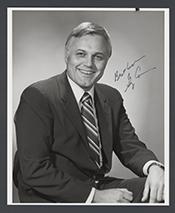
Gregory Carman
Former U.S. Representative · New York District 3 · 1981–1983 · Republican
Gregory Carman represented New York's District 3 in the United States House of Representatives (1981–1983) for the Republican party. The page below collects sourced biographical facts, term history, committee roles, and provenance for Carman.
Bioguide ID: C000158
Key facts
- Full name
- Gregory Carman
- State
- New York
- District
- District 3
- Party
- Republican
- House service
- 1981–1983
- First House term
- 1981
- Status
- Left office
- Current term ends
- —
- Born
- 1937
- Bioguide ID
- C000158
- Committee assignments
- —
- Dataset version
- 1.20260605
Biographical narrative
938 words · sourced from the Wikipedia REST extract
Gregory W. Carman was a Republican politician and a prominent figure in the U.S. legal system, serving as a U.S. Representative for New York's 3rd congressional district and later as a judge on the United States Court of International Trade. His career spanned several decades, during which he transitioned from local government to national politics and then to the judiciary. Born in Farmingdale, New York, in 1937, Carman's educational background and military service laid the foundation for his future roles in public service and law.
Early life and career
Gregory Wright Carman was born on January 31, 1937, in Farmingdale, New York. Growing up in a suburban environment, he pursued his education with diligence, ultimately earning a Bachelor of Arts degree from St. Lawrence University in 1958. Following his undergraduate studies, Carman attended St. John's University School of Law, where he received his Juris Doctor in 1962. His legal education prepared him for a career in law, which he began shortly after graduation.
In addition to his academic achievements, Carman served in the U.S. Army Judge Advocate General's (JAG) Corps from 1958 until 1964. This experience provided him with valuable insights into military law and governance, which would later inform his work in both the legislative and judicial branches of government. After completing his military service, he returned to Farmingdale, where he engaged in private legal practice from 1961 until 1983. His work in law allowed him to build a reputation in his community and gain a deeper understanding of the legal issues facing his constituents.
Carman's involvement in local politics began in 1972 when he was elected to the Town Board of Oyster Bay, New York. He served on the board until 1981, during which time he developed a strong connection to the community and gained experience in governance and public policy. His tenure on the Town Board was marked by efforts to address local issues and improve the quality of life for residents. This experience in local government would later serve as a stepping stone for his entry into national politics.
House tenure
Carman's political career took a significant turn in 1980 when he ran for a seat in the U.S. House of Representatives. He successfully challenged the incumbent Democrat, Jerome Ambro, in the election, which resulted in his election to the 97th United States Congress. Carman officially took office on January 3, 1981, representing New York's 3rd congressional district. His election was part of a broader Republican wave during that election cycle, which saw the party gain numerous seats in Congress.
During his time in the House, Carman served on various committees and participated in legislative discussions that shaped national policy. His background in law and local governance informed his approach to legislation, as he sought to address the concerns of his constituents while aligning with the broader goals of the Republican Party. Although specific details about his legislative initiatives and voting record during his term are not provided, it is evident that his experience in law and local politics played a crucial role in his approach to congressional service.
Carman's tenure in the House of Representatives lasted until January 3, 1983. He chose not to seek re-election for the 98th United States Congress, concluding his time in national politics after a single term. His decision not to run again may have been influenced by a desire to pursue other opportunities, particularly in the legal field, where he had already established a strong foundation.
Legislative focus and committees
While specific details regarding Gregory W. Carman's legislative focus during his time in the House are not extensively documented, his background in law and local governance likely influenced his priorities as a congressman. As a member of the Republican Party, he would have aligned with the party's platform, which traditionally emphasizes limited government, fiscal responsibility, and a strong national defense. These themes often resonate with constituents in suburban districts like New York's 3rd congressional district, where Carman served.
Carman's legal expertise would have been an asset in navigating complex legislative issues, particularly those related to the judiciary, commerce, and trade. His experience as a practicing attorney and his military service in the JAG Corps may have shaped his perspectives on legal and regulatory matters, allowing him to contribute meaningfully to discussions on these topics within Congress.
Following his departure from the House, Carman transitioned to a significant role in the federal judiciary. On January 31, 1983, he was nominated by President Ronald Reagan to serve as a Judge of the United States Court of International Trade. This appointment marked a new chapter in his career, allowing him to apply his legal knowledge and experience in a judicial capacity. His nomination was confirmed by the Senate on March 2, 1983, and he received his commission the same day.
Carman's judicial career included serving as Chief Judge of the Court from 1996 until 2003, during which time he oversaw important cases related to international trade and commerce. He assumed senior status on September 15, 2014, allowing him to continue serving on the court while reducing his caseload. His contributions to the judiciary were recognized as he played a role in shaping legal interpretations related to trade law.
Gregory W. Carman passed away on April 5, 2020, in Melville, New York. His career spanned various roles in public service, from local governance to national legislation and finally to the judiciary. His educational background, military service, and legal practice provided a solid foundation for his contributions to American law and governance, leaving a lasting impact on the communities he served and the legal system in which he participated.
Notable legislation
Sponsored and co-sponsored legislation for Gregory Carman is pending operator curation. The biographical narrative above carries the same provenance trail until per-bill rows are written.
Sources
- [1]https://en.wikipedia.org/wiki/Gregory_W._CarmanWikipedia · retrieved 2026-06-05
Notable quotes
Sourced quotes for Gregory Carman are pending operator curation. Narrative-scope provenance remains attached below.
Sources
- [1]https://en.wikipedia.org/wiki/Gregory_W._CarmanWikipedia · retrieved 2026-06-05
Key positions
Curated policy positions for Gregory Carman are pending operator review. The biographical narrative above carries the same provenance trail until per-topic positions are written.
Sources
- [1]https://en.wikipedia.org/wiki/Gregory_W._CarmanWikipedia · retrieved 2026-06-05
Terms served
- 1981–1983U.S. House · Term 1 · Republican
Sources & provenance
Every attributable claim above carries a per-section [N] marker that resolves to the corresponding URL below. Each entry records the upstream provider, the canonical URL, and the timestamp at which the source was retrieved by the ingest pipeline.
Key facts
- https://bioguide.congress.gov/search/bio/C000158bioguide · retrieved 2026-06-05
- https://www.govtrack.us/congress/members/402307govtrack · retrieved 2026-06-05
Biographical narrative
- https://en.wikipedia.org/wiki/Gregory_W._Carmanwikipedia · retrieved 2026-06-05
Find your representative
Every U.S. state elects representatives by district. Browse New York’s delegation, the full former-representative roster, or explore the role and term length.
Related on The Candidate
- Preceded by Jerome Ambro Jr.Earlier holder of the New York District 3 House seat · Democratic.Open
- Succeeded by Robert MrazekLater holder of the New York District 3 House seat · Democratic.Open
- Abel HuntingtonFormer U.S. Representative · New York District 1 · JacksonOpen
- Alfred ChapinFormer U.S. Representative · New York District 1 · DemocraticOpen
- Cadwallader ColdenFormer U.S. Representative · New York District 1 · FederalistOpen
- Charles FloydFormer U.S. Representative · New York District 1 · DemocraticOpen