
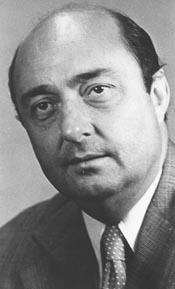
Historical · U.S. House · New York · District 3
Jerome Ambro Jr.
Former U.S. Representative · New York District 3 · 1975–1981 · Democratic
Jerome Ambro Jr. represented New York's District 3 in the United States House of Representatives (1975–1981) for the Democratic party. The page below collects sourced biographical facts, term history, committee roles, and provenance for Jr..
Bioguide ID: A000170
Key facts
- Full name
- Jerome Ambro Jr.
- State
- New York
- District
- District 3
- Party
- Democratic
- House service
- 1975–1981
- First House term
- 1975
- Status
- Left office
- Current term ends
- —
- Born
- 1928
- Bioguide ID
- A000170
- Committee assignments
- —
- Dataset version
- 1.20260605
Biographical narrative
970 words · sourced from the Wikipedia REST extract
Jerome A. Ambro was an American politician and military veteran who served as a U.S. Representative for New York's 3rd congressional district from 1975 to 1981. A member of the Democratic Party, Ambro was known for his involvement in local government prior to his congressional tenure and for his contributions to environmental legislation during his time in office. His career was marked by a commitment to public service, which included roles in both military and local government positions.
Early life and career
Jerome Anthony Ambro, Jr. was born on June 27, 1928, in Brooklyn, New York. He was the son of Jerome G. Ambro, who served as a New York assemblyman, suggesting a familial connection to public service from an early age. Ambro attended public elementary schools in Brooklyn and graduated from Grover Cleveland High School in Queens in 1946. Following high school, he pursued higher education at New York University, where he earned a Bachelor of Arts degree in 1955.
Ambro's early career included significant military service. He enlisted in the United States Army during the Korean War, serving from 1951 to 1953 as a member of the Military Police. He attained the rank of sergeant during his service, which contributed to his leadership skills and understanding of governmental structure.
After his military service, Ambro transitioned into local government. From 1960 to 1967, he worked as the budget office and purchasing and personnel director for the town of Huntington, New York. His involvement in local governance deepened when he was elected to the Suffolk County Board of Supervisors, where he served from 1968 to 1969. Additionally, he held the position of Supervisor for the town of Huntington for four terms from 1968 to 1974. During this time, he also chaired Huntington's Urban Renewal Agency and served as president of the Freeholders and Commonalty of the Town of Huntington.
Ambro's political aspirations extended beyond local government. In 1970, he sought the Democratic nomination for Lieutenant Governor of New York, challenging incumbent Basil Paterson in the primary election. Although he was not successful in this endeavor, his political career continued to develop, ultimately leading to his election to the U.S. House of Representatives.
House tenure
Jerome Ambro was elected to the United States House of Representatives in 1974, beginning his first term on January 3, 1975. He served three consecutive terms, concluding his tenure on January 3, 1981. During his time in Congress, Ambro was a member of the Democratic Party and played a significant role in local and national politics.
Ambro's election marked a notable achievement for the Democratic Party in Huntington, as he led the party to its first sweep of local elections in 35 years. His tenure in the House was characterized by a focus on environmental issues, among other legislative priorities. He was elected president of his freshman class, which consisted of 82 members, indicating a level of respect and leadership among his peers.
Throughout his congressional career, Ambro served on the Public Works and Transportation Committee, where he was involved in various legislative initiatives related to infrastructure and environmental protection. He was also elected chairman of the House Science and Technology Committee's Subcommittee on Natural Resources and the Environment. In this capacity, he played a pivotal role in advocating for the preservation of wetlands, particularly in Massapequa, New York, and was instrumental in the designation of Brookhaven National Laboratory as the site for a high-energy reactor.
In 1980, Ambro authored an important amendment to the Marine Protection, Research, and Sanctuaries Act. This amendment mandated that the disposal of dredged material into Long Island Sound from federal projects, as well as from non-federal projects exceeding a specified volume, adhere to environmental criteria for ocean dumping. This legislation reflected his commitment to environmental conservation and sustainable practices.
Despite his contributions and efforts, Ambro was defeated in his bid for re-election in 1980 by Gregory W. Carman. His departure from Congress marked the end of a significant chapter in his political career.
Legislative focus and committees
During his time in Congress, Jerome Ambro's legislative focus was primarily centered on environmental issues, infrastructure, and public works. His role on the Public Works and Transportation Committee allowed him to engage with a range of topics related to the development and maintenance of public infrastructure, which included roads, bridges, and transportation systems.
Ambro's chairmanship of the House Science and Technology Committee's Subcommittee on Natural Resources and the Environment further emphasized his dedication to environmental issues. He was particularly noted for his efforts to protect wetlands and promote responsible environmental policies. His work in this area included significant advocacy for the preservation of natural resources and the promotion of sustainable practices within legislative frameworks.
The amendment he authored to the Marine Protection, Research, and Sanctuaries Act illustrated his proactive approach to environmental regulation. By ensuring that dredged material disposal complied with stringent environmental criteria, Ambro contributed to the broader movement toward environmental protection during a time when such issues were gaining national attention.
In addition to his environmental initiatives, Ambro's leadership within his freshman class and his involvement in local governance prior to his congressional career provided him with a unique perspective on the intersection of local and federal policies. His experiences in local government informed his legislative priorities and his approach to addressing the needs of his constituents.
After leaving Congress, Ambro continued to engage in public service as a lobbyist and governmental consultant, applying his knowledge and experience to influence policy and advocate for various causes. He passed away on March 4, 1993, due to complications from diabetes, and is interred at Arlington National Cemetery. In recognition of his contributions, the East Northport post office was renamed in his honor, and the Town of Huntington established the Jerome Ambro Memorial Wetlands Preserve, reflecting his legacy in environmental conservation.
Notable legislation
Sponsored and co-sponsored legislation for Jerome Ambro Jr. is pending operator curation. The biographical narrative above carries the same provenance trail until per-bill rows are written.
Sources
- [1]https://en.wikipedia.org/wiki/Jerome_AmbroWikipedia · retrieved 2026-06-05
Notable quotes
Sourced quotes for Jerome Ambro Jr. are pending operator curation. Narrative-scope provenance remains attached below.
Sources
- [1]https://en.wikipedia.org/wiki/Jerome_AmbroWikipedia · retrieved 2026-06-05
Key positions
Curated policy positions for Jerome Ambro Jr. are pending operator review. The biographical narrative above carries the same provenance trail until per-topic positions are written.
Sources
- [1]https://en.wikipedia.org/wiki/Jerome_AmbroWikipedia · retrieved 2026-06-05
Terms served
- 1975–1977U.S. House · Term 1 · Democratic
- 1977–1979U.S. House · Term 2 · Democratic
- 1979–1981U.S. House · Term 3 · Democratic
Sources & provenance
Every attributable claim above carries a per-section [N] marker that resolves to the corresponding URL below. Each entry records the upstream provider, the canonical URL, and the timestamp at which the source was retrieved by the ingest pipeline.
Key facts
- https://bioguide.congress.gov/search/bio/A000170bioguide · retrieved 2026-06-05
- https://www.govtrack.us/congress/members/400825govtrack · retrieved 2026-06-05
Biographical narrative
- https://en.wikipedia.org/wiki/Jerome_Ambrowikipedia · retrieved 2026-06-05
Find your representative
Every U.S. state elects representatives by district. Browse New York’s delegation, the full former-representative roster, or explore the role and term length.
Related on The Candidate
- Preceded by Angelo RoncalloEarlier holder of the New York District 3 House seat · Republican.Open
- Succeeded by Gregory CarmanLater holder of the New York District 3 House seat · Republican.Open
- Abel HuntingtonFormer U.S. Representative · New York District 1 · JacksonOpen
- Alfred ChapinFormer U.S. Representative · New York District 1 · DemocraticOpen
- Cadwallader ColdenFormer U.S. Representative · New York District 1 · FederalistOpen
- Charles FloydFormer U.S. Representative · New York District 1 · DemocraticOpen