
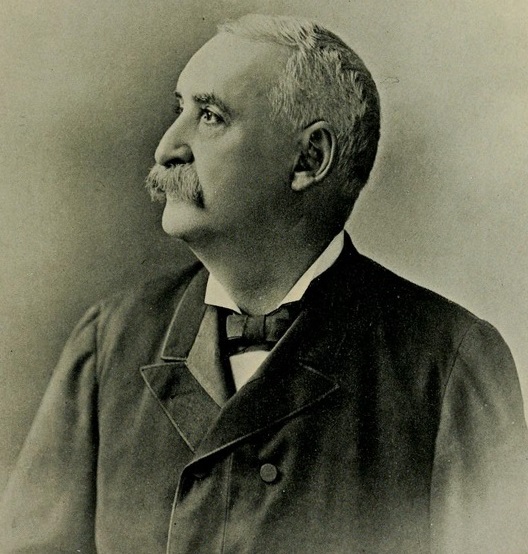
Historical · U.S. House · New York · District 3
Guy Pelton
Former U.S. Representative · New York District 3 · 1855–1857 · Ind. Republican-Democrat
Guy Pelton represented New York's District 3 in the United States House of Representatives (1855–1857) for the Ind. Republican-Democrat party. The page below collects sourced biographical facts, term history, committee roles, and provenance for Pelton.
Bioguide ID: P000198
Key facts
- Full name
- Guy Pelton
- State
- New York
- District
- District 3
- Party
- Ind. Republican-Democrat
- House service
- 1855–1857
- First House term
- 1855
- Status
- Left office
- Current term ends
- —
- Born
- 1824
- Bioguide ID
- P000198
- Committee assignments
- —
- Dataset version
- 1.20260606
Biographical narrative
974 words · sourced from the Wikipedia REST extract
Guy Pelton was an American lawyer and politician who served as a U.S. Representative for New York's 3rd congressional district during the 34th Congress from 1855 to 1857. A member of the Whig Party, Pelton's political career was marked by his involvement in various business ventures and civic organizations. He was born on August 3, 1824, in Great Barrington, Massachusetts, and his life spanned significant periods of American history, including the lead-up to the Civil War. Pelton's tenure in Congress was relatively brief, and he was not re-elected after his first term. He passed away on July 24, 1890, while visiting Yellowstone National Park.
Early life and career
Guy Pelton was born into a family with a strong educational background. His father, Joseph Kneeland Pelton, and mother, Harriet Ray, raised him in Great Barrington, where he attended local public schools. Pelton's early education was supplemented by his attendance at the Sedgwick Institution, a notable educational establishment in Great Barrington, and the Connecticut Literary Institute located in Suffield, Connecticut. These formative years laid the groundwork for his future pursuits in law and politics.
After completing his secondary education, Pelton furthered his studies at Oberlin College, an institution known for its progressive values and commitment to higher education. Following his time at Oberlin, he began his legal training in Kinderhook, New York. Pelton was admitted to the bar in 1851, marking the official start of his legal career. He subsequently established a law practice in New York City, partnering with his older brother, Timothy Dwight Pelton. This familial connection not only provided him with professional support but also helped him navigate the complexities of the legal landscape in a burgeoning urban environment.
In addition to his legal career, Pelton was actively involved in various civic and social organizations. He was a member of the Union League Club, which was established during the Civil War to promote loyalty to the Union and support for the war effort. His affiliation with the Freemasons also indicated his engagement with community and fraternal organizations, which were significant in the social fabric of the time. Beyond his legal and civic endeavors, Pelton participated in business ventures, including a rubber manufacturing company, reflecting his diverse interests and entrepreneurial spirit.
House tenure
Pelton's political career took a significant turn in 1854 when he was elected to the Thirty-fourth Congress as a member of the Whig Party. His term in the House of Representatives began on March 4, 1855, and concluded on March 3, 1857. During this period, he represented New York's 3rd congressional district, a region that was undergoing considerable change as the nation grappled with issues related to slavery, economic development, and national unity.
In Congress, Pelton served on the Committee on Commerce, where he was involved in discussions and legislation pertaining to trade, transportation, and economic policy. The mid-1850s were a tumultuous time in American politics, characterized by intense debates over the expansion of slavery into new territories and states. While specific details of Pelton's legislative contributions are not extensively documented, his role on the Committee on Commerce suggests that he was engaged with the economic issues of the day, which were closely tied to the broader political landscape.
Pelton's congressional career was relatively short-lived, as he faced challenges in securing re-election in 1856. His defeat marked the end of his formal political career, although the reasons for his lack of success in subsequent elections are not detailed in the available records. The shifting political dynamics of the time, particularly the decline of the Whig Party and the rise of new political movements, likely played a role in his electoral challenges.
Legislative focus and committees
During his time in the House of Representatives, Guy Pelton's legislative focus was primarily centered on commerce and economic issues, as indicated by his membership on the Committee on Commerce. This committee was responsible for overseeing a range of matters related to trade, shipping, and the regulation of commerce, which were critical to the economic development of the United States during the mid-19th century. The period was marked by significant changes in transportation and trade practices, including the expansion of railroads and the growth of industrialization.
While specific legislative initiatives or bills that Pelton supported are not detailed in the available records, his involvement in the Committee on Commerce suggests that he was engaged in discussions about policies that would impact both local and national economies. The economic landscape of the United States was rapidly evolving, and representatives like Pelton played a role in shaping the legislative framework that would govern these changes.
Pelton's affiliation with the Whig Party also placed him within a political context that was increasingly challenged by emerging parties and ideologies. The Whig Party was known for its support of economic modernization and infrastructure development, which aligned with Pelton's interests in commerce. However, as the political climate shifted in the lead-up to the Civil War, the party faced significant internal divisions and external pressures that ultimately contributed to its decline.
After his congressional term ended in 1857, Pelton returned to private life and continued his legal and business pursuits. His contributions to the legal profession and his involvement in civic organizations reflect a commitment to public service that extended beyond his time in Congress. Pelton's life came to an end on July 24, 1890, while he was climbing Mary Mountain in Yellowstone National Park, a testament to his adventurous spirit. He was buried at Mahaiwe Cemetery in Great Barrington, Massachusetts, where he had spent much of his early life.
Pelton's legacy is that of a dedicated public servant and lawyer who navigated the complexities of a changing America during a pivotal time in its history. His brief tenure in Congress, while not extensively documented, was part of a larger narrative of political and economic transformation in the United States.
Notable legislation
Sponsored and co-sponsored legislation for Guy Pelton is pending operator curation. The biographical narrative above carries the same provenance trail until per-bill rows are written.
Sources
- [1]https://en.wikipedia.org/wiki/Guy_R._PeltonWikipedia · retrieved 2026-06-06
Notable quotes
Sourced quotes for Guy Pelton are pending operator curation. Narrative-scope provenance remains attached below.
Sources
- [1]https://en.wikipedia.org/wiki/Guy_R._PeltonWikipedia · retrieved 2026-06-06
Key positions
Curated policy positions for Guy Pelton are pending operator review. The biographical narrative above carries the same provenance trail until per-topic positions are written.
Sources
- [1]https://en.wikipedia.org/wiki/Guy_R._PeltonWikipedia · retrieved 2026-06-06
Terms served
- 1855–1857U.S. House · Term 1 · Ind. Republican-Democrat
Sources & provenance
Every attributable claim above carries a per-section [N] marker that resolves to the corresponding URL below. Each entry records the upstream provider, the canonical URL, and the timestamp at which the source was retrieved by the ingest pipeline.
Key facts
- https://bioguide.congress.gov/search/bio/P000198bioguide · retrieved 2026-06-06
- https://www.govtrack.us/congress/members/408601govtrack · retrieved 2026-06-06
Biographical narrative
- https://en.wikipedia.org/wiki/Guy_R._Peltonwikipedia · retrieved 2026-06-06
Find your representative
Every U.S. state elects representatives by district. Browse New York’s delegation, the full former-representative roster, or explore the role and term length.
Related on The Candidate
- Preceded by Hiram WalbridgeEarlier holder of the New York District 3 House seat · Democratic.Open
- Succeeded by James HumphreyLater holder of the New York District 3 House seat · Republican.Open
- Abel HuntingtonFormer U.S. Representative · New York District 1 · JacksonOpen
- Alfred ChapinFormer U.S. Representative · New York District 1 · DemocraticOpen
- Cadwallader ColdenFormer U.S. Representative · New York District 1 · FederalistOpen
- Charles FloydFormer U.S. Representative · New York District 1 · DemocraticOpen