
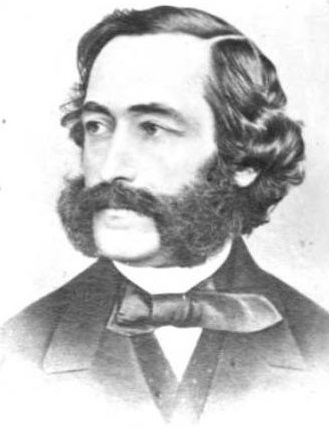
Historical · U.S. House · New York · District 3
James Humphrey
Former U.S. Representative · New York District 3 · 1859–1867 · Republican
James Humphrey represented New York's District 3 in the United States House of Representatives (1859–1867) for the Republican party. The page below collects sourced biographical facts, term history, committee roles, and provenance for Humphrey.
Bioguide ID: H000954
Key facts
- Full name
- James Humphrey
- State
- New York
- District
- District 3
- Party
- Republican
- House service
- 1859–1867
- First House term
- 1859
- Status
- Left office
- Current term ends
- —
- Born
- 1811
- Bioguide ID
- H000954
- Committee assignments
- —
- Dataset version
- 1.20260606
Biographical narrative
895 words · sourced from the Wikipedia REST extract
James Humphrey was a U.S. Representative from New York, serving as a member of the Republican Party during the mid-19th century. His political career spanned two terms in the House of Representatives, where he was involved in various legislative activities until his death in 1866. His contributions to Congress occurred during a tumultuous period in American history, marked by the Civil War and significant political change.
Early life and career
James Humphrey was born on October 9, 1811, in Fairfield, Connecticut. He came from a family that valued education, as his father, Heman Humphrey, was an educator. This familial background likely influenced Humphrey’s pursuit of knowledge and academic achievement. He engaged in classical studies under his father's guidance, which laid a strong foundation for his later educational endeavors. In 1831, he graduated from Amherst College, an institution known for its rigorous academic standards and commitment to liberal arts education.
Following his graduation, Humphrey turned his focus to the field of law. He undertook legal studies and successfully gained admission to the bar, allowing him to practice law. His legal career began in earnest when he moved to Louisville, Kentucky, in 1837. This relocation marked a significant transition in his life, as he sought to establish himself professionally in a new environment. The following year, in 1838, he moved again, this time to Brooklyn, New York, where he continued his legal practice.
Humphrey's legal background and experience in Brooklyn would later serve as a foundation for his entry into politics. The political landscape of New York during the 19th century was dynamic, and Humphrey's involvement in the legal community likely provided him with insights and connections that would prove beneficial in his future political endeavors.
House tenure
James Humphrey's political career in the U.S. House of Representatives began when he was elected as a Republican to the Thirty-sixth Congress. His first term commenced on March 4, 1859, and he served until March 3, 1861. During this period, he participated in legislative discussions and decisions that were crucial to the nation, particularly as the country was on the brink of the Civil War.
After his initial term, Humphrey sought reelection but was unsuccessful in his bid for the Thirty-seventh Congress in 1860. He also attempted to regain a seat in the Thirty-eighth Congress in 1862, but these efforts did not result in election. Despite these setbacks, he remained active in political circles and continued to engage with the issues of the day.
Humphrey's political fortunes changed when he was elected to the Thirty-ninth Congress, where he served from March 4, 1865, until his death on June 16, 1866. His return to Congress came at a pivotal time in American history, as the nation was grappling with the aftermath of the Civil War and the challenges of Reconstruction. During his tenure in the Thirty-ninth Congress, he was appointed as the chairman of the Committee on Expenditures in the Department of the Navy, a role that placed him in a position to influence naval policy and budgetary matters at a time when the military was undergoing significant changes.
Humphrey's service in Congress was cut short by his untimely death in Brooklyn, New York, in June 1866. He was interred in Greenwood Cemetery, a resting place for many notable figures in New York history. His passing marked the end of his contributions to the legislative process, but his legacy as a public servant continued through the policies and decisions made during his time in office.
Legislative focus and committees
During his time in the House of Representatives, James Humphrey's legislative focus was shaped by the pressing issues of his era. As a member of the Republican Party during a time of national strife, he was involved in discussions surrounding the Civil War and its implications for the future of the United States. The Republican Party, which was founded on principles of anti-slavery and unionism, played a significant role in shaping the policies that would guide the nation through and beyond the war.
Humphrey's position as chairman of the Committee on Expenditures in the Department of the Navy allowed him to engage directly with matters concerning naval appropriations and oversight. This role was particularly important during the post-war period when the Navy was undergoing reorganization and expansion to meet new national security needs. His leadership in this committee indicated a focus on ensuring that naval expenditures were managed effectively, reflecting the broader concerns of governance and accountability in federal spending.
While specific details about the legislation he supported or opposed during his terms are not extensively documented, his involvement in the Committee on Expenditures suggests that he was concerned with fiscal responsibility and the efficient use of government resources. The challenges of the post-Civil War era required legislators to navigate complex issues related to military funding, reconstruction efforts, and the integration of returning soldiers into civilian life.
In summary, James Humphrey's tenure in the U.S. House of Representatives was marked by his commitment to public service during a critical period in American history. His background in law and his roles in Congress positioned him to contribute to the legislative process at a time when the nation was facing significant challenges and changes. His legacy is reflected in the policies and decisions made during his time in office, which continue to influence the historical narrative of the United States.
Notable legislation
Sponsored and co-sponsored legislation for James Humphrey is pending operator curation. The biographical narrative above carries the same provenance trail until per-bill rows are written.
Sources
- [1]https://en.wikipedia.org/wiki/James_Humphrey_(New_York_politician)Wikipedia · retrieved 2026-06-06
Notable quotes
Sourced quotes for James Humphrey are pending operator curation. Narrative-scope provenance remains attached below.
Sources
- [1]https://en.wikipedia.org/wiki/James_Humphrey_(New_York_politician)Wikipedia · retrieved 2026-06-06
Key positions
Curated policy positions for James Humphrey are pending operator review. The biographical narrative above carries the same provenance trail until per-topic positions are written.
Sources
- [1]https://en.wikipedia.org/wiki/James_Humphrey_(New_York_politician)Wikipedia · retrieved 2026-06-06
Terms served
- 1859–1861U.S. House · Term 1 · Republican
- 1865–1867U.S. House · Term 2 · Republican
Sources & provenance
Every attributable claim above carries a per-section [N] marker that resolves to the corresponding URL below. Each entry records the upstream provider, the canonical URL, and the timestamp at which the source was retrieved by the ingest pipeline.
Key facts
- https://bioguide.congress.gov/search/bio/H000954bioguide · retrieved 2026-06-06
- https://www.govtrack.us/congress/members/405798govtrack · retrieved 2026-06-06
Biographical narrative
- https://en.wikipedia.org/wiki/James_Humphrey_(New_York_politician)wikipedia · retrieved 2026-06-06
Find your representative
Every U.S. state elects representatives by district. Browse New York’s delegation, the full former-representative roster, or explore the role and term length.
Related on The Candidate
- Preceded by Guy PeltonEarlier holder of the New York District 3 House seat · Ind. Republican-Democrat.Open
- Succeeded by Simeon ChittendenLater holder of the New York District 3 House seat · Republican.Open
- Abel HuntingtonFormer U.S. Representative · New York District 1 · JacksonOpen
- Alfred ChapinFormer U.S. Representative · New York District 1 · DemocraticOpen
- Cadwallader ColdenFormer U.S. Representative · New York District 1 · FederalistOpen
- Charles FloydFormer U.S. Representative · New York District 1 · DemocraticOpen