
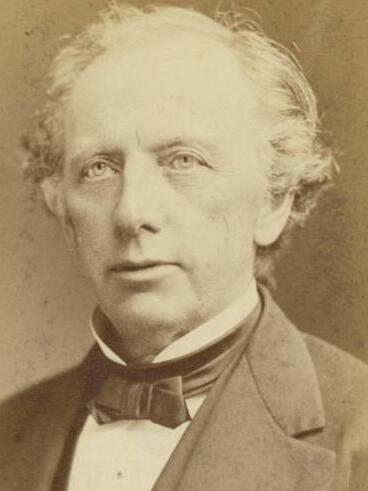
Historical · U.S. House · New York · District 3
John Hunter
Former U.S. Representative · New York District 3 · 1865–1867 · Democratic
John Hunter represented New York's District 3 in the United States House of Representatives (1865–1867) for the Democratic party. The page below collects sourced biographical facts, term history, committee roles, and provenance for Hunter.
Bioguide ID: H000984
Key facts
- Full name
- John Hunter
- State
- New York
- District
- District 3
- Party
- Democratic
- House service
- 1865–1867
- First House term
- 1865
- Status
- Left office
- Current term ends
- —
- Born
- 1807
- Bioguide ID
- H000984
- Committee assignments
- —
- Dataset version
- 1.20260606
Biographical narrative
800 words · sourced from the Wikipedia REST extract
John Hunter was an American banker and politician who served as a U.S. Representative for New York's 3rd congressional district during a brief tenure in the late 1860s. A member of the Democratic Party, Hunter's congressional career was marked by a notable censure from the House of Representatives. Prior to his time in Congress, he held various positions in banking and local government, including serving as the mayor of Brooklyn. His life spanned a significant period in American history, and his contributions to both the financial and political landscapes of New York are noteworthy.
Early life and career
John Hunter was born on October 15, 1807, in the Bedford neighborhood of Brooklyn, which is now known as Bedford-Stuyvesant. His early education was liberal, providing him with a foundation that would support his later endeavors in business and politics. Hunter began his professional career as a clerk in a wholesale grocery store in New York City in 1824. This position marked the beginning of his engagement in the commercial sector, where he would gain valuable experience in business operations.
In 1831, Hunter transitioned to a role at the U.S. Custom House in New York City, where he worked as a clerk until 1836. His tenure at the Custom House allowed him to develop a deeper understanding of government operations and financial management. Following his clerical work, he was appointed as the assistant auditor of the Custom House, a position he held from 1836 until 1865. This role further solidified his expertise in financial oversight and public service.
In addition to his work in government, Hunter became involved in the banking sector. He served as the treasurer of the Dime Savings Bank in Brooklyn, where he played a crucial role in managing the bank's operations and finances. His banking career contributed to his reputation as a knowledgeable figure in financial matters, which would later influence his political career.
House tenure
John Hunter's political career took a significant turn when he was elected to the United States House of Representatives. He was chosen as a Democrat to fill the vacancy left by the death of Congressman James Humphrey. Hunter's term in the House began on December 4, 1866, and concluded on March 3, 1867. His time in Congress was relatively short, lasting only a few months, but it was marked by a significant event that would define his congressional legacy.
During his brief tenure, Hunter was censured by the House of Representatives on January 26, 1867, for using unparliamentary language during a debate. This censure was a notable event, as it marked the tenth time in American history that a Representative had been formally censured. The action taken against Hunter underscored the importance of decorum and respect in legislative discourse. Despite this controversy, he did not seek renomination for another term in the 1866 elections, effectively ending his congressional career shortly after it began.
Legislative focus and committees
While specific details regarding Hunter's legislative initiatives and committee assignments during his time in Congress are not extensively documented, his censure indicates that he was actively engaged in the debates and discussions of the day. The political climate of the 1860s was characterized by significant national challenges, including the aftermath of the Civil War and the ongoing struggles related to Reconstruction. As a member of the Democratic Party, Hunter would have been involved in discussions surrounding these critical issues, although the specifics of his contributions remain unclear.
After his congressional service, Hunter returned to public life in a different capacity. He was elected as the mayor of Brooklyn in 1875 and served in this role for two consecutive years. His tenure as mayor allowed him to further influence local governance and community affairs. Following his time as mayor, he continued to engage with civic organizations, notably being elected as the first President of the Society of Old Brooklynites, a prestigious civic group founded in 1880. This organization aimed to celebrate and preserve the history and culture of Brooklyn, and it continues to hold public meetings to this day.
In his later years, Hunter returned to the banking sector, where he resumed his work in financial management. His career in banking and public service spanned several decades, and he remained an influential figure in Brooklyn until his death on April 16, 1900. He was interred in Green-Wood Cemetery, a notable resting place for many prominent figures in New York history.
John Hunter's life and career reflect the complexities of American politics and finance during a transformative period in the nation's history. His brief tenure in Congress, marked by censure, alongside his roles in local government and banking, illustrate the multifaceted nature of public service. His contributions to Brooklyn and the broader New York community remain part of the historical narrative of the region.
Notable legislation
Sponsored and co-sponsored legislation for John Hunter is pending operator curation. The biographical narrative above carries the same provenance trail until per-bill rows are written.
Sources
- [1]https://en.wikipedia.org/wiki/John_W._HunterWikipedia · retrieved 2026-06-06
Notable quotes
Sourced quotes for John Hunter are pending operator curation. Narrative-scope provenance remains attached below.
Sources
- [1]https://en.wikipedia.org/wiki/John_W._HunterWikipedia · retrieved 2026-06-06
Key positions
Curated policy positions for John Hunter are pending operator review. The biographical narrative above carries the same provenance trail until per-topic positions are written.
Sources
- [1]https://en.wikipedia.org/wiki/John_W._HunterWikipedia · retrieved 2026-06-06
Terms served
- 1865–1867U.S. House · Term 1 · Democratic
Sources & provenance
Every attributable claim above carries a per-section [N] marker that resolves to the corresponding URL below. Each entry records the upstream provider, the canonical URL, and the timestamp at which the source was retrieved by the ingest pipeline.
Key facts
- https://bioguide.congress.gov/search/bio/H000984bioguide · retrieved 2026-06-06
- https://www.govtrack.us/congress/members/405826govtrack · retrieved 2026-06-06
Biographical narrative
- https://en.wikipedia.org/wiki/John_W._Hunterwikipedia · retrieved 2026-06-06
Find your representative
Every U.S. state elects representatives by district. Browse New York’s delegation, the full former-representative roster, or explore the role and term length.
Related on The Candidate
- Preceded by Moses OdellEarlier holder of the New York District 3 House seat · Democratic.Open
- Succeeded by Simeon ChittendenLater holder of the New York District 3 House seat · Republican.Open
- Abel HuntingtonFormer U.S. Representative · New York District 1 · JacksonOpen
- Alfred ChapinFormer U.S. Representative · New York District 1 · DemocraticOpen
- Cadwallader ColdenFormer U.S. Representative · New York District 1 · FederalistOpen
- Charles FloydFormer U.S. Representative · New York District 1 · DemocraticOpen