
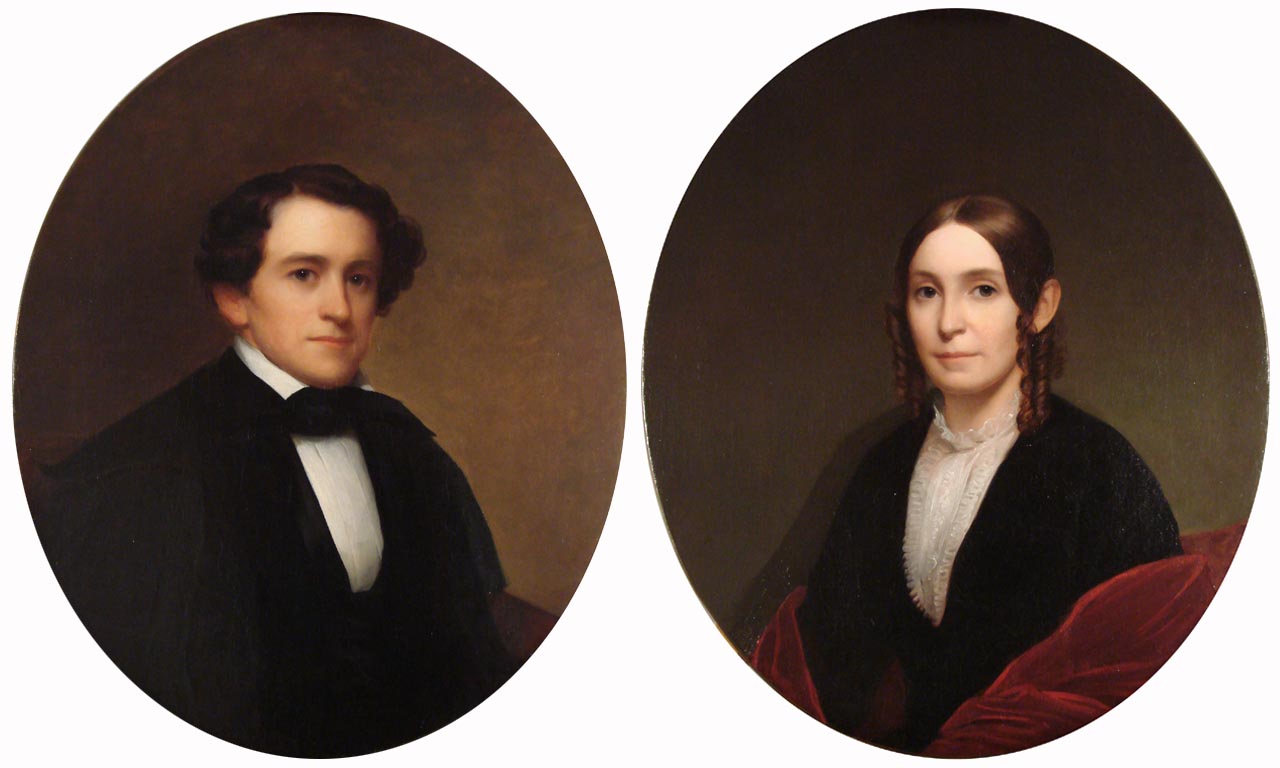
Historical · U.S. House · New York · District 3
Simeon Chittenden
Former U.S. Representative · New York District 3 · 1873–1881 · Republican
Simeon Chittenden represented New York's District 3 in the United States House of Representatives (1873–1881) for the Republican party. The page below collects sourced biographical facts, term history, committee roles, and provenance for Chittenden.
Bioguide ID: C000373
Key facts
- Full name
- Simeon Chittenden
- State
- New York
- District
- District 3
- Party
- Republican
- House service
- 1873–1881
- First House term
- 1873
- Status
- Left office
- Current term ends
- —
- Born
- 1814
- Bioguide ID
- C000373
- Committee assignments
- —
- Dataset version
- 1.20260606
Biographical narrative
842 words · sourced from the Wikipedia REST extract
Simeon Chittenden was a United States Representative from New York, serving the 3rd congressional district as a member of the Republican Party. His political career spanned four terms in the U.S. House of Representatives, beginning in 1873 and concluding in 1881. Chittenden's tenure in Congress was marked by his involvement in various legislative matters, reflecting the interests and needs of his constituents during a transformative period in American history.
Early life and career
Simeon Baldwin Chittenden was born on March 29, 1814, in Guilford, New Haven County, Connecticut. He was the son of Abel Chittenden and Anna Hart Baldwin Chittenden. Chittenden had several siblings, including Henry Baldwin Chittenden and Sarah Dudley Chittenden, both of whom died at a young age. His early education took place at Guilford Academy, where he laid the foundation for his future endeavors.
In 1829, Chittenden began his career in mercantile pursuits, working as a clerk for the firm McCracken & Merriman in New Haven. This experience in commerce would later inform his understanding of economic issues as a public servant. In 1842, he relocated to New York City to further pursue opportunities in the mercantile business. His professional trajectory continued to rise, and from 1867 to 1869, he served as the vice president of the New York City Chamber of Commerce, a position that underscored his influence in the business community.
Chittenden's political aspirations began to take shape in the mid-1860s. He ran unsuccessfully for a seat in the 40th United States Congress in 1866. However, he found success in 1872 when he was elected as an Independent Republican to fill a vacancy in the Forty-third Congress, which had been created by the resignation of Stewart L. Woodford. His election marked the beginning of a significant political career, as he was subsequently re-elected to the Forty-fourth Congress and later to the Forty-fifth and Forty-sixth Congresses, serving from November 3, 1874, until March 3, 1881. After his final term, he sought re-election in 1880 but was unsuccessful, leading to his retirement from public life.
House tenure
During his time in the U.S. House of Representatives, Chittenden participated in the legislative processes of a rapidly changing nation. His tenure coincided with the post-Civil War era, a time characterized by significant social, economic, and political shifts. As a member of Congress, he was involved in discussions and decisions that shaped the trajectory of the United States during this period.
Chittenden's initial election as an Independent Republican reflected a political climate that was evolving, as many voters were seeking alternatives to the traditional party lines. His subsequent re-elections as a Republican indicated a consolidation of party support and a recognition of his contributions to the legislative process. Throughout his four terms, he engaged with various issues pertinent to his constituents and the nation at large.
While specific details of his legislative actions and the bills he supported are not extensively documented, it is evident that Chittenden's role as a congressman placed him at the center of important debates and decisions. His experience in commerce likely influenced his perspectives on economic policies, trade, and business regulation, which were critical topics of discussion during his time in office.
Chittenden's service in Congress concluded on March 3, 1881, marking the end of a significant chapter in his public life. Following his departure from the House, he chose to retire from active politics, stepping away from the public eye after years of service.
Legislative focus and committees
While specific legislative initiatives and committee assignments during Chittenden's congressional career are not detailed in the available records, it can be inferred that his background in commerce and his experience as vice president of the New York City Chamber of Commerce would have shaped his legislative focus. Representatives during this period often engaged with issues related to economic development, infrastructure, and trade, all of which were crucial to the growth of the United States in the late 19th century.
Chittenden's participation in the House would have involved collaboration with colleagues on various committees, where he would have contributed to discussions on matters affecting his district and the nation. His role as a Republican representative would have aligned him with the party's platform, which during this era included support for economic growth, industrialization, and the expansion of infrastructure.
In summary, Simeon Chittenden's legislative focus likely reflected the interests of his constituents and the broader economic landscape of the United States during his tenure. His background in commerce and his experience in public service positioned him to address the challenges and opportunities of his time, contributing to the legislative framework that would shape the future of the nation.
Chittenden's life extended beyond his political career. He was married twice, first to Mary Elizabeth Hartwell, with whom he had three children, and later to Cornelia Colton. He passed away on April 14, 1889, in Brooklyn, New York, and was buried at Green-Wood Cemetery. His legacy includes not only his contributions to American politics but also his family and the trusts he established in his will for his children.
Notable legislation
Sponsored and co-sponsored legislation for Simeon Chittenden is pending operator curation. The biographical narrative above carries the same provenance trail until per-bill rows are written.
Sources
- [1]https://en.wikipedia.org/wiki/Simeon_B._ChittendenWikipedia · retrieved 2026-06-06
Notable quotes
Sourced quotes for Simeon Chittenden are pending operator curation. Narrative-scope provenance remains attached below.
Sources
- [1]https://en.wikipedia.org/wiki/Simeon_B._ChittendenWikipedia · retrieved 2026-06-06
Key positions
Curated policy positions for Simeon Chittenden are pending operator review. The biographical narrative above carries the same provenance trail until per-topic positions are written.
Sources
- [1]https://en.wikipedia.org/wiki/Simeon_B._ChittendenWikipedia · retrieved 2026-06-06
Terms served
- 1873–1875U.S. House · Term 1 · Ind. Republican
- 1875–1877U.S. House · Term 2 · Ind. Republican
- 1877–1879U.S. House · Term 3 · Republican
- 1879–1881U.S. House · Term 4 · Republican
Sources & provenance
Every attributable claim above carries a per-section [N] marker that resolves to the corresponding URL below. Each entry records the upstream provider, the canonical URL, and the timestamp at which the source was retrieved by the ingest pipeline.
Key facts
- https://bioguide.congress.gov/search/bio/C000373bioguide · retrieved 2026-06-06
- https://www.govtrack.us/congress/members/402512govtrack · retrieved 2026-06-06
Biographical narrative
- https://en.wikipedia.org/wiki/Simeon_B._Chittendenwikipedia · retrieved 2026-06-06
Find your representative
Every U.S. state elects representatives by district. Browse New York’s delegation, the full former-representative roster, or explore the role and term length.
Related on The Candidate
- Preceded by James HumphreyEarlier holder of the New York District 3 House seat · Republican.Open
- Succeeded by John SmithLater holder of the New York District 3 House seat · Independent.Open
- Abel HuntingtonFormer U.S. Representative · New York District 1 · JacksonOpen
- Alfred ChapinFormer U.S. Representative · New York District 1 · DemocraticOpen
- Cadwallader ColdenFormer U.S. Representative · New York District 1 · FederalistOpen
- Charles FloydFormer U.S. Representative · New York District 1 · DemocraticOpen