
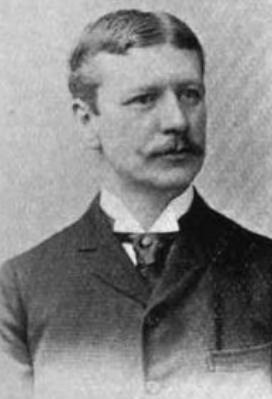
Historical · U.S. House · New York · District 3
William Wallace
Former U.S. Representative · New York District 3 · 1889–1891 · Republican
William Wallace represented New York's District 3 in the United States House of Representatives (1889–1891) for the Republican party. The page below collects sourced biographical facts, term history, committee roles, and provenance for Wallace.
Bioguide ID: W000085
Key facts
- Full name
- William Wallace
- State
- New York
- District
- District 3
- Party
- Republican
- House service
- 1889–1891
- First House term
- 1889
- Status
- Left office
- Current term ends
- —
- Born
- 1856
- Bioguide ID
- W000085
- Committee assignments
- —
- Dataset version
- 1.20260606
Biographical narrative
851 words · sourced from the Wikipedia REST extract
William Wallace was a U.S. Representative from New York, serving in the House of Representatives during the late 19th century. A member of the Republican Party, he represented New York's 3rd congressional district from 1889 until 1891. Born in Brooklyn in 1856, Wallace pursued a career in law and public service, which included roles as an assistant U.S. attorney and judge advocate general. After his congressional tenure, he returned to his legal practice and also engaged in banking before his death in 1901.
Early life and career
William Wallace was born on May 21, 1856, in Brooklyn, New York. He received his early education at the Adelphi Academy in Brooklyn, graduating in 1873. Following his secondary education, he attended Wesleyan University in Middletown, Connecticut, where he completed his undergraduate studies in 1876. Wallace's academic journey continued at the law department of Columbia College, now known as Columbia University, from which he graduated in 1878. This educational background laid a solid foundation for his future career in law.
After completing his legal education, Wallace began practicing law in New York City. His early career was marked by a significant role as an assistant United States Attorney for the Southern District of New York, a position he held from 1880 to 1883. This role allowed him to gain valuable experience in the legal system and public service, enhancing his reputation in the legal community. His work as a federal prosecutor involved handling various legal matters, which likely contributed to his understanding of legislative processes and governance.
In 1894, Wallace was appointed as the judge advocate general on the staff of Governor Levi Morton. This position involved overseeing legal matters related to the state military and advising the governor on legal issues. His appointment to this role further demonstrated his legal acumen and commitment to public service, as he took on responsibilities that were crucial for the governance of the state.
House tenure
William Wallace's political career reached a significant milestone when he was elected to the United States House of Representatives. He was elected as a Republican to the Fifty-first Congress, which convened on March 4, 1889. During his time in office, Wallace represented New York's 3rd congressional district, a position that allowed him to influence national legislation and advocate for the interests of his constituents.
His term in the House lasted until March 3, 1891. Throughout his congressional tenure, Wallace was involved in various legislative activities, contributing to discussions and decisions that shaped policies during that period. However, his time in Congress was relatively brief, as he was not successful in his bid for reelection to the Fifty-second Congress in 1890. The reasons for his defeat are not detailed in the available records, but it is not uncommon for incumbents to face challenges in subsequent elections.
After concluding his service in the House, Wallace returned to Brooklyn, where he resumed his legal practice. His experience in Congress likely enriched his legal career, providing him with insights into the intersection of law and politics. He continued to engage with the community through his legal work, maintaining a presence in Brooklyn's legal and civic circles.
Legislative focus and committees
While specific details regarding William Wallace's legislative focus and committee assignments during his time in Congress are not provided in the available records, it can be inferred that his background in law and public service would have influenced his legislative priorities. As a member of the Republican Party during a period marked by significant political and social changes in the United States, Wallace would have been involved in discussions surrounding key issues of the time.
The late 19th century was characterized by rapid industrialization, urbanization, and significant immigration, which presented both opportunities and challenges for lawmakers. Issues such as labor rights, economic policy, and infrastructure development were central to the national discourse. Given his legal background, Wallace may have been particularly interested in matters related to the judiciary, civil rights, and governance.
In addition to his legislative duties, Wallace's role as a former assistant U.S. attorney and judge advocate general likely provided him with a unique perspective on the legal implications of proposed legislation. His experience may have allowed him to contribute meaningfully to debates on legal reform and the administration of justice.
After leaving Congress, Wallace continued to be active in the legal field and also ventured into banking, indicating a diverse professional portfolio. His engagement in banking suggests an interest in economic matters and financial systems, which were increasingly relevant during his lifetime as the nation navigated the complexities of a growing economy.
William Wallace passed away on September 4, 1901, at his summer home in Warwick, New York. His contributions to public service, both as a legal professional and as a U.S. Representative, reflect a commitment to the principles of governance and civic responsibility. He was interred in Greenwood Cemetery in Brooklyn, New York, marking the end of a life dedicated to law and public service. Wallace's legacy is remembered through his contributions to the legal and political landscape of New York during a transformative period in American history.
Notable legislation
Sponsored and co-sponsored legislation for William Wallace is pending operator curation. The biographical narrative above carries the same provenance trail until per-bill rows are written.
Sources
- [1]https://en.wikipedia.org/wiki/William_C._WallaceWikipedia · retrieved 2026-06-06
Notable quotes
Sourced quotes for William Wallace are pending operator curation. Narrative-scope provenance remains attached below.
Sources
- [1]https://en.wikipedia.org/wiki/William_C._WallaceWikipedia · retrieved 2026-06-06
Key positions
Curated policy positions for William Wallace are pending operator review. The biographical narrative above carries the same provenance trail until per-topic positions are written.
Sources
- [1]https://en.wikipedia.org/wiki/William_C._WallaceWikipedia · retrieved 2026-06-06
Terms served
- 1889–1891U.S. House · Term 1 · Republican
Sources & provenance
Every attributable claim above carries a per-section [N] marker that resolves to the corresponding URL below. Each entry records the upstream provider, the canonical URL, and the timestamp at which the source was retrieved by the ingest pipeline.
Key facts
- https://bioguide.congress.gov/search/bio/W000085bioguide · retrieved 2026-06-06
- https://www.govtrack.us/congress/members/411264govtrack · retrieved 2026-06-06
Biographical narrative
- https://en.wikipedia.org/wiki/William_C._Wallacewikipedia · retrieved 2026-06-06
Find your representative
Every U.S. state elects representatives by district. Browse New York’s delegation, the full former-representative roster, or explore the role and term length.
Related on The Candidate
- Preceded by Stephen WhiteEarlier holder of the New York District 3 House seat · Republican.Open
- Succeeded by Joseph HendrixLater holder of the New York District 3 House seat · Democratic.Open
- Abel HuntingtonFormer U.S. Representative · New York District 1 · JacksonOpen
- Alfred ChapinFormer U.S. Representative · New York District 1 · DemocraticOpen
- Cadwallader ColdenFormer U.S. Representative · New York District 1 · FederalistOpen
- Charles FloydFormer U.S. Representative · New York District 1 · DemocraticOpen