
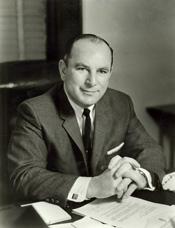
Historical · U.S. House · New York · District 32
James Hanley
Former U.S. Representative · New York District 32 · 1965–1981 · Democratic
James Hanley represented New York's District 32 in the United States House of Representatives (1965–1981) for the Democratic party. The page below collects sourced biographical facts, term history, committee roles, and provenance for Hanley.
Bioguide ID: H000158
Key facts
- Full name
- James Hanley
- State
- New York
- District
- District 32
- Party
- Democratic
- House service
- 1965–1981
- First House term
- 1965
- Status
- Left office
- Current term ends
- —
- Born
- 1920
- Bioguide ID
- H000158
- Committee assignments
- —
- Dataset version
- 1.20260605
Biographical narrative
919 words · sourced from the Wikipedia REST extract
James M. Hanley was an American businessman, World War II veteran, and politician who served as a U.S. Representative for New York's 32nd congressional district. A member of the Democratic Party, he held office for eight consecutive terms from 1965 until 1981. Hanley was notable for being the first Democrat to represent his district in Congress since 1915 and for his active involvement in various civic and fraternal organizations throughout his life.
Early life and career
James M. Hanley was born on July 19, 1920, in Syracuse, New York. He completed his education at St. Lucy's Academy, graduating in 1938. Following his education, Hanley entered the funeral industry, becoming a funeral director and eventually the owner and operator of the Callahan-Hanley-Mooney Funeral Home. His career in this field established him as a respected figure in his community.
In addition to his professional pursuits, Hanley was deeply involved in civic and religious activities. His commitment to community service was evident through his participation in numerous organizations. He was a member of the Syracuse-area chamber of commerce and held various positions in fraternal organizations such as the American Legion, Knights of Columbus, and Elks. He also contributed to cultural and social organizations, including the Syracuse-area Liederkranz and Hibernians. His engagement extended to youth and social service organizations, such as Boys Town and the Onondaga County Arc.
Hanley's community involvement was recognized in 1967 when he received an honorary degree of LL.D. from Le Moyne College, reflecting his contributions to the local community and his commitment to public service. His active participation in various organizations underscored his dedication to the welfare of his community and his belief in civic responsibility.
In addition to his civic engagements, Hanley served in the United States Army during World War II. He enlisted in 1942 and served until 1946, participating in significant military operations during the conflict. His service in the Army contributed to his understanding of national issues and shaped his perspective as a public servant.
House tenure
Hanley's political career began in earnest in 1964 when he successfully ran as a Democratic candidate for the congressional seat representing Syracuse. His election marked a significant political shift, as he became the first Democrat to hold this position since 1915. Hanley's tenure in the U.S. House of Representatives began in 1965 and continued for eight terms, concluding in 1981. Throughout his time in Congress, he was known for his liberal stance on various issues and his support for key initiatives of the era.
During his congressional career, Hanley was an advocate for the Great Society programs introduced by President Lyndon B. Johnson. He supported initiatives aimed at reducing poverty, improving education, and expanding healthcare access. His commitment to social welfare was evident in his support for the expansion of Medicare and the Head Start program, which aimed to provide early childhood education to disadvantaged children.
In his final term, Hanley served as the Chairman of the Committee on Post Office and Civil Service, a position that allowed him to influence legislation related to postal services and civil service employment. His leadership in this role demonstrated his ability to navigate complex legislative issues and advocate for the interests of his constituents.
Despite his accomplishments, Hanley chose not to seek reelection in 1980. His decision marked the end of a significant chapter in the political landscape of Syracuse, as no other Democrat has represented the area in Congress for two consecutive terms since his departure. His exit from the political scene reflected the changing dynamics of the Democratic Party in the region and the challenges faced by subsequent candidates.
Legislative focus and committees
Throughout his time in Congress, Hanley focused on a range of legislative issues that aligned with his liberal values. He was a strong supporter of social programs designed to assist vulnerable populations, including the elderly and children. His advocacy for the Great Society initiatives underscored his commitment to addressing social inequalities and promoting access to essential services.
Hanley's support for the Equal Rights Amendment was another significant aspect of his legislative focus. He championed efforts to secure equal rights for women, reflecting the broader societal changes occurring during the 1960s and 1970s. His alignment with progressive causes positioned him as a prominent voice for social justice within the Democratic Party.
In addition to his work on social issues, Hanley's role as Chairman of the Committee on Post Office and Civil Service allowed him to address matters related to government operations and public service employment. His leadership in this committee provided him with a platform to influence policies affecting postal services and civil service regulations, which are critical components of the federal government.
Hanley's legislative contributions were characterized by a commitment to public service and a focus on improving the lives of his constituents. His tenure in Congress reflected the evolving political landscape of the time, as he navigated the complexities of legislative processes while advocating for policies that aligned with his values.
After leaving Congress, Hanley continued to engage in public service as a government relations consultant in Washington, D.C., until 1990. He later retired to upstate New York, where he remained active in his community until his passing on October 16, 2003. Hanley's legacy is commemorated in Syracuse, where a federal building bears his name, serving as a reminder of his contributions to the community and the nation. His life and career reflect the impact of dedicated public service and the importance of civic engagement in shaping local and national policies.
Notable legislation
Sponsored and co-sponsored legislation for James Hanley is pending operator curation. The biographical narrative above carries the same provenance trail until per-bill rows are written.
Sources
- [1]https://en.wikipedia.org/wiki/James_M._HanleyWikipedia · retrieved 2026-06-05
Notable quotes
Sourced quotes for James Hanley are pending operator curation. Narrative-scope provenance remains attached below.
Sources
- [1]https://en.wikipedia.org/wiki/James_M._HanleyWikipedia · retrieved 2026-06-05
Key positions
Curated policy positions for James Hanley are pending operator review. The biographical narrative above carries the same provenance trail until per-topic positions are written.
Sources
- [1]https://en.wikipedia.org/wiki/James_M._HanleyWikipedia · retrieved 2026-06-05
Terms served
- 1965–1967U.S. House · Term 1 · Democratic
- 1967–1969U.S. House · Term 2 · Democratic
- 1969–1971U.S. House · Term 3 · Democratic
- 1971–1973U.S. House · Term 4 · Democratic
- 1973–1975U.S. House · Term 5 · Democratic
- 1975–1977U.S. House · Term 6 · Democratic
- 1977–1979U.S. House · Term 7 · Democratic
- 1979–1981U.S. House · Term 8 · Democratic
Sources & provenance
Every attributable claim above carries a per-section [N] marker that resolves to the corresponding URL below. Each entry records the upstream provider, the canonical URL, and the timestamp at which the source was retrieved by the ingest pipeline.
Key facts
- https://bioguide.congress.gov/search/bio/H000158bioguide · retrieved 2026-06-05
- https://www.govtrack.us/congress/members/405040govtrack · retrieved 2026-06-05
Biographical narrative
- https://en.wikipedia.org/wiki/James_M._Hanleywikipedia · retrieved 2026-06-05
Find your representative
Every U.S. state elects representatives by district. Browse New York’s delegation, the full former-representative roster, or explore the role and term length.
Related on The Candidate
- Preceded by Pat KearneyEarlier holder of the New York District 32 House seat · Republican.Open
- Abel HuntingtonFormer U.S. Representative · New York District 1 · JacksonOpen
- Alfred ChapinFormer U.S. Representative · New York District 1 · DemocraticOpen
- Cadwallader ColdenFormer U.S. Representative · New York District 1 · FederalistOpen
- Charles FloydFormer U.S. Representative · New York District 1 · DemocraticOpen
- Democratic PartyFederal candidates and office holders on the Democratic line.Open