
Historical · U.S. House · New York · District 42
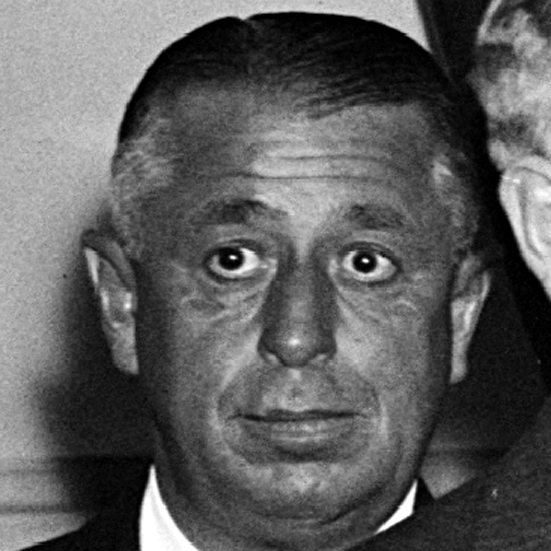
Walter Andrews
Former U.S. Representative · New York District 42 · 1931–1949 · Republican
Walter Andrews represented New York's District 42 in the United States House of Representatives (1931–1949) for the Republican party. The page below collects sourced biographical facts, term history, committee roles, and provenance for Andrews.
Bioguide ID: A000250
Key facts
- Full name
- Walter Andrews
- State
- New York
- District
- District 42
- Party
- Republican
- House service
- 1931–1949
- First House term
- 1931
- Status
- Left office
- Current term ends
- —
- Born
- 1889
- Bioguide ID
- A000250
- Committee assignments
- —
- Dataset version
- 1.20260605
Biographical narrative
1,012 words · sourced from the Wikipedia REST extract
Walter Andrews was an American politician who served as a Republican member of the United States House of Representatives, representing New York's 42nd congressional district. His congressional career spanned nearly two decades, during which he was involved in various legislative activities and held significant leadership roles. Born in 1889, Andrews had a diverse background that included military service during World War I and a brief stint as a college football coach. He passed away in 1949, leaving behind a legacy of public service.
Early life and career
Walter Gresham Andrews was born on July 16, 1889, in Evanston, Illinois, to William Henry Andrews and Kate Gresham Andrews. He was named after his grandfather, Walter Q. Gresham, who served as the U.S. Secretary of State. Andrews spent his formative years in Buffalo, New York, where he attended local public schools. He later graduated from the Lawrenceville School in 1908, a prestigious preparatory institution, before pursuing higher education at Princeton Law School, from which he graduated in 1913.
In addition to his academic pursuits, Andrews had a brief career in athletics. He served as the head coach for the Princeton Tigers football team in 1913, showcasing his leadership and team-building skills. His involvement in sports would later reflect his commitment to teamwork and discipline, traits that would serve him well in his political career.
With the onset of World War I, Andrews enlisted in the military. He initially served as a private on the Mexican border in 1916 with Troop I of the First New York Cavalry. His military service continued as he was commissioned as a second lieutenant and became part of the Machine Gun Group of the First New York Cavalry in 1917. Andrews was deployed to France, where he served with the 107th Infantry Regiment of the Twenty-seventh Division. His service was marked by bravery; he was wounded during an attack on the Hindenburg Line in 1918 and was subsequently awarded the Distinguished Service Cross for his actions.
After the war, Andrews transitioned to civilian life and took on various roles in the business sector. He worked as the superintendent and central sales manager for Pratt & Lambert, Inc., a paint and coatings company based in Buffalo, New York, until 1925. His career continued to evolve as he took on public service roles, including serving as the supervisor for the fifteenth federal census in the seventh district of New York in 1929 and 1930. Additionally, he was appointed as the director of the Buffalo General Hospital, further establishing his commitment to community service.
House tenure
Walter Andrews entered the political arena when he was elected to the United States House of Representatives in 1930. His first term began on March 4, 1931, representing New York's 40th congressional district. Over the years, he was re-elected multiple times, ultimately serving until January 3, 1945. Following a redistricting, he continued his congressional career by representing New York's 42nd congressional district from January 3, 1945, until the conclusion of his tenure on January 3, 1949.
During his time in Congress, Andrews was involved in various legislative initiatives and discussions, reflecting the political landscape of the era. His service coincided with significant events in U.S. history, including the Great Depression and World War II. As a member of the House, he was part of the broader legislative efforts to address the challenges facing the nation during these tumultuous times.
Andrews held notable leadership positions, including serving as the chairman of the United States House Committee on Armed Services during the 80th Congress. In this role, he was responsible for overseeing matters related to national defense and military affairs, which were particularly critical in the post-war context. His leadership on this committee underscored his commitment to ensuring the safety and security of the nation.
Despite his active role in Congress, Andrews's health became a concern toward the end of his tenure. He chose not to seek renomination for another term due to medical advice to take a more relaxed approach to life. This decision marked the end of his nearly two-decade-long career in the U.S. House of Representatives.
Legislative focus and committees
Throughout his congressional career, Walter Andrews focused on a range of issues that were pertinent to his constituents and the nation. His tenure in the House coincided with significant legislative developments, including those related to national defense, economic recovery, and social welfare programs. As a member of the Republican Party, he often aligned with the party's broader goals and objectives during a time of considerable political change.
Andrews's role as chairman of the House Committee on Armed Services was particularly significant, especially given the context of the post-World War II era. In this capacity, he was involved in discussions and decisions regarding military funding, defense policy, and the overall readiness of the armed forces. His leadership on this committee allowed him to influence key legislation that shaped the future of U.S. military strategy and operations.
In addition to his focus on military affairs, Andrews was engaged in various other legislative initiatives that addressed the needs of his constituents in New York. His background in business and public service informed his approach to legislation, as he sought to balance economic growth with social responsibility. His experience as a director of a hospital also provided him with insights into healthcare issues, which were increasingly becoming a topic of national discussion during his time in office.
Walter Andrews's legislative focus and committee work reflected his dedication to public service and his commitment to addressing the challenges faced by the nation and his constituents. His contributions to the House of Representatives were part of a broader narrative of American governance during a period marked by significant change and development.
Andrews passed away on March 5, 1949, from a heart attack while staying at a hotel in Daytona Beach, Florida. He was cremated, and his ashes were interred at Old Fort Niagara Cemetery in Youngstown, New York. His life and career remain a testament to the complexities of American political life in the early to mid-20th century.
Notable legislation
Sponsored and co-sponsored legislation for Walter Andrews is pending operator curation. The biographical narrative above carries the same provenance trail until per-bill rows are written.
Sources
- [1]https://en.wikipedia.org/wiki/Walter_G._AndrewsWikipedia · retrieved 2026-06-05
Notable quotes
Sourced quotes for Walter Andrews are pending operator curation. Narrative-scope provenance remains attached below.
Sources
- [1]https://en.wikipedia.org/wiki/Walter_G._AndrewsWikipedia · retrieved 2026-06-05
Key positions
Curated policy positions for Walter Andrews are pending operator review. The biographical narrative above carries the same provenance trail until per-topic positions are written.
Sources
- [1]https://en.wikipedia.org/wiki/Walter_G._AndrewsWikipedia · retrieved 2026-06-05
Terms served
- 1931–1933U.S. House · Term 1 · Republican
- 1933–1935U.S. House · Term 2 · Republican
- 1935–1937U.S. House · Term 3 · Republican
- 1937–1939U.S. House · Term 4 · Republican
- 1939–1941U.S. House · Term 5 · Republican
- 1941–1943U.S. House · Term 6 · Republican
- 1943–1945U.S. House · Term 7 · Republican
- 1945–1947U.S. House · Term 8 · Republican
- 1947–1949U.S. House · Term 9 · Republican
Sources & provenance
Every attributable claim above carries a per-section [N] marker that resolves to the corresponding URL below. Each entry records the upstream provider, the canonical URL, and the timestamp at which the source was retrieved by the ingest pipeline.
Key facts
- https://bioguide.congress.gov/search/bio/A000250bioguide · retrieved 2026-06-05
- https://www.govtrack.us/congress/members/400886govtrack · retrieved 2026-06-05
Biographical narrative
- https://en.wikipedia.org/wiki/Walter_G._Andrewswikipedia · retrieved 2026-06-05
Find your representative
Every U.S. state elects representatives by district. Browse New York’s delegation, the full former-representative roster, or explore the role and term length.
Related on The Candidate
- Preceded by William WaldowEarlier holder of the New York District 42 House seat · Republican.Open
- Succeeded by William PfeifferLater holder of the New York District 42 House seat · Republican.Open
- Abel HuntingtonFormer U.S. Representative · New York District 1 · JacksonOpen
- Alfred ChapinFormer U.S. Representative · New York District 1 · DemocraticOpen
- Cadwallader ColdenFormer U.S. Representative · New York District 1 · FederalistOpen
- Charles FloydFormer U.S. Representative · New York District 1 · DemocraticOpen