
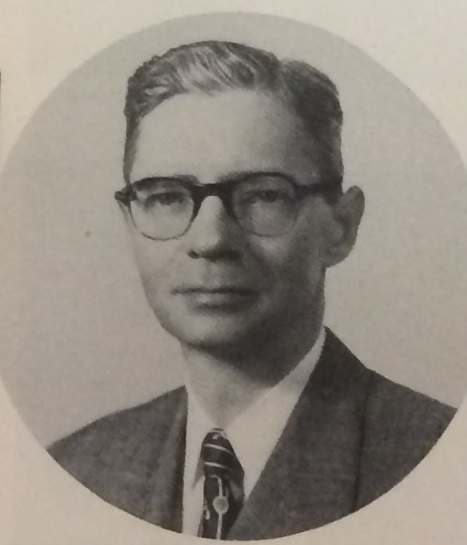
Historical · U.S. House · New York · District 42
William Pfeiffer
Former U.S. Representative · New York District 42 · 1949–1951 · Republican
William Pfeiffer represented New York's District 42 in the United States House of Representatives (1949–1951) for the Republican party. The page below collects sourced biographical facts, term history, committee roles, and provenance for Pfeiffer.
Bioguide ID: P000286
Key facts
- Full name
- William Pfeiffer
- State
- New York
- District
- District 42
- Party
- Republican
- House service
- 1949–1951
- First House term
- 1949
- Status
- Left office
- Current term ends
- —
- Born
- 1907
- Bioguide ID
- P000286
- Committee assignments
- —
- Dataset version
- 1.20260605
Biographical narrative
1,087 words · sourced from the Wikipedia REST extract
William Pfeiffer was a Republican politician who served as a U.S. Representative for New York's 42nd congressional district. His tenure in the House of Representatives lasted from January 3, 1949, until January 3, 1951. Pfeiffer's political career was marked by his involvement in various capacities within the Republican Party and his subsequent work in the banking sector after leaving Congress. His contributions to local and state politics, as well as his engagement in community service, reflect a commitment to public service that extended beyond his time in office.
Early life and career
William Louis Pfeiffer was born on May 29, 1907, in Buffalo, New York. Growing up in a city known for its industrial and economic significance, Pfeiffer received his early education in the public school system of Buffalo. He graduated from Buffalo's Technical High School, where he likely developed foundational skills that would serve him in his future career.
After completing his education, Pfeiffer began his professional journey as a timekeeper for the American Radiator Company. This role marked the beginning of his career in the business sector, where he gained valuable experience that would later inform his work in public service. While employed at the American Radiator Company, he also pursued studies in accounting, which would further enhance his qualifications in financial management and oversight.
Pfeiffer's career progressed as he took on managerial roles in several companies within the Buffalo area. His growing involvement in the business community provided him with insights into the economic challenges and opportunities facing local businesses. In 1938, he transitioned into politics when he was appointed as the chief staff aide for the New York State Republican Congressional Committee. This position allowed him to engage with political processes and develop a deeper understanding of legislative affairs.
From 1939 to 1940, Pfeiffer served as a member of the New York State Assembly journal clerk's staff, where he gained firsthand experience in the legislative process. His involvement in state politics continued as he became the secretary of the Erie County Republican Committee from 1941 to 1942. This role further solidified his connections within the Republican Party and provided him with a platform to influence local political dynamics.
In the early 1940s, Pfeiffer expanded his public service portfolio by serving as a personnel officer for the Erie County Board of Supervisors from 1942 to 1943. His experience in this role contributed to his understanding of governmental operations and human resource management. Following this position, he served as executive assistant to the New York State Comptroller from 1943 to 1946, where he likely gained insights into state financial management and oversight.
Pfeiffer's career in public service culminated in his role as Deputy Comptroller from 1946 to 1948. This position allowed him to play a significant part in the financial administration of the state, further enhancing his qualifications for a future role in Congress. His extensive experience in both the private and public sectors positioned him as a knowledgeable candidate for the U.S. House of Representatives.
House tenure
In 1948, William Pfeiffer successfully ran for a seat in the United States House of Representatives, representing New York's 42nd congressional district. His election marked the beginning of his congressional career, which commenced on January 3, 1949. During his time in the House, Pfeiffer served in the 81st Congress, a period characterized by significant post-World War II legislative activity and the early stages of the Cold War.
Pfeiffer's tenure in Congress was relatively brief, lasting until January 3, 1951. He chose not to seek renomination in 1950, concluding his time in the House after a single term. While specific details regarding his legislative initiatives and voting record during his time in office are not provided, it is evident that his experience in various political roles contributed to his understanding of the legislative process and the needs of his constituents.
Following his departure from Congress, Pfeiffer continued to be active in the Republican Party. He served as the chairman of the New York State Republican Committee from 1949 to 1953, a role that allowed him to influence state-level party strategies and candidate selections. His leadership in this capacity demonstrated his ongoing commitment to the Republican Party and its objectives.
Legislative focus and committees
While specific details regarding William Pfeiffer's legislative focus and committee assignments during his time in the House of Representatives are not available, his background in finance and public administration likely informed his interests in economic and fiscal policy. Given his extensive experience in various governmental roles, it is reasonable to infer that he may have been involved in discussions related to budgeting, taxation, and economic development, which were critical issues during the post-war period.
After concluding his congressional career, Pfeiffer transitioned to the banking sector, where he continued to apply his financial expertise. He relocated to Kattskill Bay and became involved with the Bank of North America in New York City, serving on its board of directors and as chairman of the executive committee from 1952 to 1966. This role allowed him to influence banking practices and policies, further contributing to his legacy in public service.
In addition to his banking career, Pfeiffer maintained a strong connection to community service and education. He served as a member of the board of trustees for the Albany Savings Bank from 1955 to 1982, where he held the position of president from 1967 to 1971 and later became chairman of the board and chief executive officer from 1971 to 1975. His involvement in these financial institutions reflects a commitment to fostering economic growth and stability in the region.
Pfeiffer's engagement in Republican politics continued throughout his life, as he successfully managed the campaigns of notable figures such as Nelson Rockefeller during his gubernatorial runs in New York in the early 1960s. His contributions to political campaigns and party organization underscored his dedication to the principles of the Republican Party.
In addition to his political and banking endeavors, Pfeiffer served as a trustee for Albany Medical College and Siena College, indicating his commitment to education and healthcare. His involvement in these institutions highlights his belief in the importance of community service and the role of education in fostering a prosperous society.
William Pfeiffer passed away on July 22, 1985, in Glens Falls, New York. His life and career reflect a dedication to public service, economic development, and community engagement. Through his various roles in politics, banking, and education, Pfeiffer left a lasting impact on the communities he served and the institutions with which he was associated.
Notable legislation
Sponsored and co-sponsored legislation for William Pfeiffer is pending operator curation. The biographical narrative above carries the same provenance trail until per-bill rows are written.
Sources
- [1]https://en.wikipedia.org/wiki/William_L._PfeifferWikipedia · retrieved 2026-06-05
Notable quotes
Sourced quotes for William Pfeiffer are pending operator curation. Narrative-scope provenance remains attached below.
Sources
- [1]https://en.wikipedia.org/wiki/William_L._PfeifferWikipedia · retrieved 2026-06-05
Key positions
Curated policy positions for William Pfeiffer are pending operator review. The biographical narrative above carries the same provenance trail until per-topic positions are written.
Sources
- [1]https://en.wikipedia.org/wiki/William_L._PfeifferWikipedia · retrieved 2026-06-05
Terms served
- 1949–1951U.S. House · Term 1 · Republican
Sources & provenance
Every attributable claim above carries a per-section [N] marker that resolves to the corresponding URL below. Each entry records the upstream provider, the canonical URL, and the timestamp at which the source was retrieved by the ingest pipeline.
Key facts
- https://bioguide.congress.gov/search/bio/P000286bioguide · retrieved 2026-06-05
- https://www.govtrack.us/congress/members/408686govtrack · retrieved 2026-06-05
Biographical narrative
- https://en.wikipedia.org/wiki/William_L._Pfeifferwikipedia · retrieved 2026-06-05
Find your representative
Every U.S. state elects representatives by district. Browse New York’s delegation, the full former-representative roster, or explore the role and term length.
Related on The Candidate
- Preceded by Walter AndrewsEarlier holder of the New York District 42 House seat · Republican.Open
- Abel HuntingtonFormer U.S. Representative · New York District 1 · JacksonOpen
- Alfred ChapinFormer U.S. Representative · New York District 1 · DemocraticOpen
- Cadwallader ColdenFormer U.S. Representative · New York District 1 · FederalistOpen
- Charles FloydFormer U.S. Representative · New York District 1 · DemocraticOpen
- Republican PartyFederal candidates and office holders on the Republican line.Open