
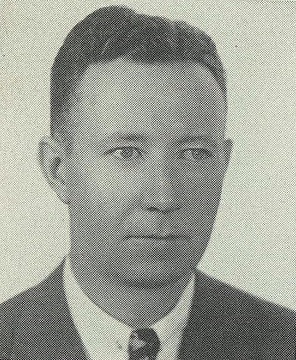
Historical · U.S. House · New York · District 5
Thomas Quinn
Former U.S. Representative · New York District 5 · 1949–1953 · Democratic
Thomas Quinn represented New York's District 5 in the United States House of Representatives (1949–1953) for the Democratic party. The page below collects sourced biographical facts, term history, committee roles, and provenance for Quinn.
Bioguide ID: Q000021
Key facts
- Full name
- Thomas Quinn
- State
- New York
- District
- District 5
- Party
- Democratic
- House service
- 1949–1953
- First House term
- 1949
- Status
- Left office
- Current term ends
- —
- Born
- 1903
- Bioguide ID
- Q000021
- Committee assignments
- —
- Dataset version
- 1.20260605
Biographical narrative
993 words · sourced from the Wikipedia REST extract
Thomas Vincent Quinn was an American jurist and politician who served as a U.S. Representative for New York's 5th congressional district. A member of the Democratic Party, he held office from 1949 until 1953. Following his tenure in Congress, Quinn transitioned into a role as the Queens County District Attorney and later served as a judge in various capacities within the New York City court system. His career was marked by significant legal and political involvement, as well as challenges related to criminal charges that arose during his time in office.
Early life and career
Thomas Vincent Quinn was born on March 16, 1903, in Long Island City, New York. He grew up in Queens, where he attended local schools and graduated from William Cullen Bryant High School. His educational journey continued at Fordham University School of Law, where he earned his LL.B. degree in 1924. Following his graduation, Quinn began practicing law in New York City, establishing a foundation for his future legal and political career.
Quinn's early career included significant roles within the legal system. He was appointed as the Assistant District Attorney of Queens County, serving from September 1931 to August 1934. This position allowed him to gain valuable experience in the legal field and to build connections within the Democratic Party. After his tenure as Assistant District Attorney, Quinn moved on to serve as an Assistant United States Attorney for the Eastern District of New York from 1934 until 1947. During this period, he also held the position of Acting U.S. Attorney on two occasions, further solidifying his reputation as a capable legal professional.
In July 1947, Quinn's career took a notable turn when he was appointed by President Harry Truman as an Assistant United States Attorney General for the Criminal Division. His confirmation came in September of the same year. In this role, Quinn was involved in high-profile post-war legal cases, including those of Iva Toguri D'Aquino, commonly known as Tokyo Rose, and Robert Henry Best, both of whom were accused of wartime propaganda activities. His work at the Justice Department provided him with a national platform and increased his visibility in the political arena.
After approximately 13 months in this federal position, Quinn resigned in August 1948 to pursue a congressional seat. His decision to run for office reflected his ambition to influence policy and serve his constituents directly. He entered the race for New York's 5th congressional district, a competitive political landscape where he aimed to secure a seat in the House of Representatives.
House tenure
Quinn's political career in the House of Representatives began with his election in 1948, where he successfully defeated the incumbent Republican, Robert Tripp Ross. This victory marked the beginning of his first term, which commenced in 1949. Quinn's election was indicative of the Democratic Party's strength in the region during that period. He was re-elected in 1950, defeating Ross again in a rematch, which demonstrated his continued support among voters in his district.
During his time in Congress, Quinn focused on various legislative issues pertinent to his constituents and the broader national landscape. His tenure, however, was relatively brief, as he chose to run for the position of Queens County District Attorney in 1951. This decision led to his resignation from Congress in December of that year, as he sought to transition from federal to local government.
Quinn's time in the House was characterized by his active engagement in legislative matters, although specific details regarding the bills he sponsored or voted on during his terms are not documented in the provided references. His legal background likely informed his approach to policy-making and his understanding of the implications of legislation on the legal system and public welfare.
Legislative focus and committees
While specific information about the committees Quinn served on during his congressional tenure is not available, it can be inferred that his legal expertise would have influenced his contributions to committees related to legal affairs, public safety, and possibly civil rights. Given the era in which he served, issues such as post-war recovery, civil rights, and economic development were likely significant topics of discussion in Congress.
After leaving Congress, Quinn's career continued to evolve as he took on the role of Queens County District Attorney. His time in this position was marred by controversy when he and his former law partners were indicted in 1953 on charges related to legal fees he allegedly accepted while serving in Congress. These charges raised questions about ethical conduct and the intersection of legal practice and public service. Despite the indictment, Quinn was not convicted, and a judge later ruled that there was insufficient evidence to prove he was aware of any wrongdoing regarding the legal fees in question.
Quinn's political career faced further challenges when he ran for re-election as District Attorney in 1955. He was defeated in the Democratic primary by former state Senator Frank D. O'Connor, a loss that came after a recount revealed a narrow margin of victory for O'Connor. Following this defeat, Quinn's legal troubles continued to unfold, but he ultimately saw the remaining charges against him dismissed in 1957.
In the same year, Quinn was appointed to the New York City Magistrates' Court, where he served until 1962. This position was part of a broader restructuring of the court system, which culminated in the merger of the Magistrates' Court with the New York City Criminal Court. Following the merger, Quinn continued to serve as a judge on the criminal court until his retirement in September 1972.
Quinn's later years were spent in Venice, Florida, where he lived until his death on March 1, 1982. His life and career reflect a complex interplay of legal practice, public service, and the challenges that can arise within the political sphere. Through his various roles, Quinn contributed to the legal and political landscape of New York, leaving a legacy shaped by both his achievements and the controversies he faced.
Notable legislation
Sponsored and co-sponsored legislation for Thomas Quinn is pending operator curation. The biographical narrative above carries the same provenance trail until per-bill rows are written.
Sources
- [1]https://en.wikipedia.org/wiki/T._Vincent_QuinnWikipedia · retrieved 2026-06-05
Notable quotes
Sourced quotes for Thomas Quinn are pending operator curation. Narrative-scope provenance remains attached below.
Sources
- [1]https://en.wikipedia.org/wiki/T._Vincent_QuinnWikipedia · retrieved 2026-06-05
Key positions
Curated policy positions for Thomas Quinn are pending operator review. The biographical narrative above carries the same provenance trail until per-topic positions are written.
Sources
- [1]https://en.wikipedia.org/wiki/T._Vincent_QuinnWikipedia · retrieved 2026-06-05
Terms served
- 1949–1951U.S. House · Term 1 · Democratic
- 1951–1953U.S. House · Term 2 · Democratic
Sources & provenance
Every attributable claim above carries a per-section [N] marker that resolves to the corresponding URL below. Each entry records the upstream provider, the canonical URL, and the timestamp at which the source was retrieved by the ingest pipeline.
Key facts
- https://bioguide.congress.gov/search/bio/Q000021bioguide · retrieved 2026-06-05
- https://www.govtrack.us/congress/members/408983govtrack · retrieved 2026-06-05
Biographical narrative
- https://en.wikipedia.org/wiki/T._Vincent_Quinnwikipedia · retrieved 2026-06-05
Find your representative
Every U.S. state elects representatives by district. Browse New York’s delegation, the full former-representative roster, or explore the role and term length.
Related on The Candidate
- Preceded by James RoeEarlier holder of the New York District 5 House seat · Democratic.Open
- Succeeded by Albert BoschLater holder of the New York District 5 House seat · Republican.Open
- Abel HuntingtonFormer U.S. Representative · New York District 1 · JacksonOpen
- Alfred ChapinFormer U.S. Representative · New York District 1 · DemocraticOpen
- Cadwallader ColdenFormer U.S. Representative · New York District 1 · FederalistOpen
- Charles FloydFormer U.S. Representative · New York District 1 · DemocraticOpen