
Historical · U.S. House · Ohio · District 1
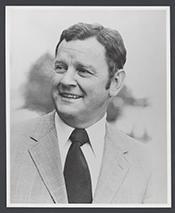
Thomas Luken
Former U.S. Representative · Ohio District 1 · 1973–1991 · Democratic
Thomas Luken represented Ohio's District 1 in the United States House of Representatives (1973–1991) for the Democratic party. The page below collects sourced biographical facts, term history, committee roles, and provenance for Luken.
Bioguide ID: L000508
Key facts
- Full name
- Thomas Luken
- State
- Ohio
- District
- District 1
- Party
- Democratic
- House service
- 1973–1991
- First House term
- 1973
- Status
- Left office
- Current term ends
- —
- Born
- 1925
- Bioguide ID
- L000508
- Committee assignments
- —
- Dataset version
- 1.20260605
Biographical narrative
952 words · sourced from the Wikipedia REST extract
Thomas A. Luken was an American politician who served as a member of the Democratic Party in the United States House of Representatives, representing Ohio's 1st congressional district from the mid-1970s until the early 1990s. His political career spanned nearly two decades, during which he was known for his involvement in local and national issues. Luken's background as a lawyer and his experiences in various public service roles shaped his approach to governance and legislation. He was a notable figure in Ohio politics, particularly in Cincinnati, where he held several key positions, including mayor and city council member.
Early life and career
Thomas Andrew Luken was born on July 9, 1925. He completed his high school education at Purcell High School in 1942. Shortly thereafter, Luken enlisted in the United States Marine Corps, serving during World War II. His military service contributed to his understanding of national issues and public service, which would later influence his political career.
After the war, Luken pursued higher education, earning a Bachelor of Arts degree from Xavier University in Cincinnati in 1947. He initially attended Bowling Green State University, where he began his collegiate studies. Following his undergraduate education, Luken continued his academic journey by obtaining a law degree from the Salmon P. Chase College of Law at Northern Kentucky University in 1950. This legal background provided him with a strong foundation for his future roles in public service and politics.
Luken's professional career began in public service when he was appointed solicitor for the city of Deer Park, Ohio, a position he held from 1955 to 1961. His work in this role allowed him to gain valuable experience in municipal law and governance. Subsequently, he was appointed as the United States District Attorney for the Southern District of Ohio, serving from 1961 to 1964. This position further solidified his reputation as a dedicated public servant and legal professional.
In addition to his roles in law enforcement, Luken was actively involved in local government. He served on the Cincinnati City Council from 1964 to 1967 and again from 1969 to 1974. His tenure on the council provided him with insights into the needs and concerns of his constituents. Luken also held the position of mayor of Cincinnati from 1971 to 1972, during which he focused on various urban issues and community development initiatives.
House tenure
Luken's congressional career began in 1974 when he won a special election to represent Ohio's 1st congressional district. This election was necessitated by the resignation of Republican William J. Keating. Although Luken initially faced challenges in his political journey, including a defeat later that same year in his bid for a full term against Republican Bill Gradison, he persevered and returned to the political arena.
In 1976, Luken ran for a seat in the neighboring 2nd congressional district, where he successfully unseated the Republican incumbent Donald D. Clancy. This victory marked the beginning of Luken's long tenure in the U.S. House of Representatives, as he commenced his service in the 95th Congress in 1977. Over the course of his eight terms in office, Luken was reelected six times, often by significant margins, reflecting his strong support among constituents in his district.
During his time in Congress, Luken became known for his commitment to representing the interests of his constituents and addressing issues pertinent to Ohio and the nation. His political career was characterized by a focus on local concerns, which resonated with voters in his district. Luken's ability to connect with the community played a crucial role in his electoral success.
In 1983, following the redistricting process that occurred after the 1980 census, Luken's congressional district was renumbered as the 1st District. He and Gradison, his former opponent, effectively swapped districts, which was a notable event in Ohio's political landscape. Luken chose not to seek an eighth term in 1990, deciding instead to retire from Congress. His decision to step down was influenced by a desire to pass the torch to his son, Charlie Luken, who subsequently won a term in his father's former seat.
Legislative focus and committees
Throughout his congressional career, Luken was involved in various legislative initiatives and served on multiple committees. His legal background and experience in local government informed his approach to policy-making and governance. Luken's work in Congress often centered around issues that affected his constituents, including urban development, public safety, and social services.
As a member of the House of Representatives, Luken participated in discussions and debates on a wide range of topics, contributing to the legislative process and advocating for the needs of his district. His time in office coincided with significant national events and policy changes, and he worked to ensure that the voices of his constituents were heard in the halls of Congress.
Luken's legislative focus was reflective of the broader concerns of urban areas during his tenure. He aimed to address issues such as housing, transportation, and economic development, which were critical to the well-being of his constituents. His commitment to public service was evident in his efforts to collaborate with other lawmakers and stakeholders to advance policies that would benefit the community.
In summary, Thomas A. Luken's career as a U.S. Representative was marked by his dedication to public service and his engagement with the issues facing his constituents. His background in law and local government provided him with the tools necessary to navigate the complexities of federal legislation. Luken's legacy in Ohio politics is characterized by his contributions to the community and his role in shaping policy during a transformative period in American history. He passed away on January 10, 2018, leaving behind a legacy of public service and commitment to the people of Ohio.
Notable legislation
Sponsored and co-sponsored legislation for Thomas Luken is pending operator curation. The biographical narrative above carries the same provenance trail until per-bill rows are written.
Sources
- [1]https://en.wikipedia.org/wiki/Tom_LukenWikipedia · retrieved 2026-06-05
Notable quotes
Sourced quotes for Thomas Luken are pending operator curation. Narrative-scope provenance remains attached below.
Sources
- [1]https://en.wikipedia.org/wiki/Tom_LukenWikipedia · retrieved 2026-06-05
Key positions
Curated policy positions for Thomas Luken are pending operator review. The biographical narrative above carries the same provenance trail until per-topic positions are written.
Sources
- [1]https://en.wikipedia.org/wiki/Tom_LukenWikipedia · retrieved 2026-06-05
Terms served
- 1973–1975U.S. House · Term 1 · Democratic
- 1977–1979U.S. House · Term 2 · Democratic
- 1979–1981U.S. House · Term 3 · Democratic
- 1981–1983U.S. House · Term 4 · Democratic
- 1983–1985U.S. House · Term 5 · Democratic
- 1985–1987U.S. House · Term 6 · Democratic
- 1987–1989U.S. House · Term 7 · Democratic
- 1989–1991U.S. House · Term 8 · Democratic
Sources & provenance
Every attributable claim above carries a per-section [N] marker that resolves to the corresponding URL below. Each entry records the upstream provider, the canonical URL, and the timestamp at which the source was retrieved by the ingest pipeline.
Key facts
- https://bioguide.congress.gov/search/bio/L000508bioguide · retrieved 2026-06-05
- https://www.govtrack.us/congress/members/406994govtrack · retrieved 2026-06-05
Biographical narrative
- https://en.wikipedia.org/wiki/Tom_Lukenwikipedia · retrieved 2026-06-05
Find your representative
Every U.S. state elects representatives by district. Browse Ohio’s delegation, the full former-representative roster, or explore the role and term length.
Related on The Candidate
- Preceded by John GilliganEarlier holder of the Ohio District 1 House seat · Democratic.Open
- Succeeded by Charles LukenLater holder of the Ohio District 1 House seat · Democratic.Open
- Aaron PerryFormer U.S. Representative · Ohio District 1 · RepublicanOpen
- Alexander DuncanFormer U.S. Representative · Ohio District 1 · DemocraticOpen
- Bellamy StorerFormer U.S. Representative · Ohio District 1 · WhigOpen
- Bellamy StorerFormer U.S. Representative · Ohio District 1 · RepublicanOpen