
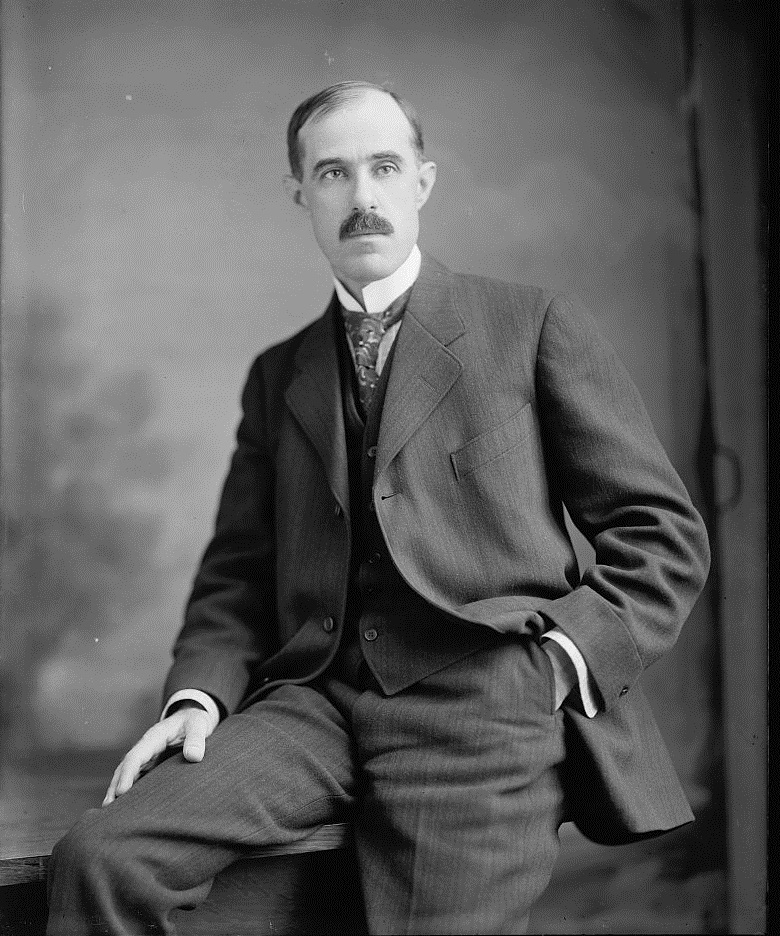
Historical · U.S. House · Ohio · District 10
Henry Bannon
Former U.S. Representative · Ohio District 10 · 1905–1909 · Republican
Henry Bannon represented Ohio's District 10 in the United States House of Representatives (1905–1909) for the Republican party. The page below collects sourced biographical facts, term history, committee roles, and provenance for Bannon.
Bioguide ID: B000118
Key facts
- Full name
- Henry Bannon
- State
- Ohio
- District
- District 10
- Party
- Republican
- House service
- 1905–1909
- First House term
- 1905
- Status
- Left office
- Current term ends
- —
- Born
- 1867
- Bioguide ID
- B000118
- Committee assignments
- —
- Dataset version
- 1.20260606
Biographical narrative
895 words · sourced from the Wikipedia REST extract
Henry Bannon was a U.S. Representative from Ohio, serving two terms in the early 20th century. A member of the Republican Party, he represented Ohio's 10th congressional district from 1905 until 1909. Born in Portsmouth, Ohio, Bannon had a diverse career that included law, public service, and contributions to local history through his writings. Following his congressional tenure, he continued to engage in legal practice and remained active in various civic and financial organizations until his death in 1950.
Early life and career
Henry Towne Bannon was born on June 5, 1867, in Portsmouth, Ohio. He was the grandson of Irish immigrants, Edward and Bridget Dervin Bannon, who settled in the United States in search of better opportunities. His father, James W. Bannon, was a notable figure in the community, serving as a Common Pleas Court judge in Scioto County from 1884 to 1887, as well as being an attorney and businessman in Portsmouth. Bannon grew up in a family that valued education and public service, which likely influenced his future career choices.
Bannon attended the public schools in Portsmouth before pursuing higher education. He briefly attended Ohio State University in Columbus during 1885 and 1886 before transferring to the University of Michigan at Ann Arbor, where he graduated in 1889. His academic background laid the foundation for his future endeavors in law and politics. After completing his education, Bannon studied law and was admitted to the Ohio bar in 1891. He began practicing law in Portsmouth, joining his father and brother, Arthur H. Bannon, who were also attorneys.
In addition to his legal career, Bannon served as the prosecuting attorney for Scioto County from 1897 to 1902. This role allowed him to gain valuable experience in the legal system and public service, further establishing his reputation in the community. Bannon's early career was marked by his commitment to law and public service, which would later inform his legislative priorities during his time in Congress.
House tenure
Henry Bannon was elected to the United States House of Representatives as a Republican, serving in the Fifty-ninth and Sixtieth Congresses from March 4, 1905, to March 3, 1909. His election to Congress marked a significant milestone in his career, allowing him to represent the interests of his constituents at the federal level. During his time in office, Bannon participated in various legislative activities and contributed to discussions on issues pertinent to his district and the nation.
Bannon's congressional tenure coincided with a period of significant change in American politics and society. The early 1900s were characterized by progressive reforms aimed at addressing social issues, economic challenges, and government accountability. While specific details of Bannon's legislative actions and positions during his time in Congress are not extensively documented, his role as a representative would have involved engaging with these broader national conversations.
After completing his two terms in the House, Bannon chose not to seek renomination in 1908. This decision marked the end of his formal legislative career, but he remained active in various capacities within his community and the Republican Party. His experience in Congress likely provided him with insights and connections that would benefit his future endeavors.
Legislative focus and committees
While specific legislative initiatives and committee assignments during Bannon's time in Congress are not detailed in the available records, it is known that he was involved in the political landscape of his time, which included addressing issues relevant to his constituents in Ohio. As a member of the Republican Party, his legislative focus may have aligned with the party's platform, which during this era included support for economic development, infrastructure improvements, and regulatory reforms.
Following his congressional service, Bannon returned to the practice of law in Portsmouth. He remained engaged in the political process as a delegate to several Republican National Conventions throughout the 1920s and 1930s. His involvement in these conventions indicates his continued commitment to the party and its principles, as well as his interest in shaping national policies.
In addition to his legal and political pursuits, Bannon was also known for his contributions to local history. He authored two notable books that explored the history of Portsmouth and Scioto County. His first book, "Scioto Sketches: An Account of Discovery and Settlement of Scioto County, Ohio," published in 1920, provided an account of early interactions between Native Americans and European settlers, as well as descriptions of the region's natural history. His second book, "Stories Old and Often Told: Being Chronicles of Scioto County, Ohio," published in 1927, expanded on his earlier work by including narratives about the War of 1812, early transportation, and local industry.
Bannon's interest in local history also extended to his efforts in documenting the Indian Head Rock, a significant local artifact. He examined this rock in 1894 and again in 1920, contributing an account to the Ohio State Archaeology and Historic Society, which was published in their journal in 1921. His dedication to preserving local history reflects a broader commitment to understanding and sharing the cultural heritage of his community.
Henry Bannon passed away on September 6, 1950, in Portsmouth, Ohio. He was interred in Greenlawn Cemetery, leaving behind a legacy that encompassed public service, legal practice, and contributions to local history. His life and career illustrate the multifaceted roles that individuals can play in their communities, from serving in government to engaging in cultural preservation.
Notable legislation
Sponsored and co-sponsored legislation for Henry Bannon is pending operator curation. The biographical narrative above carries the same provenance trail until per-bill rows are written.
Sources
- [1]https://en.wikipedia.org/wiki/Henry_T._BannonWikipedia · retrieved 2026-06-06
Notable quotes
Sourced quotes for Henry Bannon are pending operator curation. Narrative-scope provenance remains attached below.
Sources
- [1]https://en.wikipedia.org/wiki/Henry_T._BannonWikipedia · retrieved 2026-06-06
Key positions
Curated policy positions for Henry Bannon are pending operator review. The biographical narrative above carries the same provenance trail until per-topic positions are written.
Sources
- [1]https://en.wikipedia.org/wiki/Henry_T._BannonWikipedia · retrieved 2026-06-06
Terms served
- 1905–1907U.S. House · Term 1 · Republican
- 1907–1909U.S. House · Term 2 · Republican
Sources & provenance
Every attributable claim above carries a per-section [N] marker that resolves to the corresponding URL below. Each entry records the upstream provider, the canonical URL, and the timestamp at which the source was retrieved by the ingest pipeline.
Key facts
- https://bioguide.congress.gov/search/bio/B000118bioguide · retrieved 2026-06-06
- https://www.govtrack.us/congress/members/401119govtrack · retrieved 2026-06-06
Biographical narrative
- https://en.wikipedia.org/wiki/Henry_T._Bannonwikipedia · retrieved 2026-06-06
Find your representative
Every U.S. state elects representatives by district. Browse Ohio’s delegation, the full former-representative roster, or explore the role and term length.
Related on The Candidate
- Preceded by Stephen MorganEarlier holder of the Ohio District 10 House seat · Republican.Open
- Succeeded by Adna JohnsonLater holder of the Ohio District 10 House seat · Republican.Open
- Aaron PerryFormer U.S. Representative · Ohio District 1 · RepublicanOpen
- Alexander DuncanFormer U.S. Representative · Ohio District 1 · DemocraticOpen
- Bellamy StorerFormer U.S. Representative · Ohio District 1 · WhigOpen
- Bellamy StorerFormer U.S. Representative · Ohio District 1 · RepublicanOpen