
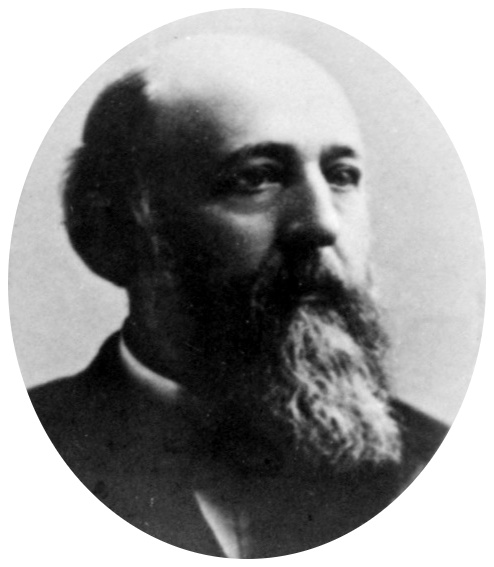
Historical · U.S. House · Ohio · District 10
Jacob Romeis
Former U.S. Representative · Ohio District 10 · 1885–1889 · Republican
Jacob Romeis represented Ohio's District 10 in the United States House of Representatives (1885–1889) for the Republican party. The page below collects sourced biographical facts, term history, committee roles, and provenance for Romeis.
Bioguide ID: R000415
Key facts
- Full name
- Jacob Romeis
- State
- Ohio
- District
- District 10
- Party
- Republican
- House service
- 1885–1889
- First House term
- 1885
- Status
- Left office
- Current term ends
- —
- Born
- 1835
- Bioguide ID
- R000415
- Committee assignments
- —
- Dataset version
- 1.20260606
Biographical narrative
939 words · sourced from the Wikipedia REST extract
Jacob Romeis was an American businessman and politician who served as a U.S. Representative from Ohio's 10th congressional district. A member of the Republican Party, he held office from 1885 until 1889, completing two terms in the House of Representatives. His career was marked by a transition from local governance in Toledo, Ohio, to national politics, reflecting his engagement with the community and the broader political landscape of his time.
Early life and career
Jacob Romeis was born on December 1, 1835, in Weisenbach, which was part of the German Confederation at the time. His early education took place in local village schools, where he began to develop the foundational skills that would later support his professional endeavors. In 1847, when he was just twelve years old, Romeis immigrated to the United States with his parents. They settled in Erie County, New York, where he continued his education in both public and select schools in the city of Buffalo. This formative period in his life was crucial, as it exposed him to the opportunities and challenges of a new country.
After completing his education, Romeis entered the workforce, initially engaging in the shipping business and railroading. These industries were vital to the economic development of the United States during the mid-19th century, and his involvement in them provided him with valuable experience in commerce and transportation. In 1856, he relocated to Toledo, Ohio, a city that was rapidly growing due to its strategic location along the Great Lakes and its burgeoning industrial base. This move marked the beginning of his long-standing connection to Toledo, which would later serve as the base for his political career.
Romeis's political journey began at the local level. He was elected to the board of aldermen in Toledo in 1874, a position that allowed him to engage directly with the governance of the city. His re-election in 1876 demonstrated his growing influence and popularity within the community. In 1877, he served as the president of the board, further solidifying his leadership role in local politics. His commitment to public service culminated in his election as mayor of Toledo, a position he held from 1879 until 1885. During his tenure as mayor, Romeis focused on various municipal issues, contributing to the city's development and addressing the needs of its residents.
House tenure
Jacob Romeis's transition to national politics occurred when he was elected as a Republican to the United States House of Representatives. He served in the Forty-ninth and Fiftieth Congresses from March 4, 1885, to March 3, 1889. His election to Congress came after a successful tenure as mayor, indicating a strong support base and a desire among constituents for his continued leadership at a higher level of government.
During his time in the House, Romeis participated in the legislative process and contributed to discussions that shaped national policy. Although specific details regarding his legislative initiatives and committee assignments are not provided, it can be inferred that his background in local governance would have informed his approach to federal issues. His experience as mayor likely equipped him with insights into the needs of urban populations, which he could advocate for on the national stage.
Despite his efforts in Congress, Romeis faced challenges in securing re-election. He was an unsuccessful candidate for re-election in 1888 to the Fifty-first Congress. This defeat marked the end of his congressional career, but it did not signify the end of his involvement in public life. After leaving Congress, he returned to Toledo, where he engaged in fruit growing, a venture that reflected both a personal interest in agriculture and an understanding of the economic opportunities available in the region.
Legislative focus and committees
While specific details about Jacob Romeis's legislative focus and committee assignments during his time in Congress are not documented, it is essential to consider the broader context of the political landscape during the late 19th century. This period was characterized by significant changes in American society, including industrialization, urbanization, and shifts in immigration patterns. As a representative from Ohio, a state that was experiencing rapid growth and transformation, Romeis would have been positioned to address various issues related to these developments.
The late 1800s were marked by debates over economic policies, labor rights, and infrastructure development. Representatives from industrial states like Ohio often focused on issues such as tariffs, transportation, and labor relations. Given Romeis's background in shipping and railroading, it is plausible that he had an interest in policies that affected these sectors. Additionally, as a former mayor, he may have been particularly attuned to the needs of urban constituents, advocating for legislation that would improve city infrastructure and services.
In the context of his congressional service, Romeis's experience in local government would have provided him with a unique perspective on the relationship between federal and local policies. He likely understood the importance of collaboration between different levels of government in addressing the challenges faced by communities. His engagement in fruit growing after his congressional tenure suggests a continued interest in economic development and local agriculture, which may have informed his legislative priorities while in office.
Jacob Romeis passed away on March 8, 1904, in Toledo, Ohio. His contributions to the city and the state, both as a businessman and a politician, left a lasting impact on the community he served. He was interred in Woodlawn Cemetery, where his legacy as a public servant and community leader is remembered. Through his journey from a young immigrant to a U.S. Representative, Romeis exemplified the opportunities available in America during the 19th century and the vital role of local leaders in shaping national policy.
Notable legislation
Sponsored and co-sponsored legislation for Jacob Romeis is pending operator curation. The biographical narrative above carries the same provenance trail until per-bill rows are written.
Sources
- [1]https://en.wikipedia.org/wiki/Jacob_RomeisWikipedia · retrieved 2026-06-06
Notable quotes
Sourced quotes for Jacob Romeis are pending operator curation. Narrative-scope provenance remains attached below.
Sources
- [1]https://en.wikipedia.org/wiki/Jacob_RomeisWikipedia · retrieved 2026-06-06
Key positions
Curated policy positions for Jacob Romeis are pending operator review. The biographical narrative above carries the same provenance trail until per-topic positions are written.
Sources
- [1]https://en.wikipedia.org/wiki/Jacob_RomeisWikipedia · retrieved 2026-06-06
Terms served
- 1885–1887U.S. House · Term 1 · Republican
- 1887–1889U.S. House · Term 2 · Republican
Sources & provenance
Every attributable claim above carries a per-section [N] marker that resolves to the corresponding URL below. Each entry records the upstream provider, the canonical URL, and the timestamp at which the source was retrieved by the ingest pipeline.
Key facts
- https://bioguide.congress.gov/search/bio/R000415bioguide · retrieved 2026-06-06
- https://www.govtrack.us/congress/members/409381govtrack · retrieved 2026-06-06
Biographical narrative
- https://en.wikipedia.org/wiki/Jacob_Romeiswikipedia · retrieved 2026-06-06
Find your representative
Every U.S. state elects representatives by district. Browse Ohio’s delegation, the full former-representative roster, or explore the role and term length.
Related on The Candidate
- Preceded by Frank HurdEarlier holder of the Ohio District 10 House seat · Democratic.Open
- Succeeded by Robert DoanLater holder of the Ohio District 10 House seat · Republican.Open
- Aaron PerryFormer U.S. Representative · Ohio District 1 · RepublicanOpen
- Alexander DuncanFormer U.S. Representative · Ohio District 1 · DemocraticOpen
- Bellamy StorerFormer U.S. Representative · Ohio District 1 · WhigOpen
- Bellamy StorerFormer U.S. Representative · Ohio District 1 · RepublicanOpen