
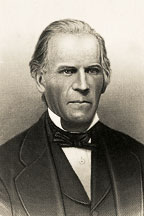
Historical · U.S. House · Ohio · District 11
William Kennon Sr.
Former U.S. Representative · Ohio District 11 · 1829–1837 · Jackson
William Kennon Sr. represented Ohio's District 11 in the United States House of Representatives (1829–1837) for the Jackson party. The page below collects sourced biographical facts, term history, committee roles, and provenance for Sr..
Bioguide ID: K000123
Key facts
- Full name
- William Kennon Sr.
- State
- Ohio
- District
- District 11
- Party
- Jackson
- House service
- 1829–1837
- First House term
- 1829
- Status
- Left office
- Current term ends
- —
- Born
- 1793
- Bioguide ID
- K000123
- Committee assignments
- —
- Dataset version
- 1.20260606
Biographical narrative
999 words · sourced from the Wikipedia REST extract
William Kennon Sr. was an American lawyer and politician who served as a U.S. Representative from Ohio. A member of the Jacksonian party, he held office during a formative period in American politics, representing the 11th congressional district of Ohio across three terms in the House of Representatives from 1829 to 1833 and again from 1835 to 1837. His political career was marked by his involvement in significant legislative activities and his contributions to the judicial system in Ohio following his congressional tenure.
Early life and career
William Kennon Sr. was born on May 14, 1793, in Uniontown, Pennsylvania. His early life was shaped by his family's relocation to Belmont County, Ohio, in 1804, a move that would place him in a region that was rapidly developing during the early 19th century. Kennon received his education in the common schools of the area, which were typical for that time, providing foundational knowledge that would serve him well in his future endeavors. He furthered his education at Franklin College in New Athens, Ohio, where he likely gained exposure to the political and legal ideas that would influence his later career.
After completing his studies, Kennon pursued a career in law, a profession that was both prestigious and influential in the early American republic. He was admitted to the bar in 1824, marking the beginning of his legal practice in St. Clairsville, Ohio. This town, located in Belmont County, served as a regional hub and provided Kennon with a platform to establish his legal career and engage with the local community. His work as a lawyer would not only enhance his reputation but also provide him with valuable experience that would later inform his legislative activities in Congress.
House tenure
Kennon's political career began in earnest when he was elected as a member of the Jacksonian party to the Twenty-first Congress, serving from March 4, 1829, to March 3, 1833. His election to Congress came during a time of significant political change in the United States, as the Jacksonian movement was gaining momentum. This movement was characterized by its populist approach and its focus on the rights of the "common man," which resonated with many voters in Ohio and across the nation.
During his first term, Kennon was involved in various legislative activities, although specific details regarding the bills he sponsored or supported are not documented in the available records. His tenure coincided with a period of national debate over issues such as economic policy, land distribution, and the role of the federal government, all of which were central to the Jacksonian agenda. However, Kennon faced challenges in his political career; he was unsuccessful in his bid for reelection in 1832 to the Twenty-third Congress.
Despite this setback, Kennon returned to Congress when he was elected to the Twenty-fourth Congress, serving from March 4, 1835, to March 3, 1837. His return to the House reflected his continued support from constituents in Ohio, who valued his representation. Once again, Kennon engaged in legislative discussions pertinent to the era, although specific legislative accomplishments during this term are not detailed in the available records. After his second term in the House, he sought reelection in 1836 but was unsuccessful in his attempt to secure a seat in the Twenty-fifth Congress.
Legislative focus and committees
Throughout his time in Congress, Kennon's legislative focus aligned with the broader goals of the Jacksonian party, which emphasized agrarian interests, states' rights, and opposition to centralized banking. While specific committee assignments and legislative initiatives are not documented, it is reasonable to infer that his legal background and experience as a practicing attorney would have influenced his approach to various issues, including those related to commerce, land use, and the judiciary.
Following his congressional service, Kennon continued to contribute to public life in Ohio. He served as president judge of the court of common pleas from 1840 to 1847, a role that placed him at the forefront of the legal system in his region. This position allowed him to influence judicial proceedings and contribute to the development of legal standards in Ohio. His experience in the judiciary would have further informed his understanding of the law and governance, enhancing his reputation as a legal authority.
In addition to his judicial responsibilities, Kennon was a delegate to the second State constitutional convention in 1850, where he participated in discussions that would shape the governance of Ohio. His involvement in this convention reflects his ongoing commitment to public service and his interest in the foundational aspects of state governance.
In 1854, Kennon was appointed by Governor William Medill to fill the unexpired term of William B. Caldwell as a judge of the Ohio Supreme Court. This appointment marked a significant achievement in his legal career, as it placed him in one of the highest judicial positions in the state. However, he resigned from this position in 1856, returning to his legal practice in St. Clairsville, where he continued to serve the community until the later years of his life.
Kennon's political affiliations evolved over time, and he became associated with the Republican Party at the onset of the Civil War. This shift reflected the changing political landscape of the United States during a tumultuous period, as the Republican Party emerged as a significant force opposing the expansion of slavery and advocating for a more unified nation.
Kennon married Mary Ellis on June 16, 1825, and together they had three children. His family life, while not extensively documented, provides insight into his personal commitments and responsibilities outside of his professional endeavors.
William Kennon Sr. passed away on November 2, 1881, in St. Clairsville, Belmont County, Ohio. His contributions to the legal and political landscape of Ohio, along with his service in the U.S. House of Representatives, mark him as a notable figure in the history of American governance during the early 19th century. He was interred in Methodist Cemetery, leaving behind a legacy of public service that spanned several decades.
Notable legislation
Sponsored and co-sponsored legislation for William Kennon Sr. is pending operator curation. The biographical narrative above carries the same provenance trail until per-bill rows are written.
Sources
- [1]https://en.wikipedia.org/wiki/William_Kennon_Sr.Wikipedia · retrieved 2026-06-06
Notable quotes
Sourced quotes for William Kennon Sr. are pending operator curation. Narrative-scope provenance remains attached below.
Sources
- [1]https://en.wikipedia.org/wiki/William_Kennon_Sr.Wikipedia · retrieved 2026-06-06
Key positions
Curated policy positions for William Kennon Sr. are pending operator review. The biographical narrative above carries the same provenance trail until per-topic positions are written.
Sources
- [1]https://en.wikipedia.org/wiki/William_Kennon_Sr.Wikipedia · retrieved 2026-06-06
Terms served
- 1829–1831U.S. House · Term 1 · Jackson
- 1831–1833U.S. House · Term 2 · Jackson
- 1835–1837U.S. House · Term 3 · Jackson
Sources & provenance
Every attributable claim above carries a per-section [N] marker that resolves to the corresponding URL below. Each entry records the upstream provider, the canonical URL, and the timestamp at which the source was retrieved by the ingest pipeline.
Key facts
- https://bioguide.congress.gov/search/bio/K000123bioguide · retrieved 2026-06-06
- https://www.govtrack.us/congress/members/406289govtrack · retrieved 2026-06-06
Biographical narrative
- https://en.wikipedia.org/wiki/William_Kennon_Sr.wikipedia · retrieved 2026-06-06
Find your representative
Every U.S. state elects representatives by district. Browse Ohio’s delegation, the full former-representative roster, or explore the role and term length.
Related on The Candidate
- Preceded by John WrightEarlier holder of the Ohio District 11 House seat · Adams.Open
- Succeeded by James Alexander Jr.Later holder of the Ohio District 11 House seat · Whig.Open
- Aaron PerryFormer U.S. Representative · Ohio District 1 · RepublicanOpen
- Alexander DuncanFormer U.S. Representative · Ohio District 1 · DemocraticOpen
- Bellamy StorerFormer U.S. Representative · Ohio District 1 · WhigOpen
- Bellamy StorerFormer U.S. Representative · Ohio District 1 · RepublicanOpen