
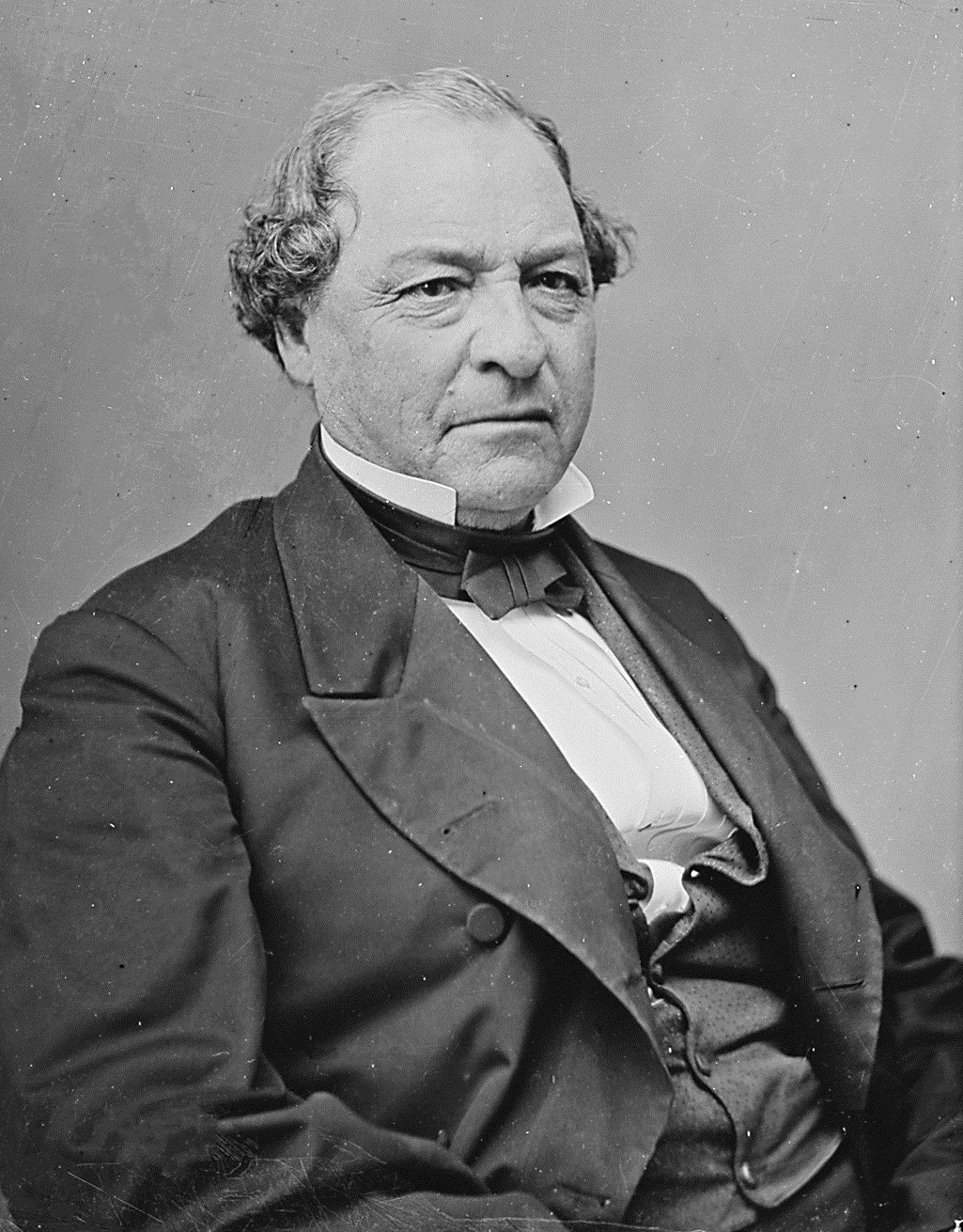
Historical · U.S. House · Ohio · District 12
Philadelph Van Trump
Former U.S. Representative · Ohio District 12 · 1867–1873 · Democratic
Philadelph Van Trump represented Ohio's District 12 in the United States House of Representatives (1867–1873) for the Democratic party. The page below collects sourced biographical facts, term history, committee roles, and provenance for Trump.
Bioguide ID: V000060
Key facts
- Full name
- Philadelph Van Trump
- State
- Ohio
- District
- District 12
- Party
- Democratic
- House service
- 1867–1873
- First House term
- 1867
- Status
- Left office
- Current term ends
- —
- Born
- 1810
- Bioguide ID
- V000060
- Committee assignments
- —
- Dataset version
- 1.20260606
Biographical narrative
800 words · sourced from the Wikipedia REST extract
Philadelph Van Trump was an American politician who served as a U.S. Representative for Ohio's 12th congressional district from 1867 to 1873. A member of the Democratic Party, Van Trump had a diverse career that included roles in journalism, law, and politics. His tenure in the House of Representatives was marked by his involvement in the legislative processes of the post-Civil War era, during which he contributed to various discussions and initiatives relevant to his constituents and the nation.
Early life and career
Philadelph Van Trump was born on November 15, 1810, in Lancaster, Ohio. He received his early education in public schools, where he developed a foundation for his future endeavors. Following his schooling, Van Trump pursued a career in printing, which led him to become the editor of the Gazette and Enquirer in Lancaster. This role in journalism not only honed his writing skills but also provided him with a platform to engage with the political issues of his time.
In addition to his work in journalism, Van Trump studied law and was admitted to the bar, beginning his legal practice in Lancaster on May 14, 1838. His legal career coincided with his growing interest in politics. He became involved in various political movements, initially aligning with the Whig Party. In 1852, he served as a delegate to the Whig National Convention, marking his entry into national political discourse.
Van Trump's political ambitions continued to evolve, and in 1857, he ran as a candidate for governor representing the American Party, although he was unsuccessful in this bid. His political involvement deepened as he participated in the Bell and Everett State convention in 1860, where he served as president. This experience further solidified his reputation as a committed political figure in Ohio.
From 1862 to 1867, Van Trump served as a judge on the court of common pleas, a position that allowed him to gain significant judicial experience. However, he faced challenges in his political career, notably failing in his attempts to secure a position on the Supreme Court of Ohio in the years 1863, 1864, and 1865. Despite these setbacks, he remained active in the Democratic Party and continued to build his political profile.
House tenure
Philadelph Van Trump's congressional career began when he was elected as a Democrat to the Fortieth Congress, which commenced on March 4, 1867. He subsequently served in the Forty-first and Forty-second Congresses, concluding his time in the House on March 3, 1873. During his six years in office, Van Trump was involved in the legislative processes that shaped the post-Civil War United States, a period marked by significant social and political changes.
Throughout his tenure, Van Trump participated in various debates and discussions that addressed the pressing issues of the day, including Reconstruction policies and the integration of formerly enslaved individuals into American society. His role as a representative allowed him to advocate for the interests of his constituents in Ohio, contributing to the broader national dialogue on these critical matters.
Van Trump chose not to seek renomination in 1872, concluding his congressional career after three terms. His decision to step back from electoral politics marked a transition in his professional life, as he returned to his legal practice in Lancaster, Ohio.
Legislative focus and committees
During his time in the House of Representatives, Philadelph Van Trump was known for his engagement in legislative matters that were pertinent to his district and the nation. While specific details regarding the committees he served on or particular legislation he championed are not extensively documented, it is understood that his contributions were reflective of the Democratic Party's platform during the Reconstruction era.
As a member of the House, Van Trump was part of a legislative body grappling with the aftermath of the Civil War. This included addressing issues related to civil rights, economic recovery, and the reintegration of Southern states into the Union. His legal background likely informed his approach to these complex issues, as he navigated the challenges of a nation in transition.
In addition to his legislative work, Van Trump was active in party politics, serving as president of the Democratic State convention in 1869. This role underscored his influence within the party and his commitment to its principles during a time of significant political realignment in the United States.
After leaving Congress, Van Trump resumed his legal career, continuing to practice law in Lancaster until his death on July 31, 1874. His contributions to Ohio's political landscape and his service in the U.S. House of Representatives remain a part of his legacy, reflecting the multifaceted nature of his career in public service. He is interred at Elmwood Cemetery in Lancaster, Ohio, where he is remembered as a figure who played a role in the political developments of his time.
Notable legislation
Sponsored and co-sponsored legislation for Philadelph Van Trump is pending operator curation. The biographical narrative above carries the same provenance trail until per-bill rows are written.
Sources
- [1]https://en.wikipedia.org/wiki/Philadelph_Van_TrumpWikipedia · retrieved 2026-06-06
Notable quotes
Sourced quotes for Philadelph Van Trump are pending operator curation. Narrative-scope provenance remains attached below.
Sources
- [1]https://en.wikipedia.org/wiki/Philadelph_Van_TrumpWikipedia · retrieved 2026-06-06
Key positions
Curated policy positions for Philadelph Van Trump are pending operator review. The biographical narrative above carries the same provenance trail until per-topic positions are written.
Sources
- [1]https://en.wikipedia.org/wiki/Philadelph_Van_TrumpWikipedia · retrieved 2026-06-06
Terms served
- 1867–1869U.S. House · Term 1 · Democratic
- 1869–1871U.S. House · Term 2 · Democratic
- 1871–1873U.S. House · Term 3 · Democratic
Sources & provenance
Every attributable claim above carries a per-section [N] marker that resolves to the corresponding URL below. Each entry records the upstream provider, the canonical URL, and the timestamp at which the source was retrieved by the ingest pipeline.
Key facts
- https://bioguide.congress.gov/search/bio/V000060bioguide · retrieved 2026-06-06
- https://www.govtrack.us/congress/members/411102govtrack · retrieved 2026-06-06
Biographical narrative
- https://en.wikipedia.org/wiki/Philadelph_Van_Trumpwikipedia · retrieved 2026-06-06
Find your representative
Every U.S. state elects representatives by district. Browse Ohio’s delegation, the full former-representative roster, or explore the role and term length.
Related on The Candidate
- Preceded by Samuel GallowayEarlier holder of the Ohio District 12 House seat · Ind. Republican-Democrat.Open
- Succeeded by Hugh JewettLater holder of the Ohio District 12 House seat · Democratic.Open
- Aaron PerryFormer U.S. Representative · Ohio District 1 · RepublicanOpen
- Alexander DuncanFormer U.S. Representative · Ohio District 1 · DemocraticOpen
- Bellamy StorerFormer U.S. Representative · Ohio District 1 · WhigOpen
- Bellamy StorerFormer U.S. Representative · Ohio District 1 · RepublicanOpen