
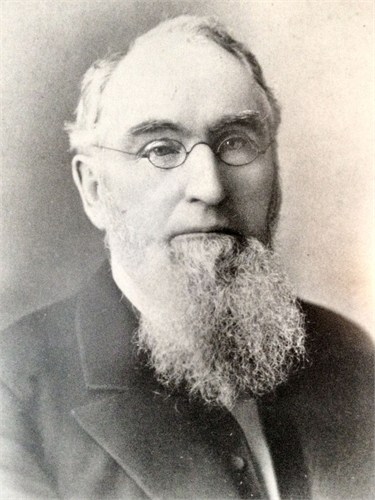
Historical · U.S. House · Ohio · District 14
Jacob Cowan
Former U.S. Representative · Ohio District 14 · 1875–1877 · Democratic
Jacob Cowan represented Ohio's District 14 in the United States House of Representatives (1875–1877) for the Democratic party. The page below collects sourced biographical facts, term history, committee roles, and provenance for Cowan.
Bioguide ID: C000820
Key facts
- Full name
- Jacob Cowan
- State
- Ohio
- District
- District 14
- Party
- Democratic
- House service
- 1875–1877
- First House term
- 1875
- Status
- Left office
- Current term ends
- —
- Born
- 1823
- Bioguide ID
- C000820
- Committee assignments
- —
- Dataset version
- 1.20260606
Biographical narrative
843 words · sourced from the Wikipedia REST extract
Jacob Cowan was an American physician and politician who served as a U.S. Representative for Ohio's 14th congressional district from 1875 to 1877. A member of the Democratic Party, Cowan's political career was marked by a single term in the U.S. House of Representatives, during which he held the position of chairman of the Committee on Militia. Prior to his congressional service, Cowan had a diverse career that included practicing medicine and serving in the Ohio State Legislature. His life spanned significant periods in American history, and he remained active in his profession until his death in 1895.
Early life and career
Jacob Cowan was born on March 20, 1823, in Florence, Washington County, Pennsylvania. His early education took place in local common schools, which provided him with a foundational knowledge that would serve him throughout his life. In 1835, when Cowan was just twelve years old, his family relocated to Steubenville, Ohio. This move marked a significant transition in his life, as it placed him in a burgeoning community that would influence his future endeavors.
Cowan initially engaged in the manufacturing of woolens, a common industry during that period, until 1843. This experience in manufacturing likely provided him with insights into the economic and social dynamics of the time, which would later inform his political perspectives. However, Cowan's interests shifted toward medicine, prompting him to pursue a career in healthcare. He moved to Ashland County, Ohio, in 1846, where he began practicing medicine. His commitment to the medical field was further solidified when he graduated from Starling Medical College in Columbus, Ohio, on March 6, 1855. This formal education equipped him with the skills and knowledge necessary to serve his community as a physician.
Cowan's early career in medicine was interrupted by his entry into politics. He served as a member of the Ohio State House of Representatives from 1855 to 1857. This role allowed him to gain valuable experience in governance and public service, as well as to establish connections within the political landscape of Ohio. After his term in the state legislature, Cowan returned to his medical practice in 1859, where he continued to contribute to the health and well-being of his community.
House tenure
Cowan's political career took a significant turn when he was elected to the U.S. House of Representatives as a Democrat for the 14th congressional district of Ohio. His term in the Forty-fourth Congress began on March 4, 1875, and concluded on March 3, 1877. During his time in Congress, Cowan was involved in various legislative activities and discussions, reflecting the interests and concerns of his constituents.
As a member of the House, Cowan served as the chairman of the Committee on Militia. This position placed him at the forefront of discussions regarding military readiness and the organization of the militia, which were particularly pertinent issues during the post-Civil War era. His leadership in this committee allowed him to influence legislation related to national defense and the management of military resources. However, Cowan's congressional career was relatively brief, as he was not successful in his bid for renomination in 1876. This outcome marked the end of his time in the House of Representatives, but it did not signify the end of his professional pursuits.
Legislative focus and committees
During his tenure in the House of Representatives, Jacob Cowan's legislative focus was primarily centered on issues related to military affairs, as evidenced by his role as chairman of the Committee on Militia. This committee was responsible for overseeing matters related to the organization, training, and funding of the militia, which was a critical concern in the aftermath of the Civil War. The period following the war was marked by significant changes in military policy and structure, and Cowan's involvement in these discussions reflected his commitment to national security and the welfare of military personnel.
Cowan's background as a physician likely informed his perspectives on health-related issues within the military context. Although specific legislative initiatives he championed during his term are not detailed, his dual expertise in medicine and politics positioned him to advocate for the health and well-being of soldiers and their families. The intersection of his medical knowledge and legislative responsibilities may have influenced his approach to military health care and related policies.
After concluding his term in Congress, Cowan returned to his medical practice in Ashland, Ohio. His decision to re-engage in medicine indicates a continued dedication to serving his community, albeit in a different capacity than before. Cowan's life as a physician and politician illustrates the multifaceted nature of public service during a transformative period in American history.
Jacob Cowan passed away on July 9, 1895, in Ashland, Ohio. His contributions to both medicine and politics left a lasting impact on his community and the state of Ohio. He was interred in Ashland Cemetery, where he rests alongside the legacy of his service to the public. Cowan's life story reflects the complexities of 19th-century American society, where individuals often navigated multiple roles in their pursuit of civic engagement and professional fulfillment.
Notable legislation
Sponsored and co-sponsored legislation for Jacob Cowan is pending operator curation. The biographical narrative above carries the same provenance trail until per-bill rows are written.
Sources
- [1]https://en.wikipedia.org/wiki/Jacob_Pitzer_CowanWikipedia · retrieved 2026-06-06
Notable quotes
Sourced quotes for Jacob Cowan are pending operator curation. Narrative-scope provenance remains attached below.
Sources
- [1]https://en.wikipedia.org/wiki/Jacob_Pitzer_CowanWikipedia · retrieved 2026-06-06
Key positions
Curated policy positions for Jacob Cowan are pending operator review. The biographical narrative above carries the same provenance trail until per-topic positions are written.
Sources
- [1]https://en.wikipedia.org/wiki/Jacob_Pitzer_CowanWikipedia · retrieved 2026-06-06
Terms served
- 1875–1877U.S. House · Term 1 · Democratic
Sources & provenance
Every attributable claim above carries a per-section [N] marker that resolves to the corresponding URL below. Each entry records the upstream provider, the canonical URL, and the timestamp at which the source was retrieved by the ingest pipeline.
Key facts
- https://bioguide.congress.gov/search/bio/C000820bioguide · retrieved 2026-06-06
- https://www.govtrack.us/congress/members/402938govtrack · retrieved 2026-06-06
Biographical narrative
- https://en.wikipedia.org/wiki/Jacob_Pitzer_Cowanwikipedia · retrieved 2026-06-06
Find your representative
Every U.S. state elects representatives by district. Browse Ohio’s delegation, the full former-representative roster, or explore the role and term length.
Related on The Candidate
- Preceded by John BerryEarlier holder of the Ohio District 14 House seat · Democratic.Open
- Succeeded by Charles WickhamLater holder of the Ohio District 14 House seat · Republican.Open
- Aaron PerryFormer U.S. Representative · Ohio District 1 · RepublicanOpen
- Alexander DuncanFormer U.S. Representative · Ohio District 1 · DemocraticOpen
- Bellamy StorerFormer U.S. Representative · Ohio District 1 · WhigOpen
- Bellamy StorerFormer U.S. Representative · Ohio District 1 · RepublicanOpen