
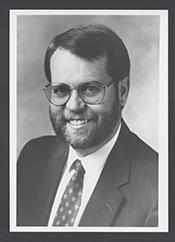
Historical · U.S. House · Ohio · District 14
Steven LaTourette
Former U.S. Representative · Ohio District 14 · 1995–2013 · Republican
Steven LaTourette represented Ohio's District 14 in the United States House of Representatives (1995–2013) for the Republican party. The page below collects sourced biographical facts, term history, committee roles, and provenance for LaTourette.
Bioguide ID: L000553
Key facts
- Full name
- Steven LaTourette
- State
- Ohio
- District
- District 14
- Party
- Republican
- House service
- 1995–2013
- First House term
- 1995
- Status
- Left office
- Current term ends
- —
- Born
- 1954
- Bioguide ID
- L000553
- Committee assignments
- —
- Dataset version
- 1.20260605
Biographical narrative
1,041 words · sourced from the Wikipedia REST extract
Steven C. LaTourette was an American politician who served as a U.S. Representative for Ohio's 19th and later the 14th congressional districts from 1995 until 2013. A member of the Republican Party, LaTourette was known for his involvement in various legislative initiatives and his work on several congressional committees. After announcing his retirement in 2012, he transitioned to a post-congressional career that included co-founding a lobbying firm. LaTourette's political career was marked by a blend of traditional Republican values and a willingness to engage in bipartisan efforts, particularly in areas such as transportation and fiscal policy.
Early life and career
Steven Clare LaTourette was born on July 22, 1954, in Cleveland, Ohio. He was raised in a family with a rich history, as his ancestors were French Huguenots who fled persecution in the 1600s, eventually settling in Staten Island, New York. LaTourette's upbringing in Ohio played a significant role in shaping his political views and career.
He attended Cleveland Heights High School, graduating in 1972, and subsequently pursued higher education at the University of Michigan. After earning his undergraduate degree, LaTourette continued his studies at the Cleveland State University College of Law, where he obtained his law degree. His early career included work as a public defender, which provided him with valuable experience in the legal system and an understanding of the challenges faced by individuals in the criminal justice system.
In 1989, LaTourette was elected as the County Prosecutor of Lake County, Ohio, a position he held until 1995. During his tenure as prosecutor, he gained prominence for his role in prosecuting the Kirtland mass murders, a high-profile case involving a series of killings orchestrated by Jeffrey Lundgren, who claimed to be a prophet. This case brought LaTourette into the public eye and established his reputation as a tough and effective prosecutor.
House tenure
LaTourette's political career in the U.S. House of Representatives began when he was elected in 1994, during a significant Republican wave that swept across the nation. He defeated incumbent Eric Fingerhut to represent Ohio's 19th congressional district, a position he held from 1995 until 2003. Following a round of redistricting after the 2000 Census, LaTourette's district was renumbered to the 14th congressional district, which included the eastern suburbs of Cleveland, parts of northeastern Summit County, northern Trumbull County, northern Portage County, Ashtabula County, Lake County, and Geauga County.
Throughout his nine terms in Congress, LaTourette was involved in various legislative efforts and served on several important committees. He was a member of the Committee on Appropriations, where he participated in shaping federal spending and budgetary policies. Within this committee, he served on multiple subcommittees, including those focused on Interior, Environment, and Related Agencies, Legislative Branch, and Transportation, Housing and Urban Development, and Related Agencies, where he held the position of Vice Chair.
LaTourette's electoral history reflects his ability to maintain support within his district. He successfully won re-election multiple times, including notable victories against Democratic opponents. In the 2008 election, he faced former Appellate Court judge Bill O'Neill and a Libertarian candidate, John Jelenic, securing his position once again.
In 2012, LaTourette announced that he would retire at the end of his term, deciding not to seek re-election. His decision was reported on July 30, 2012, marking the end of a significant chapter in his political career.
Legislative focus and committees
During his time in Congress, LaTourette's legislative focus included a range of issues, particularly those related to fiscal policy, transportation, and regulatory reform. He was known for his involvement in the Republican Main Street Partnership, a group of moderate Republicans who sought to promote pragmatic solutions to various national issues.
One of LaTourette's notable legislative contributions was his co-authorship of the Financial Data Protection Act of 2006. This legislation aimed to unify state and federal laws concerning banking and privacy, addressing the complexities and burdens that arose from a patchwork of regulations. His efforts in this area reflected a commitment to improving the regulatory environment for financial institutions while safeguarding consumer privacy.
In 1997, LaTourette sponsored legislation that exempted certain credit unions from specific regulatory restrictions, particularly those that had a history of making member business loans. This deregulatory measure aimed to stimulate lending but also raised concerns about the potential for increased risk in the financial sector, particularly in relation to taxi companies that benefited from these loans.
LaTourette's voting record included a range of positions on significant issues. He voted for the impeachment of President Bill Clinton during the Lewinsky scandal, a decision that garnered attention given the personal circumstances surrounding his own life at the time. He also took a stand on various funding measures, including a notable vote against stripping government funding from National Public Radio (NPR), where he was one of only seven Republicans to oppose the measure.
His willingness to engage in bipartisan discussions was evident in his interactions with transit advocates, where he expressed frustration with some of his fellow legislators' reluctance to consider revenue increases as part of broader fiscal compromises. LaTourette's approach to governance often emphasized the importance of collaboration and finding common ground, even amid a polarized political climate.
In his later years in Congress, LaTourette's voting record continued to reflect a blend of traditional Republican values and a pragmatic approach to governance. He was one of only two Republicans to vote against a motion to hold Attorney General Eric Holder in criminal contempt of Congress, indicating a willingness to diverge from party lines when he believed it was warranted.
After leaving Congress, LaTourette established a Super PAC called Defending Main Street, aimed at countering the influence of the Tea Party movement within the Republican Party. This move illustrated his ongoing commitment to shaping the direction of the party and advocating for a more moderate approach to governance.
In 2015, despite his previous opposition to same-sex marriage, LaTourette signed a Supreme Court brief supporting the overturning of state bans on the practice, demonstrating a shift in his views on social issues.
LaTourette's life came to a close on August 3, 2016, when he passed away from pancreatic cancer. His legacy includes a lengthy tenure in Congress marked by significant legislative contributions and a commitment to public service that spanned nearly two decades.
Notable legislation
Sponsored and co-sponsored legislation for Steven LaTourette is pending operator curation. The biographical narrative above carries the same provenance trail until per-bill rows are written.
Sources
- [1]https://en.wikipedia.org/wiki/Steve_LaTouretteWikipedia · retrieved 2026-06-05
Notable quotes
Sourced quotes for Steven LaTourette are pending operator curation. Narrative-scope provenance remains attached below.
Sources
- [1]https://en.wikipedia.org/wiki/Steve_LaTouretteWikipedia · retrieved 2026-06-05
Key positions
Curated policy positions for Steven LaTourette are pending operator review. The biographical narrative above carries the same provenance trail until per-topic positions are written.
Sources
- [1]https://en.wikipedia.org/wiki/Steve_LaTouretteWikipedia · retrieved 2026-06-05
Terms served
- 1995–1997U.S. House · Term 1 · Republican
- 1997–1999U.S. House · Term 2 · Republican
- 1999–2001U.S. House · Term 3 · Republican
- 2001–2003U.S. House · Term 4 · Republican
- 2003–2005U.S. House · Term 5 · Republican
- 2005–2007U.S. House · Term 6 · Republican
- 2007–2009U.S. House · Term 7 · Republican
- 2009–2011U.S. House · Term 8 · Republican
- 2011–2013U.S. House · Term 9 · Republican
Sources & provenance
Every attributable claim above carries a per-section [N] marker that resolves to the corresponding URL below. Each entry records the upstream provider, the canonical URL, and the timestamp at which the source was retrieved by the ingest pipeline.
Key facts
- https://bioguide.congress.gov/search/bio/L000553bioguide · retrieved 2026-06-05
- http://www.house.gov/latourettehouse.gov · retrieved 2026-06-05
Biographical narrative
- https://en.wikipedia.org/wiki/Steve_LaTourettewikipedia · retrieved 2026-06-05
Find your representative
Every U.S. state elects representatives by district. Browse Ohio’s delegation, the full former-representative roster, or explore the role and term length.
Related on The Candidate
- Preceded by John SeiberlingEarlier holder of the Ohio District 14 House seat · Democratic.Open
- Aaron PerryFormer U.S. Representative · Ohio District 1 · RepublicanOpen
- Alexander DuncanFormer U.S. Representative · Ohio District 1 · DemocraticOpen
- Bellamy StorerFormer U.S. Representative · Ohio District 1 · WhigOpen
- Bellamy StorerFormer U.S. Representative · Ohio District 1 · RepublicanOpen
- Republican PartyFederal candidates and office holders on the Republican line.Open