
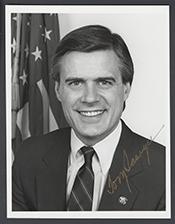
Historical · U.S. House · Ohio · District 14
Thomas Sawyer
Former U.S. Representative · Ohio District 14 · 1987–2003 · Democratic
Thomas Sawyer represented Ohio's District 14 in the United States House of Representatives (1987–2003) for the Democratic party. The page below collects sourced biographical facts, term history, committee roles, and provenance for Sawyer.
Bioguide ID: S000094
Key facts
- Full name
- Thomas Sawyer
- State
- Ohio
- District
- District 14
- Party
- Democratic
- House service
- 1987–2003
- First House term
- 1987
- Status
- Left office
- Current term ends
- —
- Born
- 1945
- Bioguide ID
- S000094
- Committee assignments
- —
- Dataset version
- 1.20260605
Biographical narrative
878 words · sourced from the Wikipedia REST extract
Thomas Charles Sawyer was an American politician affiliated with the Democratic Party, who served as a U.S. Representative for Ohio's 14th congressional district from 1987 until 2003. His political career spanned several decades, during which he held various positions at multiple levels of government, including serving as a member of the Ohio House of Representatives, the Mayor of Akron, and later as a member of the Ohio Senate. Sawyer was known for his active engagement in legislative matters, particularly those related to census accuracy and education reform.
Early life and career
Tom Sawyer was born on August 15, 1945, in Akron, Ohio. He completed his secondary education at Buchtel High School in Akron before pursuing higher education at the University of Akron. He earned a Bachelor of Arts degree in 1968 and subsequently a Master of Arts degree in 1970 from the same institution. During his time at the university, he became a member of the Alpha Phi chapter of the Phi Kappa Tau fraternity. Following his academic pursuits, Sawyer worked as an English teacher in Cleveland, which provided him with a foundation in education and public service.
Sawyer's political career began in 1977 when he successfully ran for a seat in the Ohio House of Representatives, where he served until 1983. His tenure in the Ohio House marked the beginning of his long-standing commitment to public service and laid the groundwork for his future political endeavors. In 1984, Sawyer transitioned to a higher office when he was elected Mayor of Akron, defeating the incumbent Republican mayor in a closely contested election. His victory was significant, as he became the first Democrat to hold the mayoral office in Akron in over 18 years.
House tenure
Sawyer's entry into the United States Congress came after he won a seat in the 1986 midterm elections, officially taking office on January 3, 1987. Over the course of his congressional career, he served a total of eight terms, establishing himself as a prominent figure in Ohio politics. One of his notable roles was as Chairman of the House subcommittee responsible for overseeing the 1990 U.S. census. His work in this capacity brought him national attention, particularly when he highlighted the significant undercount of Black Americans during the census. Sawyer's efforts to adjust the census figures to reflect a more accurate population count faced opposition, particularly from the Commerce Secretary at the time.
Throughout his congressional career, Sawyer participated in various legislative initiatives and voted on numerous significant bills. He supported President Bill Clinton's federal budget bill in 1993, while opposing the Welfare Reform Act of 1996 and the impeachment of President Clinton. His vote for the North American Free Trade Agreement (NAFTA) was particularly controversial and described by Sawyer as one of the most challenging decisions he faced in his political life. Additionally, he opposed the authorization for the deployment of U.S. armed forces in Iraq in 2002, reflecting his stance on foreign military intervention.
Sawyer's congressional career came to an end following the 2002 primary elections, which were impacted by a round of redistricting that altered Ohio's congressional map. The new district configuration placed him in direct competition with State Senator Tim Ryan, who ultimately defeated Sawyer in a late upset. Despite Sawyer's extensive experience and financial advantage in the campaign, the outcome was attributed in part to his controversial vote for NAFTA, which affected his standing among constituents.
Legislative focus and committees
During his time in Congress, Sawyer focused on several key issues, particularly those related to social justice, education, and economic policy. His leadership in the subcommittee overseeing the U.S. census underscored his commitment to ensuring accurate representation for marginalized communities. The national undercount of Black Americans that he sought to address highlighted the importance of demographic accuracy in shaping federal policies and resource allocation.
After leaving Congress, Sawyer continued his public service career by returning to Ohio politics. He sought to regain a congressional seat in the 2006 Democratic primary but was unsuccessful, as former State Representative Betty Sutton won the primary and subsequently the general election. In 2007, Sawyer was appointed to fill a vacancy in the Ohio Senate, where he continued to influence state legislation.
In the Ohio Senate, Sawyer played a significant role in various legislative initiatives, including the adoption of Medicaid expansion, which aimed to provide healthcare coverage to thousands of uninsured Ohioans. He also collaborated with Republican Senator Frank LaRose on efforts to reform the drawing of legislative district lines, a move aimed at curbing gerrymandering practices in Ohio. This initiative culminated in a successful ballot measure that received overwhelming voter support.
Sawyer's legislative contributions in the Ohio Senate included sponsoring reforms related to charter school oversight and actively participating in discussions about fiscal policy as the Ranking Member of the Senate Finance Committee. His commitment to public service and education reform remained evident throughout his political career, reflecting his dedication to improving the lives of Ohioans.
Tom Sawyer's political legacy is marked by his long-standing service in various capacities, his focus on social justice and education, and his efforts to ensure fair representation for all constituents. His career reflects a deep commitment to public service and the complexities of navigating political landscapes at both the state and national levels.
Notable legislation
Sponsored and co-sponsored legislation for Thomas Sawyer is pending operator curation. The biographical narrative above carries the same provenance trail until per-bill rows are written.
Sources
- [1]https://en.wikipedia.org/wiki/Tom_Sawyer_(Ohio_politician)Wikipedia · retrieved 2026-06-05
Notable quotes
Sourced quotes for Thomas Sawyer are pending operator curation. Narrative-scope provenance remains attached below.
Sources
- [1]https://en.wikipedia.org/wiki/Tom_Sawyer_(Ohio_politician)Wikipedia · retrieved 2026-06-05
Key positions
Curated policy positions for Thomas Sawyer are pending operator review. The biographical narrative above carries the same provenance trail until per-topic positions are written.
Sources
- [1]https://en.wikipedia.org/wiki/Tom_Sawyer_(Ohio_politician)Wikipedia · retrieved 2026-06-05
Terms served
- 1987–1989U.S. House · Term 1 · Democratic
- 1989–1991U.S. House · Term 2 · Democratic
- 1991–1993U.S. House · Term 3 · Democratic
- 1993–1995U.S. House · Term 4 · Democratic
- 1995–1997U.S. House · Term 5 · Democratic
- 1997–1999U.S. House · Term 6 · Democratic
- 1999–2001U.S. House · Term 7 · Democratic
- 2001–2003U.S. House · Term 8 · Democratic
Sources & provenance
Every attributable claim above carries a per-section [N] marker that resolves to the corresponding URL below. Each entry records the upstream provider, the canonical URL, and the timestamp at which the source was retrieved by the ingest pipeline.
Key facts
- https://bioguide.congress.gov/search/bio/S000094bioguide · retrieved 2026-06-05
- https://www.govtrack.us/congress/members/400539govtrack · retrieved 2026-06-05
Biographical narrative
- https://en.wikipedia.org/wiki/Tom_Sawyer_(Ohio_politician)wikipedia · retrieved 2026-06-05
Find your representative
Every U.S. state elects representatives by district. Browse Ohio’s delegation, the full former-representative roster, or explore the role and term length.
Related on The Candidate
- Preceded by John SeiberlingEarlier holder of the Ohio District 14 House seat · Democratic.Open
- Aaron PerryFormer U.S. Representative · Ohio District 1 · RepublicanOpen
- Alexander DuncanFormer U.S. Representative · Ohio District 1 · DemocraticOpen
- Bellamy StorerFormer U.S. Representative · Ohio District 1 · WhigOpen
- Bellamy StorerFormer U.S. Representative · Ohio District 1 · RepublicanOpen
- Democratic PartyFederal candidates and office holders on the Democratic line.Open