
Historical · U.S. House · Ohio · District 15
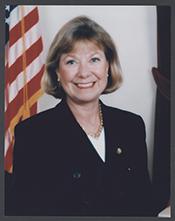
Deborah Pryce
Former U.S. Representative · Ohio District 15 · 1993–2009 · Republican
Deborah Pryce represented Ohio's District 15 in the United States House of Representatives (1993–2009) for the Republican party. The page below collects sourced biographical facts, term history, committee roles, and provenance for Pryce.
Bioguide ID: P000555
Key facts
- Full name
- Deborah Pryce
- State
- Ohio
- District
- District 15
- Party
- Republican
- House service
- 1993–2009
- First House term
- 1993
- Status
- Left office
- Current term ends
- —
- Born
- 1951
- Bioguide ID
- P000555
- Committee assignments
- —
- Dataset version
- 1.20260605
Biographical narrative
1,025 words · sourced from the Wikipedia REST extract
Deborah Pryce is a former American politician and lawyer who served as a U.S. Representative for Ohio's 15th congressional district from 1993 until 2009. A member of the Republican Party, she held a notable position in the House as the Chair of the House Republican Conference, which is one of the highest-ranking roles within the Republican leadership in Congress. Throughout her tenure, Pryce was known for her involvement in various legislative issues and her participation in multiple committees, reflecting her commitment to both her constituents and her party.
Early life and career
Deborah Denine Pryce was born on July 29, 1951, in Warren, Ohio. She pursued higher education at Ohio State University, where she graduated in 1973. During her time at the university, she was an active member of the Alpha Xi Delta sorority, which is known for fostering leadership and community service among its members. Following her undergraduate studies, Pryce continued her education at Capital University Law School, earning her law degree in 1976.
Pryce began her professional career in the legal field, serving as an administrative law judge for the Ohio State Department of Insurance from 1976 to 1978. This role provided her with valuable experience in legal proceedings and regulatory matters. Subsequently, she transitioned to public service in Columbus, Ohio, where she worked for the city from 1978 to 1985. In this capacity, she held several positions, starting as an assistant city prosecutor and later advancing to senior assistant city attorney and assistant city manager. Her work in these roles equipped her with a deep understanding of municipal governance and legal frameworks.
In 1985, Pryce was elected as a judge in the Franklin County Municipal Court, where she served until 1992. During her time on the bench, she gained recognition for her judicial leadership, ultimately becoming the presiding judge. This experience in the judiciary further solidified her reputation as a knowledgeable and capable leader in legal and governmental matters.
House tenure
Deborah Pryce entered the U.S. House of Representatives after being elected in November 1992. She represented Ohio's 15th congressional district, which encompasses the western half of Columbus and its surrounding suburbs. Her election marked the beginning of an eight-term congressional career, during which she became a prominent figure in the Republican Party.
Pryce's leadership skills were recognized early in her tenure, as she was appointed to significant roles within the House. She served as the Chair of the House Republican Conference, a position that placed her among the top leaders of her party in Congress. This role involved coordinating party messaging and strategy, making her one of the key figures in the Republican leadership. Additionally, she held the position of deputy Republican whip, further demonstrating her influence within the party.
Throughout her congressional career, Pryce was a member of the House Committee on Financial Services. In this capacity, she played a crucial role in shaping legislation related to financial markets, banking, and insurance. She also served as the ranking minority member of the Capital Markets, Insurance, and Government-Sponsored Enterprises Subcommittee, where she focused on issues pertinent to her constituents and the broader financial landscape. After a decade on the House Rules Committee, she returned to the Financial Services Committee, reflecting her ongoing commitment to economic issues.
Pryce's electoral success was notable, particularly in the early years of her congressional career. In her first election, she won a three-way race with just over 45% of the vote, despite facing a strong independent candidate. In subsequent elections from 1994 to 2002, she consistently garnered at least two-thirds of the vote, indicating her strong support within her district. In the 2004 Republican primary, she achieved a significant victory, defeating her opponent by a large margin and winning the general election with 62% of the vote against a Democratic challenger.
However, her political landscape began to shift in the mid-2000s. In the 2006 general election, Pryce faced a competitive race against Democratic candidate Mary Jo Kilroy, which attracted national attention. The race was characterized by a strong anti-Republican sentiment in Ohio, and it was considered a toss-up as the election approached. Despite her high-ranking position within the Republican leadership, the changing political dynamics posed challenges for her campaign.
Legislative focus and committees
Throughout her time in Congress, Deborah Pryce was known for her fiscally and socially conservative positions. She was involved in various legislative initiatives, reflecting her commitment to conservative principles. Pryce was a member of several center-right groups, including the Republican Main Street Partnership and Republicans for Environmental Protection. Notably, she was also associated with organizations that advocated for pro-choice policies, such as the Republican Majority for Choice and The Wish List, which focuses on supporting pro-choice women candidates.
Pryce's stance on abortion was particularly noteworthy; she opposed government interference in personal decisions regarding pregnancy. This position distinguished her from some of her Republican colleagues and highlighted her nuanced approach to social issues.
In terms of environmental policy, Pryce's voting record garnered criticism from environmental advocacy groups. She voted to elevate the United States Environmental Protection Agency to a cabinet-level department and supported measures to expedite forest thinning projects. However, her environmental score from the League of Conservation Voters indicated a lack of alignment with their priorities, as she received low ratings for her environmental voting record. This aspect of her legislative focus contributed to her being included in the League's "Dirty Dozen" list of environmentally irresponsible federal officeholders.
In the 110th Congress, Pryce's voting behavior appeared to shift as she navigated the challenges of representing a swing district. After narrowly winning re-election in 2006, she began to align more frequently with the Democratic majority on various issues. Despite this, she maintained her support for Republican positions on key matters, such as the Iraq War, where she backed legislation aimed at holding the administration accountable for its actions.
Pryce's congressional career came to an end when she did not seek re-election in 2008, and her final term concluded on January 3, 2009. Her tenure in the House was marked by significant legislative involvement and leadership roles, contributing to her legacy as a prominent figure in Ohio politics and the Republican Party.
Notable legislation
Sponsored and co-sponsored legislation for Deborah Pryce is pending operator curation. The biographical narrative above carries the same provenance trail until per-bill rows are written.
Sources
- [1]https://en.wikipedia.org/wiki/Deborah_PryceWikipedia · retrieved 2026-06-05
Notable quotes
Sourced quotes for Deborah Pryce are pending operator curation. Narrative-scope provenance remains attached below.
Sources
- [1]https://en.wikipedia.org/wiki/Deborah_PryceWikipedia · retrieved 2026-06-05
Key positions
Curated policy positions for Deborah Pryce are pending operator review. The biographical narrative above carries the same provenance trail until per-topic positions are written.
Sources
- [1]https://en.wikipedia.org/wiki/Deborah_PryceWikipedia · retrieved 2026-06-05
Terms served
- 1993–1995U.S. House · Term 1 · Republican
- 1995–1997U.S. House · Term 2 · Republican
- 1997–1999U.S. House · Term 3 · Republican
- 1999–2001U.S. House · Term 4 · Republican
- 2001–2003U.S. House · Term 5 · Republican
- 2003–2005U.S. House · Term 6 · Republican
- 2005–2007U.S. House · Term 7 · Republican
- 2007–2009U.S. House · Term 8 · Republican
Sources & provenance
Every attributable claim above carries a per-section [N] marker that resolves to the corresponding URL below. Each entry records the upstream provider, the canonical URL, and the timestamp at which the source was retrieved by the ingest pipeline.
Key facts
- https://bioguide.congress.gov/search/bio/P000555bioguide · retrieved 2026-06-05
- http://www.house.gov/prycehouse.gov · retrieved 2026-06-05
Biographical narrative
- https://en.wikipedia.org/wiki/Deborah_Prycewikipedia · retrieved 2026-06-05
Find your representative
Every U.S. state elects representatives by district. Browse Ohio’s delegation, the full former-representative roster, or explore the role and term length.
Related on The Candidate
- Preceded by Chalmers WylieEarlier holder of the Ohio District 15 House seat · Republican.Open
- Succeeded by Mary Jo KilroyLater holder of the Ohio District 15 House seat · Democratic.Open
- Aaron PerryFormer U.S. Representative · Ohio District 1 · RepublicanOpen
- Alexander DuncanFormer U.S. Representative · Ohio District 1 · DemocraticOpen
- Bellamy StorerFormer U.S. Representative · Ohio District 1 · WhigOpen
- Bellamy StorerFormer U.S. Representative · Ohio District 1 · RepublicanOpen