
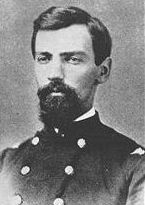
Historical · U.S. House · Ohio · District 15
Rufus Dawes
Former U.S. Representative · Ohio District 15 · 1881–1883 · Republican
Rufus Dawes represented Ohio's District 15 in the United States House of Representatives (1881–1883) for the Republican party. The page below collects sourced biographical facts, term history, committee roles, and provenance for Dawes.
Bioguide ID: D000149
Key facts
- Full name
- Rufus Dawes
- State
- Ohio
- District
- District 15
- Party
- Republican
- House service
- 1881–1883
- First House term
- 1881
- Status
- Left office
- Current term ends
- —
- Born
- 1838
- Bioguide ID
- D000149
- Committee assignments
- —
- Dataset version
- 1.20260606
Biographical narrative
995 words · sourced from the Wikipedia REST extract
Rufus R. Dawes was an American politician, military officer, and author who served as a U.S. Representative for Ohio's 15th congressional district from 1881 to 1883. A member of the Republican Party, Dawes is notable for his military service during the American Civil War, particularly as a member of the Iron Brigade, and for his subsequent political career. He was born on July 4, 1838, and passed away on August 1, 1899. Dawes was also the father of several prominent sons, including Charles G. Dawes, who served as Vice President of the United States and won the Nobel Peace Prize.
Early life and career
Rufus R. Dawes was born in 1838, on the Fourth of July, a date that would later symbolize his dedication to the ideals of American independence and service. He was a descendant of notable figures in American history; his great-grandfather, William Dawes, was known for his role in alerting colonial forces about the British approach prior to the Battles of Lexington and Concord during the American Revolution. Additionally, he was a great-grandson of Rev. Manasseh Cutler, who played a significant role in the adoption of the Northwest Ordinance of 1787 and was instrumental in the founding of Ohio University.
Dawes pursued his education at Marietta College, where he was active in student life and became one of the founders of the Alpha Digamma society in 1859. Following his studies, he moved to Wisconsin, where he began his career in the lumber business. His entrepreneurial endeavors were interrupted by the outbreak of the Civil War, during which he demonstrated leadership and commitment to the Union cause.
In May 1861, Dawes organized a volunteer company in Juneau County, Wisconsin, and was elected as its captain. His company, designated as Company K, was mustered into the 6th Wisconsin Volunteer Infantry. Over the course of the war, Dawes rose through the ranks, eventually attaining the position of lieutenant colonel. His service included participation in several significant battles, such as the Second Battle of Bull Run, Antietam, and Gettysburg. Notably, during the Battle of Gettysburg, Dawes led a counterattack that resulted in the capture of over 200 Confederate soldiers. His military career was marked by bravery and strategic acumen, and he was later nominated for the rank of brevet brigadier general, a testament to his service and leadership.
After the war, Dawes returned to Marietta, Ohio, where he resumed his business interests in the lumber industry. He married Mary Beman Gates in 1864, and they had a large family that included four sons and two daughters. His sons would go on to achieve notable success in various fields, with Charles G. Dawes becoming a prominent political figure and Nobel laureate.
House tenure
Rufus Dawes entered the political arena when he was elected to the U.S. House of Representatives in 1881, representing Ohio's 15th congressional district as a member of the Republican Party. His tenure in Congress was relatively brief, lasting only one term, as he served until March 3, 1883. During his time in office, Dawes was involved in various legislative discussions and decisions that reflected the political climate of the era.
One significant aspect of his congressional career was his opposition to the Chinese Exclusion Act of 1882, a law that aimed to restrict immigration from China. Dawes's vote against this legislation contributed to his defeat in the subsequent election, highlighting the contentious nature of immigration policy during that period. His stance on this issue may have reflected his broader views on civil rights and equality, although specific details of his legislative priorities and actions while in office are not extensively documented.
Despite the short duration of his congressional service, Dawes's political career was indicative of the complexities and challenges faced by lawmakers during the post-Civil War era. His military background and experiences shaped his perspectives on governance and public service, and his commitment to his constituents was evident throughout his time in office.
Legislative focus and committees
While specific details regarding the committees on which Rufus Dawes served during his time in the House of Representatives are not provided, it can be inferred that his background as a military officer and businessman influenced his legislative focus. Given the historical context of the late 19th century, issues such as veterans' affairs, economic development, and infrastructure may have been areas of interest for Dawes, reflecting the needs and concerns of his constituents in Ohio.
After leaving Congress, Dawes continued to engage with the public and share his experiences. In 1890, he published a memoir detailing his service in the Civil War, titled "Service with the 6th Wisconsin Volunteers." This work provided insight into his military experiences and contributed to the historical record of the Civil War. His memoir was later republished, indicating its lasting significance and the interest in Civil War narratives during the centennial commemorations.
In addition to his literary contributions, Dawes was recognized for his oratory skills and was considered an influential voice in advocating for diplomatic relations with Persia. In 1897, President William McKinley offered him the position of Minister to Persia, a role he declined due to health concerns. This decision reflects the challenges Dawes faced in his later years, as he navigated the complexities of public service while managing his health.
Rufus Dawes passed away on August 1, 1899, in Marietta, Ohio, and was laid to rest in Oak Grove Cemetery. His legacy continued through his family, particularly through his sons, who achieved notable success in their respective fields. In 2003, Dawes was posthumously inducted into Marietta College's Hall of Honor, recognizing his contributions to both the college and the broader community.
Overall, Rufus R. Dawes's life encompassed significant military service, a brief but impactful political career, and a lasting legacy through his family and written works. His experiences reflect the broader narrative of American history during a tumultuous period, marked by civil conflict, reconstruction, and the evolving role of government in addressing the needs of its citizens.
Notable legislation
Sponsored and co-sponsored legislation for Rufus Dawes is pending operator curation. The biographical narrative above carries the same provenance trail until per-bill rows are written.
Sources
- [1]https://en.wikipedia.org/wiki/Rufus_DawesWikipedia · retrieved 2026-06-06
Notable quotes
Sourced quotes for Rufus Dawes are pending operator curation. Narrative-scope provenance remains attached below.
Sources
- [1]https://en.wikipedia.org/wiki/Rufus_DawesWikipedia · retrieved 2026-06-06
Key positions
Curated policy positions for Rufus Dawes are pending operator review. The biographical narrative above carries the same provenance trail until per-topic positions are written.
Sources
- [1]https://en.wikipedia.org/wiki/Rufus_DawesWikipedia · retrieved 2026-06-06
Terms served
- 1881–1883U.S. House · Term 1 · Republican
Sources & provenance
Every attributable claim above carries a per-section [N] marker that resolves to the corresponding URL below. Each entry records the upstream provider, the canonical URL, and the timestamp at which the source was retrieved by the ingest pipeline.
Key facts
- https://bioguide.congress.gov/search/bio/D000149bioguide · retrieved 2026-06-06
- https://www.govtrack.us/congress/members/403282govtrack · retrieved 2026-06-06
Biographical narrative
- https://en.wikipedia.org/wiki/Rufus_Daweswikipedia · retrieved 2026-06-06
Find your representative
Every U.S. state elects representatives by district. Browse Ohio’s delegation, the full former-representative roster, or explore the role and term length.
Related on The Candidate
- Preceded by Nelson Van VorhesEarlier holder of the Ohio District 15 House seat · Republican.Open
- Succeeded by Henry Van VoorhisLater holder of the Ohio District 15 House seat · Republican.Open
- Aaron PerryFormer U.S. Representative · Ohio District 1 · RepublicanOpen
- Alexander DuncanFormer U.S. Representative · Ohio District 1 · DemocraticOpen
- Bellamy StorerFormer U.S. Representative · Ohio District 1 · WhigOpen
- Bellamy StorerFormer U.S. Representative · Ohio District 1 · RepublicanOpen