
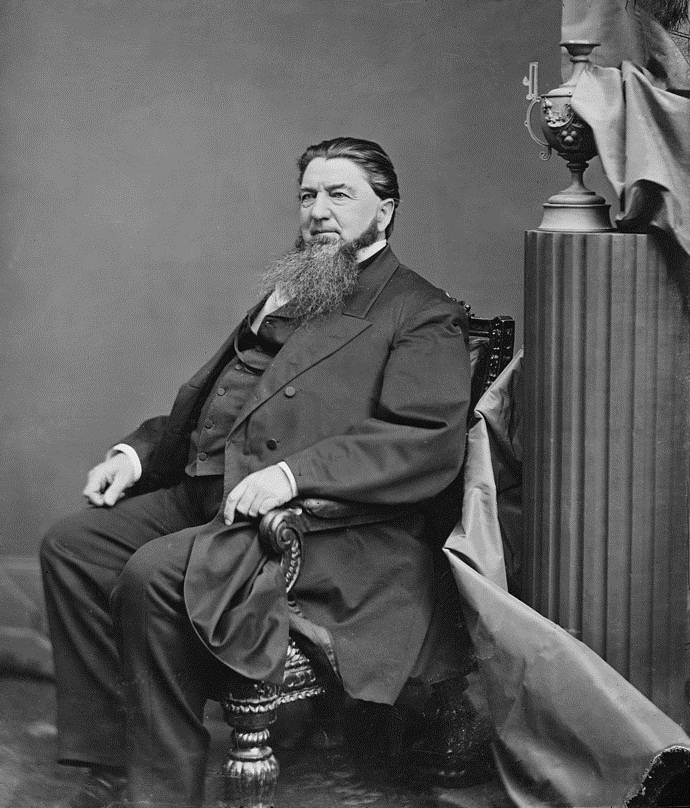
Historical · U.S. House · Ohio · District 15
Tobias Plants
Former U.S. Representative · Ohio District 15 · 1865–1869 · Republican
Tobias Plants represented Ohio's District 15 in the United States House of Representatives (1865–1869) for the Republican party. The page below collects sourced biographical facts, term history, committee roles, and provenance for Plants.
Bioguide ID: P000376
Key facts
- Full name
- Tobias Plants
- State
- Ohio
- District
- District 15
- Party
- Republican
- House service
- 1865–1869
- First House term
- 1865
- Status
- Left office
- Current term ends
- —
- Born
- 1811
- Bioguide ID
- P000376
- Committee assignments
- —
- Dataset version
- 1.20260606
Biographical narrative
916 words · sourced from the Wikipedia REST extract
Tobias Plants was an American lawyer, newspaperman, and politician who served as a U.S. Representative for Ohio's 15th congressional district during the mid-19th century. A member of the Republican Party, he held office from 1865 to 1869, participating in significant legislative activities during a transformative period in American history. Plants was born on March 17, 1811, in Sewickley, Pennsylvania, and he pursued a diverse career that included law, journalism, and public service. After his congressional tenure, he continued to contribute to his community in various capacities until his death in 1887.
Early life and career
Tobias Plants was born in Sewickley, Pennsylvania, where he began his working life at a young age. At twelve, he was apprenticed to a saddler, which provided him with early exposure to the trades and the work ethic that would characterize his later endeavors. Despite his early entry into the workforce, Plants valued education and pursued learning through various means. He received a limited education at common schools, which laid the groundwork for his future academic and professional pursuits.
Plants attended Beaver College in Meadville, Pennsylvania, where he furthered his education. After his time at college, he took on the role of a schoolteacher, which allowed him to support himself while continuing his studies. During this period, he studied law under the mentorship of Edwin M. Stanton, a prominent lawyer who would later serve as Secretary of War under President Abraham Lincoln. This legal training took place in the office of Judge David Powell in Steubenville, Ohio, where Plants honed his skills in the legal profession.
In 1846, Plants was admitted to the bar and began practicing law in Athens, Ohio. His legal career soon led him to Pomeroy, Ohio, where he established himself as a respected attorney. In addition to his legal practice, he became involved in journalism, owning and publishing the Pomeroy Weekly Telegraph around 1860. This role as a newspaperman allowed him to engage with the public on various issues and provided a platform for his political views.
Plants's political career began to take shape when he was elected to the Ohio House of Representatives, serving from 1858 to 1861. His experience in the state legislature provided him with valuable insights into governance and public policy, preparing him for his future role in the U.S. Congress.
House tenure
Tobias Plants was elected to the United States House of Representatives as a member of the Republican Party, representing Ohio's 15th congressional district. His congressional career spanned two terms, from March 4, 1865, to March 3, 1869. During this period, he participated in the Thirty-ninth and Fortieth Congresses, which were marked by significant national events, including the aftermath of the Civil War and the beginning of Reconstruction.
As a member of Congress, Plants was involved in legislative discussions and decisions that shaped the future of the nation during a critical time. The post-Civil War era was characterized by efforts to rebuild the South, address issues of civil rights, and integrate formerly enslaved individuals into American society. While specific details of his legislative actions are not documented, it is likely that he engaged in debates and votes related to these pressing national issues.
Plants chose not to seek renomination in 1868, concluding his time in Congress after two terms. His decision to step away from federal politics marked a transition in his career, allowing him to focus on other pursuits in public service and law.
Legislative focus and committees
While specific information regarding the committees on which Tobias Plants served during his time in Congress is not available, it is important to contextualize his legislative focus within the broader political landscape of the time. The Thirty-ninth and Fortieth Congresses were pivotal in addressing the challenges of Reconstruction, which included legislation aimed at rebuilding the South and ensuring civil rights for newly freed African Americans.
Given his background in law and his previous experience in the Ohio House of Representatives, it is reasonable to infer that Plants would have been involved in discussions surrounding legal reforms, civil rights, and economic recovery efforts. The Republican Party, during this period, was primarily focused on promoting policies that would support the integration of formerly enslaved individuals into society and the economy, as well as rebuilding the war-torn Southern states.
After his congressional tenure, Plants continued to serve his community in various capacities. He was appointed as a Common Pleas Judge in Meigs County, where he served from 1873 to 1875. This judicial role allowed him to apply his legal expertise in a different context, contributing to the administration of justice in his community. However, he resigned from this position to return to the practice of law, indicating his ongoing commitment to his legal career.
In addition to his legal work, Plants was active in political circles as a presidential elector for the Garfield/Arthur ticket in 1880. This role reflected his continued engagement in the political process and his support for the Republican Party. He also served as president of the First City Bank of Pomeroy from 1878 until his death, demonstrating his involvement in local economic affairs and community development.
Tobias Plants passed away on June 19, 1887, in Pomeroy, Ohio. He was interred in Beech Grove Cemetery, leaving behind a legacy of public service and community involvement. His life and career reflect the complexities of American politics during a transformative era, as well as the contributions of individuals who engaged in the legal and political arenas to shape the nation’s future.
Notable legislation
Sponsored and co-sponsored legislation for Tobias Plants is pending operator curation. The biographical narrative above carries the same provenance trail until per-bill rows are written.
Sources
- [1]https://en.wikipedia.org/wiki/Tobias_A._PlantsWikipedia · retrieved 2026-06-06
Notable quotes
Sourced quotes for Tobias Plants are pending operator curation. Narrative-scope provenance remains attached below.
Sources
- [1]https://en.wikipedia.org/wiki/Tobias_A._PlantsWikipedia · retrieved 2026-06-06
Key positions
Curated policy positions for Tobias Plants are pending operator review. The biographical narrative above carries the same provenance trail until per-topic positions are written.
Sources
- [1]https://en.wikipedia.org/wiki/Tobias_A._PlantsWikipedia · retrieved 2026-06-06
Terms served
- 1865–1867U.S. House · Term 1 · Republican
- 1867–1869U.S. House · Term 2 · Republican
Sources & provenance
Every attributable claim above carries a per-section [N] marker that resolves to the corresponding URL below. Each entry records the upstream provider, the canonical URL, and the timestamp at which the source was retrieved by the ingest pipeline.
Key facts
- https://bioguide.congress.gov/search/bio/P000376bioguide · retrieved 2026-06-06
- https://www.govtrack.us/congress/members/408770govtrack · retrieved 2026-06-06
Biographical narrative
- https://en.wikipedia.org/wiki/Tobias_A._Plantswikipedia · retrieved 2026-06-06
Find your representative
Every U.S. state elects representatives by district. Browse Ohio’s delegation, the full former-representative roster, or explore the role and term length.
Related on The Candidate
- Preceded by James MorrisEarlier holder of the Ohio District 15 House seat · Democratic.Open
- Succeeded by Eliakim MooreLater holder of the Ohio District 15 House seat · Republican.Open
- Aaron PerryFormer U.S. Representative · Ohio District 1 · RepublicanOpen
- Alexander DuncanFormer U.S. Representative · Ohio District 1 · DemocraticOpen
- Bellamy StorerFormer U.S. Representative · Ohio District 1 · WhigOpen
- Bellamy StorerFormer U.S. Representative · Ohio District 1 · RepublicanOpen