
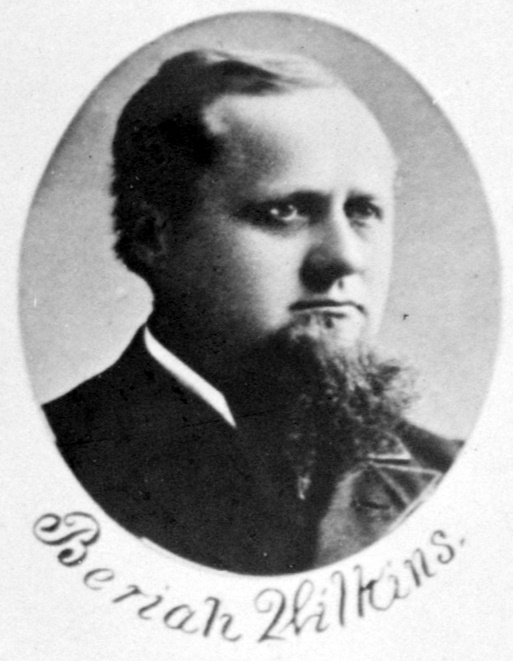
Historical · U.S. House · Ohio · District 16
Beriah Wilkins
Former U.S. Representative · Ohio District 16 · 1883–1889 · Democratic
Beriah Wilkins represented Ohio's District 16 in the United States House of Representatives (1883–1889) for the Democratic party. The page below collects sourced biographical facts, term history, committee roles, and provenance for Wilkins.
Bioguide ID: W000474
Key facts
- Full name
- Beriah Wilkins
- State
- Ohio
- District
- District 16
- Party
- Democratic
- House service
- 1883–1889
- First House term
- 1883
- Status
- Left office
- Current term ends
- —
- Born
- 1846
- Bioguide ID
- W000474
- Committee assignments
- —
- Dataset version
- 1.20260606
Biographical narrative
965 words · sourced from the Wikipedia REST extract
Beriah Wilkins was an American politician and Civil War veteran who served as a U.S. Representative from Ohio's 16th congressional district. A member of the Democratic Party, Wilkins held office for three terms in the late 19th century, from 1883 to 1889. His career in public service was marked by his involvement in banking and his leadership roles within the Democratic Party at both the state and national levels. After leaving Congress, he became a prominent figure in journalism, notably as the publisher and editor of The Washington Post until his death in 1905.
Early life and career
Beriah Wilkins was born on July 10, 1846, near Richwood, Ohio. His early education took place in the common schools of Marysville, Ohio, where he received a foundational education that would serve him throughout his life. As a young man, Wilkins became involved in the American Civil War, enlisting as a private in Company H of the One Hundred and Thirty-sixth Regiment of the Ohio Volunteer Infantry on May 2, 1864. His military service was brief but significant, as he served until his honorable discharge on August 31, 1864. This experience not only shaped his character but also instilled in him a sense of duty and commitment to public service.
Following the Civil War, Wilkins transitioned into the banking sector, where he engaged in financial activities in Uhrichsville, Ohio. His work in banking provided him with valuable experience in economic matters, which would later influence his legislative focus. Wilkins's political career began to take shape when he was elected to the Ohio Senate, where he served during the years 1880 and 1881. His involvement in state politics was further solidified when he became a member of the Democratic State Central Committee in 1882. These roles allowed him to establish connections within the Democratic Party and gain insights into the political landscape of Ohio, setting the stage for his future congressional ambitions.
House tenure
Wilkins's congressional career began when he was elected as a Democrat to the Forty-eighth Congress, which convened on March 4, 1883. He successfully secured re-election for the Forty-ninth and Fiftieth Congresses, serving in total for three consecutive terms until March 3, 1889. During his time in the House of Representatives, Wilkins was involved in various legislative activities and discussions that were pertinent to the interests of his constituents in Ohio's 16th district.
As a member of Congress, Wilkins was known for his leadership role as the chairman of the Committee on Banking and Currency during the Fiftieth Congress. This position placed him at the forefront of discussions surrounding financial legislation, banking regulations, and economic policy, which were critical issues during the late 19th century. His work on this committee allowed him to influence significant legislation that impacted the banking industry and the broader economy, reflecting his background in banking and finance.
Throughout his tenure, Wilkins participated in debates and votes on a range of issues, contributing to the legislative process and representing the interests of his constituents. His experience in the Ohio Senate and his involvement in the Democratic Party at the state level provided him with a strong foundation for his work in Congress. While specific details about the legislation he supported or opposed are not documented, his role as a committee chairman indicates a level of influence and responsibility within the House.
Legislative focus and committees
During his time in Congress, Beriah Wilkins's legislative focus was primarily centered on banking and currency issues, reflecting his professional background in finance. As chairman of the Committee on Banking and Currency, he played a crucial role in shaping policies that affected the banking sector and the economy. The late 19th century was a period of significant economic change in the United States, characterized by rapid industrialization and the expansion of the banking system. Wilkins's expertise in banking likely informed his contributions to discussions on monetary policy, financial regulation, and economic stability.
In addition to his work on the Committee on Banking and Currency, Wilkins's broader legislative agenda would have included addressing the needs and concerns of his constituents in Ohio. As a representative from a state with a growing industrial base, he would have been attuned to the economic challenges and opportunities facing his district. While specific legislative initiatives are not detailed in the available records, it can be inferred that his focus would have included issues relevant to labor, commerce, and infrastructure, which were critical to the economic development of Ohio during this era.
Wilkins's service in Congress coincided with a time of significant political and social change in the United States. The post-Civil War era was marked by efforts to rebuild the nation and address the complexities of a rapidly evolving economy. As a member of the Democratic Party, Wilkins would have been part of the larger national dialogue regarding issues such as civil rights, economic reform, and the role of government in regulating the economy. His contributions to these discussions, particularly in the context of banking and currency, would have been shaped by his experiences and the political climate of the time.
After concluding his congressional service in 1889, Beriah Wilkins relocated to Washington, D.C., where he continued to influence public discourse. He became the majority owner and publisher of The Washington Post in the same year he left Congress. His acquisition of the newspaper marked a significant transition in his career, allowing him to engage with the public through journalism. Wilkins's role as editor of The Washington Post until his death on June 7, 1905, positioned him as an important figure in the media landscape of the time. He is interred in Rock Creek Cemetery in Washington, D.C., leaving behind a legacy as a politician and journalist who contributed to the political and economic discussions of his era.
Notable legislation
Sponsored and co-sponsored legislation for Beriah Wilkins is pending operator curation. The biographical narrative above carries the same provenance trail until per-bill rows are written.
Sources
- [1]https://en.wikipedia.org/wiki/Beriah_WilkinsWikipedia · retrieved 2026-06-06
Notable quotes
Sourced quotes for Beriah Wilkins are pending operator curation. Narrative-scope provenance remains attached below.
Sources
- [1]https://en.wikipedia.org/wiki/Beriah_WilkinsWikipedia · retrieved 2026-06-06
Key positions
Curated policy positions for Beriah Wilkins are pending operator review. The biographical narrative above carries the same provenance trail until per-topic positions are written.
Sources
- [1]https://en.wikipedia.org/wiki/Beriah_WilkinsWikipedia · retrieved 2026-06-06
Terms served
- 1883–1885U.S. House · Term 1 · Democratic
- 1885–1887U.S. House · Term 2 · Democratic
- 1887–1889U.S. House · Term 3 · Democratic
Sources & provenance
Every attributable claim above carries a per-section [N] marker that resolves to the corresponding URL below. Each entry records the upstream provider, the canonical URL, and the timestamp at which the source was retrieved by the ingest pipeline.
Key facts
- https://bioguide.congress.gov/search/bio/W000474bioguide · retrieved 2026-06-06
- https://www.govtrack.us/congress/members/411631govtrack · retrieved 2026-06-06
Biographical narrative
- https://en.wikipedia.org/wiki/Beriah_Wilkinswikipedia · retrieved 2026-06-06
Find your representative
Every U.S. state elects representatives by district. Browse Ohio’s delegation, the full former-representative roster, or explore the role and term length.
Related on The Candidate
- Preceded by Jonathan UpdegraffEarlier holder of the Ohio District 16 House seat · Republican.Open
- Succeeded by Albert PearsonLater holder of the Ohio District 16 House seat · Democratic.Open
- Aaron PerryFormer U.S. Representative · Ohio District 1 · RepublicanOpen
- Alexander DuncanFormer U.S. Representative · Ohio District 1 · DemocraticOpen
- Bellamy StorerFormer U.S. Representative · Ohio District 1 · WhigOpen
- Bellamy StorerFormer U.S. Representative · Ohio District 1 · RepublicanOpen