
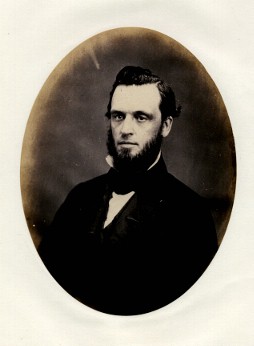
Historical · U.S. House · Ohio · District 17
James Monroe
Former U.S. Representative · Ohio District 17 · 1871–1881 · Republican
James Monroe represented Ohio's District 17 in the United States House of Representatives (1871–1881) for the Republican party. The page below collects sourced biographical facts, term history, committee roles, and provenance for Monroe.
Bioguide ID: M000857
Key facts
- Full name
- James Monroe
- State
- Ohio
- District
- District 17
- Party
- Republican
- House service
- 1871–1881
- First House term
- 1871
- Status
- Left office
- Current term ends
- —
- Born
- 1821
- Bioguide ID
- M000857
- Committee assignments
- —
- Dataset version
- 1.20260606
Biographical narrative
983 words · sourced from the Wikipedia REST extract
James Monroe was an American politician who served as a U.S. Representative from Ohio's 17th congressional district for five consecutive terms from 1871 to 1881. A member of the Republican Party, Monroe's political career was marked by his involvement in various legislative roles, including his chairmanship of the Committee on Education and Labor during the Forty-third Congress. His earlier career included significant contributions in both state and international contexts, reflecting a commitment to public service that spanned several decades.
Early life and career
James Monroe was born on July 18, 1821, in Plainfield, Connecticut. His early education took place in local common schools, where he laid the groundwork for his future academic pursuits. He later attended Plainfield Academy, which provided him with a more structured educational environment. Monroe's academic journey culminated in his graduation from Oberlin College in 1846, an institution known for its progressive stance on education and social issues, including abolitionism.
Following his graduation, Monroe pursued a postgraduate course in theology, which indicates his deep interest in religious studies and moral philosophy. This theological background would later inform his views and actions in public life. From 1849 until 1862, he served as a professor at Oberlin College, where he contributed to the education of many students during a transformative period in American history. His tenure at the college coincided with significant national events, including the Civil War, which likely influenced his perspectives on education and social justice.
Monroe's political career began in earnest when he was elected to the Ohio House of Representatives, where he served from 1856 to 1859. His legislative experience expanded when he was elected to the Ohio Senate, serving from 1860 to 1862. During this time, he was selected as president pro tempore, a position that underscored his leadership abilities and recognition among his peers. However, in October 1862, Monroe resigned from the Ohio Senate to accept a diplomatic role as the United States Consul in Rio de Janeiro, Brazil. He held this position from 1863 to 1869, where he represented American interests in Brazil during a period of significant political and social change in both nations. Following his consulship, he briefly served as Chargé d'Affaires ad interim to Brazil in 1869, further solidifying his diplomatic credentials.
House tenure
Monroe's congressional career began when he was elected as a Republican to the Forty-second Congress, which commenced on March 4, 1871. He was re-elected to four subsequent Congresses, serving until March 3, 1881. His five terms in the U.S. House of Representatives were characterized by a focus on issues pertinent to education and labor, reflecting his background as an educator and his commitment to social progress.
During his time in Congress, Monroe was appointed as the chairman of the Committee on Education and Labor during the Forty-third Congress. This role allowed him to influence legislation related to educational policies and labor rights, areas that were increasingly important in the post-Civil War United States as the country grappled with industrialization and its effects on society. Monroe's leadership in this committee was significant, as it provided him with a platform to advocate for reforms that would benefit workers and improve educational opportunities for all citizens.
Despite his active role in Congress, Monroe chose not to seek renomination after his fifth term. This decision marked the end of his direct involvement in national politics, but it did not signify a withdrawal from public life. His experiences in Congress and his earlier roles in state and international politics contributed to a well-rounded understanding of the complexities of governance and the importance of civic engagement.
Legislative focus and committees
Throughout his tenure in the House of Representatives, James Monroe's legislative focus was largely centered on education and labor issues. His background as a professor and his previous experiences in the Ohio legislature informed his approach to these critical areas. Monroe's work on the Committee on Education and Labor allowed him to engage with various stakeholders, including educators, labor leaders, and policymakers, to address the pressing needs of the time.
Monroe's commitment to education was particularly relevant during a period when the United States was experiencing rapid changes due to industrialization. The need for an educated workforce was becoming increasingly apparent, and Monroe's advocacy for educational reform aimed to ensure that all citizens had access to quality education. His efforts in this area were part of a broader movement that sought to improve educational standards and expand opportunities for underrepresented groups.
In addition to his focus on education, Monroe was also concerned with labor issues, which were becoming more prominent as workers organized for better conditions and rights. His legislative initiatives likely aimed to address the challenges faced by laborers, including fair wages, safe working conditions, and the right to organize. Monroe's understanding of these issues was shaped by his experiences in both the state legislature and his time as a consul, where he witnessed the effects of economic policies on individuals and communities.
After concluding his service in the House of Representatives in 1881, Monroe returned to Oberlin College, where he resumed his role as a professor from 1883 until 1896. This return to academia allowed him to continue influencing future generations and to share his insights gained from his extensive public service career. Monroe's legacy is preserved not only through his contributions to education and labor but also through the historical significance of his home in Oberlin, which is now part of the Oberlin Heritage Center. This site serves as a reminder of his commitment to education and social justice, highlighting the important events in the history of Oberlin and its role in the abolitionist movement.
James Monroe passed away on July 6, 1898, in Oberlin, Ohio, and was interred in Westwood Cemetery. His life and career reflect a dedication to public service, education, and the advancement of social causes, leaving a lasting impact on the communities he served.
Notable legislation
Sponsored and co-sponsored legislation for James Monroe is pending operator curation. The biographical narrative above carries the same provenance trail until per-bill rows are written.
Sources
- [1]https://en.wikipedia.org/wiki/James_Monroe_(Ohio_politician)Wikipedia · retrieved 2026-06-06
Notable quotes
Sourced quotes for James Monroe are pending operator curation. Narrative-scope provenance remains attached below.
Sources
- [1]https://en.wikipedia.org/wiki/James_Monroe_(Ohio_politician)Wikipedia · retrieved 2026-06-06
Key positions
Curated policy positions for James Monroe are pending operator review. The biographical narrative above carries the same provenance trail until per-topic positions are written.
Sources
- [1]https://en.wikipedia.org/wiki/James_Monroe_(Ohio_politician)Wikipedia · retrieved 2026-06-06
Terms served
- 1871–1873U.S. House · Term 1 · Republican
- 1873–1875U.S. House · Term 2 · Republican
- 1875–1877U.S. House · Term 3 · Republican
- 1877–1879U.S. House · Term 4 · Republican
- 1879–1881U.S. House · Term 5 · Republican
Sources & provenance
Every attributable claim above carries a per-section [N] marker that resolves to the corresponding URL below. Each entry records the upstream provider, the canonical URL, and the timestamp at which the source was retrieved by the ingest pipeline.
Key facts
- https://bioguide.congress.gov/search/bio/M000857bioguide · retrieved 2026-06-06
- https://www.govtrack.us/congress/members/407831govtrack · retrieved 2026-06-06
Biographical narrative
- https://en.wikipedia.org/wiki/James_Monroe_(Ohio_politician)wikipedia · retrieved 2026-06-06
Find your representative
Every U.S. state elects representatives by district. Browse Ohio’s delegation, the full former-representative roster, or explore the role and term length.
Related on The Candidate
- Preceded by Ephraim EckleyEarlier holder of the Ohio District 17 House seat · Republican.Open
- Succeeded by Addison McClureLater holder of the Ohio District 17 House seat · Republican.Open
- Aaron PerryFormer U.S. Representative · Ohio District 1 · RepublicanOpen
- Alexander DuncanFormer U.S. Representative · Ohio District 1 · DemocraticOpen
- Bellamy StorerFormer U.S. Representative · Ohio District 1 · WhigOpen
- Bellamy StorerFormer U.S. Representative · Ohio District 1 · RepublicanOpen