
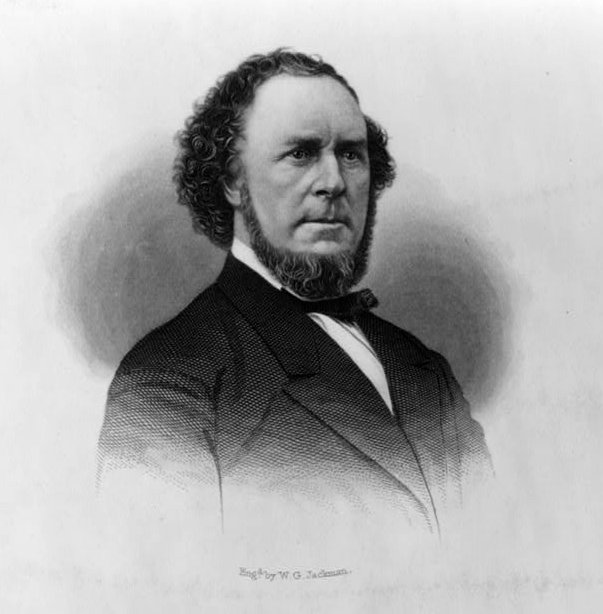
Historical · U.S. House · Ohio · District 2
Alexander Long
Former U.S. Representative · Ohio District 2 · 1863–1865 · Democratic
Alexander Long represented Ohio's District 2 in the United States House of Representatives (1863–1865) for the Democratic party. The page below collects sourced biographical facts, term history, committee roles, and provenance for Long.
Bioguide ID: L000410
Key facts
- Full name
- Alexander Long
- State
- Ohio
- District
- District 2
- Party
- Democratic
- House service
- 1863–1865
- First House term
- 1863
- Status
- Left office
- Current term ends
- —
- Born
- 1816
- Bioguide ID
- L000410
- Committee assignments
- —
- Dataset version
- 1.20260606
Biographical narrative
924 words · sourced from the Wikipedia REST extract
Alexander Long was an American politician who served as a U.S. Representative for Ohio's 2nd congressional district from 1863 to 1865. A member of the Democratic Party, Long is noted for his opposition to the Civil War and his affiliation with the Copperhead movement, which advocated for peace and sought to end the conflict through negotiations rather than military action. His political career was marked by his controversial views on states' rights and his evolving stance on issues related to slavery and civil rights.
Early life and career
Alexander Long was born on December 24, 1816, in Greenville, Pennsylvania. He spent his early years in the northern United States before relocating to Cincinnati, Ohio, in 1838 at the age of twenty-one. Following his move, Long settled in rural Hamilton County, where he initially worked as a farmhand. Recognizing the need to improve his education, he attended a local academy. After completing his studies, he became a teacher in Green Township, Hamilton County, where he taught for eight years from 1840 to 1848.
While teaching, Long pursued a legal education under the mentorship of Thomas J. Gallagher. He was admitted to the bar by the Ohio Supreme Court in March 1845. Long's entry into politics began in 1848 after he declined two nominations in the previous years. His political career was initially rooted in the Ohio State House of Representatives, where he served as a "free-soiler" Democrat from 1848 to 1850. During this time, he became associated with prominent political figures, including Salmon P. Chase, and played a role in Chase's election to the U.S. Senate in 1848.
After his tenure in the state legislature, Long moved to Cincinnati, where he established a successful law practice in January 1851. His political affiliations remained strong, and he supported Democratic candidate James Buchanan during the 1856 presidential election, aligning himself with the party's mainstream views leading up to the Civil War.
House tenure
In 1862, Long was elected to the U.S. House of Representatives as an anti-war Democrat representing Ohio's 2nd congressional district. His term began on March 4, 1863, during a tumultuous period in American history marked by the ongoing Civil War. Long's tenure in the House was characterized by his vocal opposition to the war and his advocacy for the rights of states to govern themselves without federal intervention. He became a prominent figure within the Copperhead movement, which sought to end the war through negotiation rather than continued military conflict.
Long's opposition to the Civil War was rooted in his belief in states' rights, a principle he articulated during his congressional speeches. He argued against President Abraham Lincoln's Emancipation Proclamation, asserting that it only served to entrench Southern resistance and prolong the conflict. His views were controversial and led to significant backlash from his contemporaries. On April 8, 1864, Long delivered a speech in Congress that underscored his anti-war stance and called for the recognition of the Confederacy as an independent nation. This speech solidified his reputation as a leading Copperhead and drew condemnation from many of his colleagues, including Speaker of the House Schuyler Colfax.
Despite the controversy surrounding his views, Long was unable to be expelled from Congress, though he was censured for what was deemed "treasonable utterances." Following his censure, he continued to advocate for his beliefs, but he faced significant challenges in maintaining his political career. In the 1864 election, he declined to support either Lincoln or the Democratic nominee, General George B. McClellan, and ultimately did not cast a vote for president, a stance he maintained until 1876.
Long's congressional career ended on March 3, 1865, when his term concluded. He made an unsuccessful bid for reelection to the 39th Congress later that year, marking the end of his time in federal office.
Legislative focus and committees
During his time in the House, Long's legislative focus was heavily influenced by his opposition to the Civil War and his advocacy for states' rights. He was a prominent member of the Copperhead faction within the Democratic Party, which sought to promote peace and negotiate an end to the conflict. Long's speeches and public statements often reflected his belief that the war was unconstitutional and that the federal government was overstepping its authority by waging war against the Confederate states.
Long's arguments were rooted in historical precedents, drawing on the writings of early American leaders such as Thomas Jefferson and James Madison, particularly their views expressed in The Kentucky and Virginia Resolutions. He contended that the war was a violation of the principles of self-governance and that the only viable solutions were either to recognize the independence of the Confederacy or to face the complete subjugation of its people.
Despite his strong convictions, Long's tenure in Congress was marked by significant opposition from both his peers and the public. His censure for "treasonable utterances" illustrated the contentious nature of his views and the political climate of the time. Following his departure from Congress, Long remained active in political circles, participating in Democratic National Conventions and continuing to advocate for his beliefs, although he never returned to elected office.
In summary, Alexander Long's political career was defined by his staunch opposition to the Civil War and his advocacy for states' rights. His time in the U.S. House of Representatives was marked by controversy and conflict, reflecting the deep divisions within the country during one of its most challenging periods. After leaving Congress, he continued to engage in political activities, maintaining his commitment to the principles he championed throughout his career.
Notable legislation
Sponsored and co-sponsored legislation for Alexander Long is pending operator curation. The biographical narrative above carries the same provenance trail until per-bill rows are written.
Sources
- [1]https://en.wikipedia.org/wiki/Alexander_LongWikipedia · retrieved 2026-06-06
Notable quotes
Sourced quotes for Alexander Long are pending operator curation. Narrative-scope provenance remains attached below.
Sources
- [1]https://en.wikipedia.org/wiki/Alexander_LongWikipedia · retrieved 2026-06-06
Key positions
Curated policy positions for Alexander Long are pending operator review. The biographical narrative above carries the same provenance trail until per-topic positions are written.
Sources
- [1]https://en.wikipedia.org/wiki/Alexander_LongWikipedia · retrieved 2026-06-06
Terms served
- 1863–1865U.S. House · Term 1 · Democratic
Sources & provenance
Every attributable claim above carries a per-section [N] marker that resolves to the corresponding URL below. Each entry records the upstream provider, the canonical URL, and the timestamp at which the source was retrieved by the ingest pipeline.
Key facts
- https://bioguide.congress.gov/search/bio/L000410bioguide · retrieved 2026-06-06
- https://www.govtrack.us/congress/members/406901govtrack · retrieved 2026-06-06
Biographical narrative
- https://en.wikipedia.org/wiki/Alexander_Longwikipedia · retrieved 2026-06-06
Find your representative
Every U.S. state elects representatives by district. Browse Ohio’s delegation, the full former-representative roster, or explore the role and term length.
Related on The Candidate
- Preceded by John GurleyEarlier holder of the Ohio District 2 House seat · Republican.Open
- Succeeded by Rutherford HayesLater holder of the Ohio District 2 House seat · Republican.Open
- Aaron PerryFormer U.S. Representative · Ohio District 1 · RepublicanOpen
- Alexander DuncanFormer U.S. Representative · Ohio District 1 · DemocraticOpen
- Bellamy StorerFormer U.S. Representative · Ohio District 1 · WhigOpen
- Bellamy StorerFormer U.S. Representative · Ohio District 1 · RepublicanOpen