
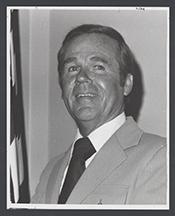
Historical · U.S. House · Ohio · District 2
Donald Clancy
Former U.S. Representative · Ohio District 2 · 1961–1977 · Republican
Donald Clancy represented Ohio's District 2 in the United States House of Representatives (1961–1977) for the Republican party. The page below collects sourced biographical facts, term history, committee roles, and provenance for Clancy.
Bioguide ID: C000409
Key facts
- Full name
- Donald Clancy
- State
- Ohio
- District
- District 2
- Party
- Republican
- House service
- 1961–1977
- First House term
- 1961
- Status
- Left office
- Current term ends
- —
- Born
- 1921
- Bioguide ID
- C000409
- Committee assignments
- —
- Dataset version
- 1.20260605
Biographical narrative
952 words · sourced from the Wikipedia REST extract
Donald D. Clancy was a prominent Republican politician who served as a U.S. Representative for Ohio's 2nd congressional district from 1961 until 1977. Over the course of his eight terms in office, Clancy became known for his involvement in various legislative matters and his commitment to his constituents. Prior to his congressional career, he held significant local political positions, including serving as the mayor of Cincinnati. Clancy's background in law and local governance provided him with a foundation for his work in the U.S. House of Representatives, where he engaged in the political landscape of the 1960s and 1970s.
Early life and career
Donald D. Clancy was born on July 24, 1921, in Cincinnati, Ohio, specifically in Hamilton County. His early education took place at Elder High School, a well-regarded institution in the Cincinnati area. Following high school, Clancy pursued higher education at Xavier University, a private Jesuit university in Cincinnati, where he began to develop his academic and professional interests. He later attended Cincinnati Law School, where he completed his legal studies and earned his law degree in 1948.
After being admitted to the bar in the same year, Clancy began practicing law in Cincinnati, establishing himself in the legal community. His legal career coincided with his growing interest in public service and local governance. Clancy's political career began in earnest when he was elected to the Cincinnati City Council in 1952. During his tenure on the council, he worked on various initiatives aimed at improving the city and addressing the needs of its residents.
Clancy's political influence grew when he was elected mayor of Cincinnati, a position he held from 1958 until 1960. In addition to his role as mayor, he served as the chairman of the Cincinnati Planning Commission, where he was involved in shaping the city's development and urban planning strategies. His leadership during this time was marked by efforts to enhance the quality of life for Cincinnati residents and to address the challenges facing the city.
In a notable political contest, Clancy faced off against Jerry Springer, who would later gain fame as a television talk show host, in the 1970 election for re-election to the House of Representatives. Clancy successfully secured his position, receiving a majority of the votes in that election. This victory underscored his political resilience and connection to the electorate.
House tenure
Donald D. Clancy's congressional career began with the Eighty-seventh Congress in 1961, when he was first elected to represent Ohio's 2nd congressional district. Over the course of his eight consecutive terms in the House of Representatives, Clancy became a familiar figure in Washington, D.C. His tenure spanned a significant period in American history, encompassing the civil rights movement, the Vietnam War, and various domestic policy debates.
During his time in Congress, Clancy participated in numerous legislative discussions and decisions that shaped national policy. His experience in local government provided him with insights into the needs and concerns of his constituents, which he brought to the national stage. Clancy's legislative efforts were likely influenced by the political climate of the 1960s and 1970s, as he navigated issues such as economic development, social welfare, and public safety.
Clancy's commitment to his constituents was evident in his approach to governance. He was known for engaging with the community and addressing the specific needs of the people he represented. His focus on local issues resonated with voters, contributing to his electoral success over the years. Clancy's ability to connect with his constituents was a hallmark of his political style, and it played a significant role in his re-elections.
Despite his long tenure in Congress, Clancy's political career came to an end after he lost his bid for re-election in 1976. Following his departure from the House of Representatives, he returned to Cincinnati, where he resumed his legal practice. His experience in Congress and his background in law continued to inform his professional endeavors after his time in public office.
Legislative focus and committees
Throughout his time in the U.S. House of Representatives, Donald D. Clancy was involved in various legislative initiatives and served on several committees. While specific details about the committees he served on are not provided, it is common for members of Congress to participate in committees that align with their interests and the needs of their constituents. These committees play a crucial role in shaping legislation and overseeing government functions.
Clancy's legislative focus likely reflected the priorities of his district and the broader political landscape of the time. As a Republican representative, he would have engaged with issues pertinent to his party's platform, including economic policies, national defense, and social issues. His background in law may have influenced his perspectives on legal and regulatory matters, contributing to his contributions in legislative discussions.
In addition to his formal legislative duties, Clancy's role as a representative involved advocating for the interests of his district. This included addressing concerns related to local economic development, infrastructure, education, and public safety. His experience as mayor and city council member provided him with a unique understanding of the challenges faced by local governments, which he could leverage in his congressional work.
Clancy's commitment to public service extended beyond his legislative responsibilities. His daughter, Patty Clancy, followed in his footsteps and became an Ohio State Senator, representing Ohio's 8th Senate district. This familial connection to public service highlights the Clancy family's ongoing involvement in the political landscape of Ohio.
Donald D. Clancy passed away on June 12, 2007, due to complications from Parkinson's disease. His legacy as a public servant and legal professional remains a part of Ohio's political history, reflecting his contributions to both local and national governance during a transformative period in American society.
Notable legislation
Sponsored and co-sponsored legislation for Donald Clancy is pending operator curation. The biographical narrative above carries the same provenance trail until per-bill rows are written.
Sources
- [1]https://en.wikipedia.org/wiki/Donald_D._ClancyWikipedia · retrieved 2026-06-05
Notable quotes
Sourced quotes for Donald Clancy are pending operator curation. Narrative-scope provenance remains attached below.
Sources
- [1]https://en.wikipedia.org/wiki/Donald_D._ClancyWikipedia · retrieved 2026-06-05
Key positions
Curated policy positions for Donald Clancy are pending operator review. The biographical narrative above carries the same provenance trail until per-topic positions are written.
Sources
- [1]https://en.wikipedia.org/wiki/Donald_D._ClancyWikipedia · retrieved 2026-06-05
Terms served
- 1961–1963U.S. House · Term 1 · Republican
- 1963–1965U.S. House · Term 2 · Republican
- 1965–1967U.S. House · Term 3 · Republican
- 1967–1969U.S. House · Term 4 · Republican
- 1969–1971U.S. House · Term 5 · Republican
- 1971–1973U.S. House · Term 6 · Republican
- 1973–1975U.S. House · Term 7 · Republican
- 1975–1977U.S. House · Term 8 · Republican
Sources & provenance
Every attributable claim above carries a per-section [N] marker that resolves to the corresponding URL below. Each entry records the upstream provider, the canonical URL, and the timestamp at which the source was retrieved by the ingest pipeline.
Key facts
- https://bioguide.congress.gov/search/bio/C000409bioguide · retrieved 2026-06-05
- https://www.govtrack.us/congress/members/402548govtrack · retrieved 2026-06-05
Biographical narrative
- https://en.wikipedia.org/wiki/Donald_D._Clancywikipedia · retrieved 2026-06-05
Find your representative
Every U.S. state elects representatives by district. Browse Ohio’s delegation, the full former-representative roster, or explore the role and term length.
Related on The Candidate
- Preceded by William HessEarlier holder of the Ohio District 2 House seat · Republican.Open
- Succeeded by Jean SchmidtLater holder of the Ohio District 2 House seat · Republican.Open
- Aaron PerryFormer U.S. Representative · Ohio District 1 · RepublicanOpen
- Alexander DuncanFormer U.S. Representative · Ohio District 1 · DemocraticOpen
- Bellamy StorerFormer U.S. Representative · Ohio District 1 · WhigOpen
- Bellamy StorerFormer U.S. Representative · Ohio District 1 · RepublicanOpen