
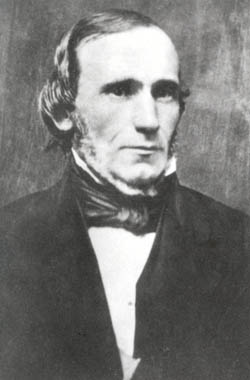
Historical · U.S. House · Ohio · District 2
John Harrison
Former U.S. Representative · Ohio District 2 · 1853–1857 · Ind. Republican-Democrat
John Harrison represented Ohio's District 2 in the United States House of Representatives (1853–1857) for the Ind. Republican-Democrat party. The page below collects sourced biographical facts, term history, committee roles, and provenance for Harrison.
Bioguide ID: H000272
Key facts
- Full name
- John Harrison
- State
- Ohio
- District
- District 2
- Party
- Ind. Republican-Democrat
- House service
- 1853–1857
- First House term
- 1853
- Status
- Left office
- Current term ends
- —
- Born
- 1804
- Bioguide ID
- H000272
- Committee assignments
- —
- Dataset version
- 1.20260606
Biographical narrative
956 words · sourced from the Wikipedia REST extract
John Harrison was an American politician who served as a U.S. Representative for Ohio's 2nd congressional district from 1853 to 1857. He was a member of the Republican-Democrat party and is notable for being the son of U.S. President William Henry Harrison and the father of U.S. President Benjamin Harrison, making him the only individual to have held the distinction of being both a son and father of U.S. presidents. His political career, while relatively brief, was marked by his involvement in significant political movements of the time, including the Anti-Nebraska movement.
Early life and career
John Harrison was born on October 4, 1804, in Vincennes, Indiana, where his family resided at Grouseland, the home of his father, William Henry Harrison, who was then the governor of the Indiana Territory and later became the ninth President of the United States. He was the second of ten children born to William Henry Harrison and Anna Tuthill Symmes. His family lineage included prominent figures; his paternal grandfather was Benjamin Harrison V, a signer of the Declaration of Independence, and his maternal grandfather was John Cleves Symmes, an associate justice on the Supreme Court of New Jersey.
Harrison received a basic education and pursued preparatory studies before initially studying law. However, he chose to abandon this path to become a farmer, a decision that reflected the agrarian lifestyle prevalent in his family and community. His early life was shaped by the political environment of his father’s career, which likely influenced his later political aspirations.
In 1852, Harrison entered politics as a member of the Whig Party, successfully winning a seat in the U.S. House of Representatives. His election marked the beginning of his congressional career, which would last until 1857. During his time in office, he was re-elected in 1854 as an Anti-Nebraska candidate, reflecting the growing opposition to the expansion of slavery into new territories. This political stance was significant during a period of intense national debate over slavery and its implications for the Union.
Harrison's political career was not without its challenges. He declined to run for the office of Governor of Ohio in 1855, indicating a preference to focus on his congressional duties rather than seek higher office. However, his tenure in the House came to an end when he was defeated in his bid for a third term in 1856. Following his departure from Congress, he returned to his estate, known as Point Farm, located in North Bend, Ohio.
House tenure
John Harrison's congressional career spanned two terms from 1853 to 1857. He was first elected to the House as a member of the Whig Party, a political group that was active in the early to mid-19th century and was known for its opposition to the Democratic Party and its stance on issues such as slavery and economic policy. His election in 1852 came during a time of significant political realignment in the United States, as the Whig Party began to fracture over the issue of slavery.
In 1854, Harrison successfully ran for re-election as an Anti-Nebraska candidate, indicating his alignment with those who opposed the Kansas-Nebraska Act, which allowed for the possibility of slavery in territories where it had previously been prohibited. This political position placed him in a critical role during a tumultuous period in American history, as the nation grappled with the implications of slavery and its expansion.
Despite his initial electoral success, Harrison's political career faced challenges. After serving two terms, he was defeated in his attempt to secure a third term in 1856. Following this defeat, he chose to retire from public office and returned to his agricultural pursuits in Ohio. His congressional tenure, while not extensive, was marked by his involvement in significant legislative debates of the era.
Legislative focus and committees
During his time in the U.S. House of Representatives, John Harrison's legislative focus was influenced by the political climate of the 1850s, particularly the contentious issue of slavery. As a member of the Anti-Nebraska faction, he was part of a movement that sought to counteract the expansion of slavery into new territories. This stance was emblematic of the broader national conflict that would eventually lead to the Civil War.
Harrison's committee assignments during his congressional tenure are not detailed in the available records. However, as a member of the House, he would have participated in discussions and debates relevant to the pressing issues of his time, including economic policies, territorial expansion, and the implications of slavery on American society. His alignment with the Anti-Nebraska movement suggests that he was actively engaged in legislative efforts aimed at shaping the future of the Union in a way that opposed the spread of slavery.
After leaving Congress, Harrison remained involved in political activities. He was nominated as a candidate for the Constitutional Union Party in 1860, reflecting his ongoing engagement with political movements that sought to address the divisions within the country. Additionally, in 1861, he was nominated on the Democratic ticket for the position of Lieutenant Governor of Ohio, indicating his continued interest in public service and governance.
Overall, John Harrison's legislative career, though brief, was set against the backdrop of a nation in turmoil over the issue of slavery. His contributions as a member of the House of Representatives were part of a larger narrative of political realignment and conflict that characterized the era leading up to the Civil War. His legacy is further complicated by his familial connections to two U.S. presidents, which places him in a unique position in American political history. Harrison passed away on May 25, 1878, in North Bend, Ohio, and was interred in the family tomb, leaving behind a complex legacy intertwined with the political developments of his time.
Notable legislation
Sponsored and co-sponsored legislation for John Harrison is pending operator curation. The biographical narrative above carries the same provenance trail until per-bill rows are written.
Sources
- [1]https://en.wikipedia.org/wiki/John_Scott_HarrisonWikipedia · retrieved 2026-06-06
Notable quotes
Sourced quotes for John Harrison are pending operator curation. Narrative-scope provenance remains attached below.
Sources
- [1]https://en.wikipedia.org/wiki/John_Scott_HarrisonWikipedia · retrieved 2026-06-06
Key positions
Curated policy positions for John Harrison are pending operator review. The biographical narrative above carries the same provenance trail until per-topic positions are written.
Sources
- [1]https://en.wikipedia.org/wiki/John_Scott_HarrisonWikipedia · retrieved 2026-06-06
Terms served
- 1853–1855U.S. House · Term 1 · Whig
- 1855–1857U.S. House · Term 2 · Ind. Republican-Democrat
Sources & provenance
Every attributable claim above carries a per-section [N] marker that resolves to the corresponding URL below. Each entry records the upstream provider, the canonical URL, and the timestamp at which the source was retrieved by the ingest pipeline.
Key facts
- https://bioguide.congress.gov/search/bio/H000272bioguide · retrieved 2026-06-06
- https://www.govtrack.us/congress/members/405148govtrack · retrieved 2026-06-06
Biographical narrative
- https://en.wikipedia.org/wiki/John_Scott_Harrisonwikipedia · retrieved 2026-06-06
Find your representative
Every U.S. state elects representatives by district. Browse Ohio’s delegation, the full former-representative roster, or explore the role and term length.
Related on The Candidate
- Preceded by David FisherEarlier holder of the Ohio District 2 House seat · Whig.Open
- Succeeded by William GroesbeckLater holder of the Ohio District 2 House seat · Democratic.Open
- Aaron PerryFormer U.S. Representative · Ohio District 1 · RepublicanOpen
- Alexander DuncanFormer U.S. Representative · Ohio District 1 · DemocraticOpen
- Bellamy StorerFormer U.S. Representative · Ohio District 1 · WhigOpen
- Bellamy StorerFormer U.S. Representative · Ohio District 1 · RepublicanOpen