
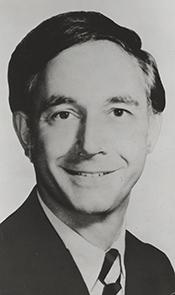
Historical · U.S. House · Ohio · District 2
Willis Gradison Jr.
Former U.S. Representative · Ohio District 2 · 1975–1993 · Republican
Willis Gradison Jr. represented Ohio's District 2 in the United States House of Representatives (1975–1993) for the Republican party. The page below collects sourced biographical facts, term history, committee roles, and provenance for Jr..
Bioguide ID: G000349
Key facts
- Full name
- Willis Gradison Jr.
- State
- Ohio
- District
- District 2
- Party
- Republican
- House service
- 1975–1993
- First House term
- 1975
- Status
- Left office
- Current term ends
- —
- Born
- 1928
- Bioguide ID
- G000349
- Committee assignments
- —
- Dataset version
- 1.20260605
Biographical narrative
936 words · sourced from the Wikipedia REST extract
Willis D. Gradison Jr. is a former American politician who served as a U.S. Representative for Ohio's 2nd congressional district from 1975 until 1993. A member of the Republican Party, Gradison was notable for his involvement in significant tax legislation and social security reform during his tenure in Congress. His political career was preceded by a background in banking and local government, where he held various positions, including a term as mayor of Cincinnati.
Early life and career
Willis David Gradison Jr. was born on December 28, 1928, in Cincinnati, Ohio. He received his early education at Walnut Hills High School, a well-regarded institution in the area. Following high school, Gradison pursued higher education, earning a Bachelor of Arts degree from Yale University in 1949. He continued his academic journey at Harvard University, where he obtained a Master of Business Administration in 1951 and later a Doctor of Commercial Science degree from the Harvard Business School in 1954.
Gradison began his professional career in the financial sector as an investment broker. His early work in government commenced when he served as an assistant to the Undersecretary of the Treasury from 1953 to 1955. He then transitioned to the Department of Health, Education, and Welfare, where he held the position of assistant to the Secretary from 1955 to 1957. These roles provided him with valuable experience in federal government operations and policy-making.
In the 1960s, Gradison entered local politics, being elected to the Cincinnati City Council in 1961. He served on the council until 1974, during which time he held the position of mayor in 1971, a role that rotated among council members at the time. His tenure in local government helped him build a foundation for his subsequent run for the U.S. House of Representatives.
Gradison was first elected to the House in 1974, beginning his service in 1975 as part of the 94th Congress. He was the first Jewish Representative from Ohio, marking a significant milestone in the state's political history. Initially representing Ohio's 1st congressional district, he later switched to the 2nd district following the 1980 census, a change that resulted from a redistricting process.
House tenure
Throughout his time in the U.S. House of Representatives, Gradison served a total of ten terms, concluding his congressional career on January 31, 1993. His legislative work was characterized by a focus on tax policy and social security reform, areas in which he played a significant role as a member of the House Ways and Means Committee. This committee is one of the most influential in Congress, responsible for overseeing taxation and revenue-related legislation.
Gradison's involvement in tax legislation during the 1980s was particularly noteworthy. He was instrumental in the development of several key tax acts, including the Economic Recovery Tax Act of 1981, the Tax Reform Act of 1984, and the Tax Reform Act of 1986. His advocacy for income tax indexing, which aimed to prevent "bracket creep" due to inflation, was a significant contribution to the 1981 tax legislation. This provision allowed income tax brackets to adjust automatically with inflation, thereby ensuring that taxpayers would not face higher tax rates solely due to inflationary increases in income.
In addition to tax reform, Gradison was also a key figure in the Social Security Reform Act of 1983. As the ranking Republican on the Ways and Means Subcommittee on Social Security, he contributed to critical reforms aimed at ensuring the long-term viability of the Social Security system. His proposals included measures to computerize death certificates for beneficiaries, which aimed to reduce fraudulent payments, and to place the Social Security Trust Funds "off-budget," thereby protecting them from political manipulation.
Gradison's legislative efforts extended to the Tax Reform Act of 1984, where he sponsored a bill clarifying the tax treatment of non-statutory fringe benefits. This legislation addressed ongoing controversies regarding how these benefits should be regulated by the Internal Revenue Service. His work contributed to the broader tax reform efforts of the 1980s, which sought to simplify the tax code and improve compliance.
In 1986, Gradison continued his focus on tax reform by requesting a study on corporate tax rates and the potential impact of eliminating the investment tax credit. The findings of this study informed the subsequent legislation that reduced corporate tax rates while maintaining revenue neutrality.
Legislative focus and committees
During his tenure in Congress, Gradison's primary focus was on tax policy and social security reform, areas that had significant implications for both individuals and the economy at large. His role on the House Ways and Means Committee allowed him to influence major legislative initiatives and contribute to the shaping of tax policy during a transformative period in American economic history.
Gradison's legislative achievements were characterized by a collaborative approach, working with colleagues across party lines to advance key reforms. His involvement in the Ways and Means Committee during the 95th through the 101st Congresses positioned him at the forefront of critical discussions regarding taxation and social welfare programs.
After leaving Congress in 1993, Gradison transitioned to a leadership role in the private sector, becoming the president of the Health Insurance Association of America. His departure from the House created a vacancy that was subsequently filled by fellow Republican Rob Portman in a special election.
In summary, Willis D. Gradison Jr. is recognized for his significant contributions to U.S. tax policy and social security reform during his long tenure in the House of Representatives. His background in finance and local government, combined with his legislative expertise, enabled him to play a pivotal role in shaping important economic policies that continue to impact American society.
Notable legislation
Sponsored and co-sponsored legislation for Willis Gradison Jr. is pending operator curation. The biographical narrative above carries the same provenance trail until per-bill rows are written.
Sources
- [1]https://en.wikipedia.org/wiki/Bill_GradisonWikipedia · retrieved 2026-06-05
Notable quotes
Sourced quotes for Willis Gradison Jr. are pending operator curation. Narrative-scope provenance remains attached below.
Sources
- [1]https://en.wikipedia.org/wiki/Bill_GradisonWikipedia · retrieved 2026-06-05
Key positions
Curated policy positions for Willis Gradison Jr. are pending operator review. The biographical narrative above carries the same provenance trail until per-topic positions are written.
Sources
- [1]https://en.wikipedia.org/wiki/Bill_GradisonWikipedia · retrieved 2026-06-05
Terms served
- 1975–1977U.S. House · Term 1 · Republican
- 1977–1979U.S. House · Term 2 · Republican
- 1979–1981U.S. House · Term 3 · Republican
- 1981–1983U.S. House · Term 4 · Republican
- 1983–1985U.S. House · Term 5 · Republican
- 1985–1987U.S. House · Term 6 · Republican
- 1987–1989U.S. House · Term 7 · Republican
- 1989–1991U.S. House · Term 8 · Republican
- 1991–1993U.S. House · Term 9 · Republican
- 1993–1993U.S. House · Term 10 · Republican
Sources & provenance
Every attributable claim above carries a per-section [N] marker that resolves to the corresponding URL below. Each entry records the upstream provider, the canonical URL, and the timestamp at which the source was retrieved by the ingest pipeline.
Key facts
- https://bioguide.congress.gov/search/bio/G000349bioguide · retrieved 2026-06-05
- https://www.govtrack.us/congress/members/404705govtrack · retrieved 2026-06-05
Biographical narrative
- https://en.wikipedia.org/wiki/Bill_Gradisonwikipedia · retrieved 2026-06-05
Find your representative
Every U.S. state elects representatives by district. Browse Ohio’s delegation, the full former-representative roster, or explore the role and term length.
Related on The Candidate
- Preceded by William HessEarlier holder of the Ohio District 2 House seat · Republican.Open
- Succeeded by Jean SchmidtLater holder of the Ohio District 2 House seat · Republican.Open
- Aaron PerryFormer U.S. Representative · Ohio District 1 · RepublicanOpen
- Alexander DuncanFormer U.S. Representative · Ohio District 1 · DemocraticOpen
- Bellamy StorerFormer U.S. Representative · Ohio District 1 · WhigOpen
- Bellamy StorerFormer U.S. Representative · Ohio District 1 · RepublicanOpen