
Historical · U.S. House · Ohio · District 20
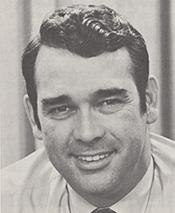
James Stanton
Former U.S. Representative · Ohio District 20 · 1971–1977 · Democratic
James Stanton represented Ohio's District 20 in the United States House of Representatives (1971–1977) for the Democratic party. The page below collects sourced biographical facts, term history, committee roles, and provenance for Stanton.
Bioguide ID: S000803
Key facts
- Full name
- James Stanton
- State
- Ohio
- District
- District 20
- Party
- Democratic
- House service
- 1971–1977
- First House term
- 1971
- Status
- Left office
- Current term ends
- —
- Born
- 1932
- Bioguide ID
- S000803
- Committee assignments
- —
- Dataset version
- 1.20260605
Biographical narrative
915 words · sourced from the Wikipedia REST extract
James V. Stanton was an American lawyer and politician who served as a U.S. Representative for Ohio's 20th congressional district from 1971 until 1977. A member of the Democratic Party, Stanton's political career was marked by his prior experience on the Cleveland City Council, where he held the position of president for several years. After concluding his time in Congress, he returned to the legal profession and later took on executive roles in the private sector. Stanton's life spanned significant historical events, including his military service during the Korean War, and he remained active in various professional capacities until his passing in 2022.
Early life and career
James Vincent Stanton was born on February 27, 1932, in Cleveland, Ohio. He completed his secondary education at Holy Name High School, graduating in 1949. Following high school, Stanton enlisted in the United States Air Force, where he served from 1950 to 1954 during the Korean War. This period of military service provided him with valuable experiences that would later inform his public service and leadership roles.
After his time in the Air Force, Stanton pursued higher education, earning an A.B. degree from the University of Dayton in 1958. He continued his studies at the Cleveland-Marshall College of Law, where he obtained his Juris Doctor (J.D.) degree in 1961. Upon completing his legal education, Stanton became a member of the Ohio bar association and began practicing law in Cleveland. His legal background would later play a significant role in his political career, as he navigated the complexities of legislation and governance.
Stanton's entry into politics began with his election to the Cleveland City Council, where he served from 1959 until 1970. His tenure on the council included a notable period as president from 1964 to 1970, during which he gained valuable experience in local governance and public policy. His leadership in this role helped him build a network of connections and establish a reputation as a dedicated public servant. This experience laid the groundwork for his subsequent election to the U.S. House of Representatives.
House tenure
Stanton's congressional career began when he was elected as a Democrat to the 92nd Congress, which commenced on January 3, 1971. He was subsequently re-elected to serve in the 93rd and 94th Congresses, completing a total of three terms in the House of Representatives. During his time in Congress, Stanton was involved in various legislative initiatives and contributed to discussions on a wide range of issues affecting his constituents and the nation.
One notable aspect of Stanton's congressional tenure was his involvement in the internal workings of the House. In his final term, he played a significant role in the leadership dynamics of the House by successfully advocating for the removal of House Doorkeeper William "Fishbait" Miller. Stanton's efforts led to the appointment of his friend and protégé, James Molloy, to the position. This change was significant as it reflected Stanton's influence within the House and his commitment to fostering leadership that aligned with his vision for the institution. Molloy would serve in that role until the office was abolished in 1995.
Stanton chose not to seek re-election in 1976, marking the end of his congressional career. Instead, he pursued a nomination for the United States Senate but was unsuccessful in that endeavor. Despite his defeat in the primary, he publicly supported Howard Metzenbaum, the candidate who ultimately won the nomination. Stanton's decision to step back from the House was influenced by his perception of the slow progress made by members in gaining stature and influence within the legislative body.
Legislative focus and committees
During his time in the House, Stanton's legislative focus encompassed a variety of issues pertinent to his constituents in Ohio and the broader national landscape. While specific details regarding the bills he sponsored or supported are not provided, it is typical for members of Congress to engage with matters related to their districts, including economic development, education, healthcare, and infrastructure.
Stanton's legal background likely informed his approach to legislation, as he would have been adept at understanding the implications of various policies and their effects on the public. His experience on the Cleveland City Council also provided him with insights into local governance, which he could translate into federal policy discussions.
In addition to his legislative work, Stanton's role on various committees would have been critical in shaping his contributions to Congress. While specific committee assignments are not detailed, members of the House typically serve on committees that align with their interests and expertise. These committees play a vital role in reviewing legislation, conducting hearings, and overseeing government operations. Stanton's involvement in such committees would have allowed him to advocate for his constituents and influence policy decisions at the national level.
After concluding his congressional service in January 1977, Stanton returned to the legal profession, practicing law in Washington, D.C., until 1981. He then transitioned to the private sector, serving as executive vice president of Delaware North Companies in Buffalo, New York, from 1981 to 1988. His career continued to evolve, and he furthered his education by earning an Advanced Management Program (A.M.P.) degree from Harvard University Business School in 1984.
Stanton spent his later years residing in Potomac, Maryland, where he remained engaged in various professional endeavors until his passing on May 2, 2022, at the age of 90. His life and career reflect a commitment to public service, law, and business, underscoring the diverse paths that individuals can take in their professional journeys.
Notable legislation
Sponsored and co-sponsored legislation for James Stanton is pending operator curation. The biographical narrative above carries the same provenance trail until per-bill rows are written.
Sources
- [1]https://en.wikipedia.org/wiki/James_V._StantonWikipedia · retrieved 2026-06-05
Notable quotes
Sourced quotes for James Stanton are pending operator curation. Narrative-scope provenance remains attached below.
Sources
- [1]https://en.wikipedia.org/wiki/James_V._StantonWikipedia · retrieved 2026-06-05
Key positions
Curated policy positions for James Stanton are pending operator review. The biographical narrative above carries the same provenance trail until per-topic positions are written.
Sources
- [1]https://en.wikipedia.org/wiki/James_V._StantonWikipedia · retrieved 2026-06-05
Terms served
- 1971–1973U.S. House · Term 1 · Democratic
- 1973–1975U.S. House · Term 2 · Democratic
- 1975–1977U.S. House · Term 3 · Democratic
Sources & provenance
Every attributable claim above carries a per-section [N] marker that resolves to the corresponding URL below. Each entry records the upstream provider, the canonical URL, and the timestamp at which the source was retrieved by the ingest pipeline.
Key facts
- https://bioguide.congress.gov/search/bio/S000803bioguide · retrieved 2026-06-05
- https://www.govtrack.us/congress/members/410269govtrack · retrieved 2026-06-05
Biographical narrative
- https://en.wikipedia.org/wiki/James_V._Stantonwikipedia · retrieved 2026-06-05
Find your representative
Every U.S. state elects representatives by district. Browse Ohio’s delegation, the full former-representative roster, or explore the role and term length.
Related on The Candidate
- Preceded by Michael FeighanEarlier holder of the Ohio District 20 House seat · Democratic.Open
- Succeeded by Mary OakarLater holder of the Ohio District 20 House seat · Democratic.Open
- Aaron PerryFormer U.S. Representative · Ohio District 1 · RepublicanOpen
- Alexander DuncanFormer U.S. Representative · Ohio District 1 · DemocraticOpen
- Bellamy StorerFormer U.S. Representative · Ohio District 1 · WhigOpen
- Bellamy StorerFormer U.S. Representative · Ohio District 1 · RepublicanOpen