
Historical · U.S. House · Ohio · District 22
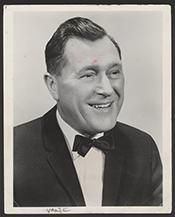
Charles Vanik
Former U.S. Representative · Ohio District 22 · 1955–1981 · Democratic
Charles Vanik represented Ohio's District 22 in the United States House of Representatives (1955–1981) for the Democratic party. The page below collects sourced biographical facts, term history, committee roles, and provenance for Vanik.
Bioguide ID: V000047
Key facts
- Full name
- Charles Vanik
- State
- Ohio
- District
- District 22
- Party
- Democratic
- House service
- 1955–1981
- First House term
- 1955
- Status
- Left office
- Current term ends
- —
- Born
- 1913
- Bioguide ID
- V000047
- Committee assignments
- —
- Dataset version
- 1.20260605
Biographical narrative
830 words · sourced from the Wikipedia REST extract
Charles A. Vanik was a prominent Democratic politician from Ohio who served as a U.S. Representative for 13 consecutive terms from 1955 until 1981. His lengthy tenure in the House of Representatives was marked by significant legislative contributions, particularly in the area of trade and immigration policy. Vanik's political career was characterized by his commitment to social justice and economic equity, reflecting the diverse constituency he represented throughout his years in office.
Early life and career
Charles Albert Vanik was born on April 7, 1913, in Cleveland, Ohio, to Stella Kvasnicka and Charles Albert Vanik, a butcher. He was of Czech descent, with familial roots tracing back to southern Bohemia. Growing up in a culturally rich environment, Vanik's early life in Cleveland would later influence his political perspectives and priorities.
Vanik pursued higher education at Western Reserve University, where he completed both his undergraduate studies and a law degree. His academic background laid a foundation for his future career in public service and law. Following his education, he began his political career by serving on the Cleveland City Council from 1938 to 1939. He then transitioned to the Ohio State Senate, where he served from 1940 to 1942. His legislative experience at the state level provided him with valuable insights into governance and public policy.
With the onset of World War II, Vanik enlisted in the U.S. Naval Reserve. He served in both the Atlantic and Pacific theaters, gaining firsthand experience of military service and the challenges faced by service members. After the war, he returned to Cleveland, where he took on the role of city judge from 1946 to 1954. This position further solidified his reputation as a dedicated public servant committed to justice and community welfare.
House tenure
In 1954, Vanik embarked on a new chapter in his political career by running for a seat in the U.S. House of Representatives, representing Ohio's 21st congressional district. This district, located on Cleveland's East Side, was characterized by a diverse population, with a significant number of African American residents who had historically aligned with the Republican Party. In the Democratic primary, Vanik faced off against incumbent Congressman Robert Crosser and African-American challenger John Holly, ultimately securing the nomination.
In the general election, Vanik defeated Republican candidate Francis E. Young, who was known for his involvement in civil rights through the Cleveland branch of the NAACP. Vanik's victory marked the beginning of a long and impactful congressional career. In 1968, he shifted to the neighboring 22nd congressional district, allowing Louis Stokes to take over the 21st district. Vanik successfully defeated Frances P. Bolton, who had held her seat since 1939, and continued to serve in the House until January 3, 1981.
Throughout his time in Congress, Vanik was known for his active engagement in legislative matters and his willingness to tackle complex issues. His long tenure allowed him to build significant influence within the House, and he was recognized for his ability to navigate the intricacies of legislative processes.
Legislative focus and committees
During his congressional career, Vanik was particularly noted for his work on trade and immigration policy. In 1974, he co-sponsored the Jackson–Vanik amendment alongside Senator Henry "Scoop" Jackson. This significant piece of legislation aimed to deny normal trade relations to certain countries with non-market economies that imposed restrictions on emigration. The amendment was designed to facilitate the escape of refugees, especially religious minorities, from the Soviet Bloc, reflecting Vanik's commitment to human rights and social justice.
In addition to his work on the Jackson–Vanik amendment, Vanik served as the chair of the House Ways and Means Subcommittee on Trade. In this capacity, he was instrumental in shaping trade policy and advocating for fair practices that would benefit American workers and industries. He was known for his critical stance on corporate tax practices, often highlighting corporations that paid little to no federal income taxes through what he termed the "Annual Corporate Tax Study," which he would insert into the Congressional Record.
Vanik's legislative efforts were characterized by a focus on equity and justice, aiming to address the needs of his constituents and the broader American populace. His commitment to social issues, particularly those affecting marginalized communities, was a hallmark of his time in office.
After leaving Congress, Vanik continued to be active in public life. In 1982, he sought the Democratic nomination for lieutenant governor of Ohio as the running mate of Attorney General William J. Brown, although the ticket ultimately lost in the election. Known for his distinctive style, Vanik was often seen wearing black bow ties with his suits, which became a recognizable aspect of his public persona.
Charles A. Vanik passed away on August 30, 2007, at the age of 94, in his home in Jupiter, Florida. He was survived by his wife, Betty, along with one son, one daughter, and two grandchildren. His legacy as a dedicated public servant and advocate for social justice continues to be remembered in Ohio and beyond.
Notable legislation
Sponsored and co-sponsored legislation for Charles Vanik is pending operator curation. The biographical narrative above carries the same provenance trail until per-bill rows are written.
Sources
- [1]https://en.wikipedia.org/wiki/Charles_VanikWikipedia · retrieved 2026-06-05
Notable quotes
Sourced quotes for Charles Vanik are pending operator curation. Narrative-scope provenance remains attached below.
Sources
- [1]https://en.wikipedia.org/wiki/Charles_VanikWikipedia · retrieved 2026-06-05
Key positions
Curated policy positions for Charles Vanik are pending operator review. The biographical narrative above carries the same provenance trail until per-topic positions are written.
Sources
- [1]https://en.wikipedia.org/wiki/Charles_VanikWikipedia · retrieved 2026-06-05
Terms served
- 1955–1957U.S. House · Term 1 · Democratic
- 1957–1959U.S. House · Term 2 · Democratic
- 1959–1961U.S. House · Term 3 · Democratic
- 1961–1963U.S. House · Term 4 · Democratic
- 1963–1965U.S. House · Term 5 · Democratic
- 1965–1967U.S. House · Term 6 · Democratic
- 1967–1969U.S. House · Term 7 · Democratic
- 1969–1971U.S. House · Term 8 · Democratic
- 1971–1973U.S. House · Term 9 · Democratic
- 1973–1975U.S. House · Term 10 · Democratic
- 1975–1977U.S. House · Term 11 · Democratic
- 1977–1979U.S. House · Term 12 · Democratic
- 1979–1981U.S. House · Term 13 · Democratic
Sources & provenance
Every attributable claim above carries a per-section [N] marker that resolves to the corresponding URL below. Each entry records the upstream provider, the canonical URL, and the timestamp at which the source was retrieved by the ingest pipeline.
Key facts
- https://bioguide.congress.gov/search/bio/V000047bioguide · retrieved 2026-06-05
- https://www.govtrack.us/congress/members/411126govtrack · retrieved 2026-06-05
Biographical narrative
- https://en.wikipedia.org/wiki/Charles_Vanikwikipedia · retrieved 2026-06-05
Find your representative
Every U.S. state elects representatives by district. Browse Ohio’s delegation, the full former-representative roster, or explore the role and term length.
Related on The Candidate
- Preceded by Chester BoltonEarlier holder of the Ohio District 22 House seat · Republican.Open
- Aaron PerryFormer U.S. Representative · Ohio District 1 · RepublicanOpen
- Alexander DuncanFormer U.S. Representative · Ohio District 1 · DemocraticOpen
- Bellamy StorerFormer U.S. Representative · Ohio District 1 · WhigOpen
- Bellamy StorerFormer U.S. Representative · Ohio District 1 · RepublicanOpen
- Democratic PartyFederal candidates and office holders on the Democratic line.Open