
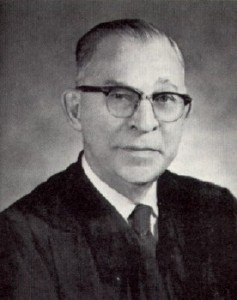
Historical · U.S. House · Ohio · District 4
Frank Kloeb
Former U.S. Representative · Ohio District 4 · 1933–1939 · Democratic
Frank Kloeb represented Ohio's District 4 in the United States House of Representatives (1933–1939) for the Democratic party. The page below collects sourced biographical facts, term history, committee roles, and provenance for Kloeb.
Bioguide ID: K000271
Key facts
- Full name
- Frank Kloeb
- State
- Ohio
- District
- District 4
- Party
- Democratic
- House service
- 1933–1939
- First House term
- 1933
- Status
- Left office
- Current term ends
- —
- Born
- 1890
- Bioguide ID
- K000271
- Committee assignments
- —
- Dataset version
- 1.20260605
Biographical narrative
804 words · sourced from the Wikipedia REST extract
Frank Kloeb was a Democratic politician who served as a U.S. Representative for Ohio's 4th congressional district from 1933 until 1937. Following his congressional tenure, he was appointed as a United States district judge, a position he held for several decades. Kloeb's career spanned significant periods in American history, including the Great Depression and World War II, during which he contributed to both legislative and judicial branches of government.
Early life and career
Frank Le Blond Kloeb was born on June 16, 1890, in Celina, Ohio. He was the grandson of Francis Celeste Le Blond and grew up in a community that would later influence his political career. Kloeb received his early education in both parochial and public schools, which laid the foundation for his academic pursuits. He furthered his education at Ohio State University in Columbus and later attended the University of Wisconsin–Madison.
In 1917, Kloeb graduated from the Ohio State University Moritz College of Law, marking the beginning of his legal career. He was admitted to the bar the same year and began practicing law in Celina in April 1919. His legal career was complemented by public service when he was elected as the prosecuting attorney for Mercer County, Ohio, a position he held from 1921 to 1925. After completing his term as prosecuting attorney, Kloeb returned to private legal practice, where he continued until his election to Congress in 1933.
Kloeb's life was also marked by his military service during World War I. He enlisted in the United States Navy in September 1917, where he advanced through the ranks from seaman to quartermaster, third class, and ultimately to ensign. His service lasted until March 1919, after which he returned to his legal career in Ohio.
House tenure
Kloeb's political career took a significant turn when he was elected as a Democrat to the 73rd United States Congress. His congressional service began on March 4, 1933, during a time when the nation was grappling with the economic challenges of the Great Depression. Kloeb was reelected to two subsequent Congresses, serving until August 19, 1937. His tenure in the House of Representatives was characterized by a commitment to addressing the pressing issues of his time, including economic recovery and social welfare.
During his time in Congress, Kloeb was involved in various legislative initiatives aimed at alleviating the hardships faced by his constituents and the nation as a whole. His work in the House coincided with the New Deal policies of President Franklin D. Roosevelt, which sought to provide relief and recovery to the American populace. Kloeb's contributions to these efforts were part of a broader Democratic agenda that aimed to reshape the role of government in the economy and society.
Kloeb's congressional career came to an end when he resigned on August 19, 1937, to accept a federal judicial appointment. His departure from the House marked the conclusion of a significant chapter in his public service, but it paved the way for a new role in the federal judiciary.
Legislative focus and committees
Throughout his time in the House of Representatives, Kloeb's legislative focus was aligned with the broader objectives of the Democratic Party during the 1930s. He was particularly concerned with issues related to economic recovery, social welfare, and the implementation of New Deal programs. While specific details about the committees he served on during his congressional tenure are not provided, it is common for members of Congress to engage in committees that align with their interests and the needs of their constituents.
Kloeb's commitment to public service extended beyond his legislative work. After resigning from Congress, he was nominated by President Franklin D. Roosevelt to serve as a United States district judge for the Northern District of Ohio. This appointment reflected his legal expertise and dedication to public service. Kloeb was confirmed by the Senate and took his commission on August 20, 1937.
As a district judge, Kloeb continued to influence the legal landscape of Ohio and the nation. He served as Chief Judge from 1959 to 1960 and assumed senior status on September 30, 1964. His judicial career lasted until his death on March 11, 1976, marking a significant legacy in both the legislative and judicial branches of government.
Kloeb's life and career were also marked by his family. He was married to Florence Root, and together they had one daughter. His personal life, while less documented in public records, contributed to the foundation of his character and values, which he carried into his professional endeavors.
In summary, Frank Kloeb's career as a U.S. Representative and later as a federal judge reflects a commitment to public service that spanned several decades. His contributions during a transformative period in American history underscore the role of elected officials in addressing the challenges faced by their constituents and the nation.
Notable legislation
Sponsored and co-sponsored legislation for Frank Kloeb is pending operator curation. The biographical narrative above carries the same provenance trail until per-bill rows are written.
Sources
- [1]https://en.wikipedia.org/wiki/Frank_Le_Blond_KloebWikipedia · retrieved 2026-06-05
Notable quotes
Sourced quotes for Frank Kloeb are pending operator curation. Narrative-scope provenance remains attached below.
Sources
- [1]https://en.wikipedia.org/wiki/Frank_Le_Blond_KloebWikipedia · retrieved 2026-06-05
Key positions
Curated policy positions for Frank Kloeb are pending operator review. The biographical narrative above carries the same provenance trail until per-topic positions are written.
Sources
- [1]https://en.wikipedia.org/wiki/Frank_Le_Blond_KloebWikipedia · retrieved 2026-06-05
Terms served
- 1933–1935U.S. House · Term 1 · Democratic
- 1935–1937U.S. House · Term 2 · Democratic
- 1937–1939U.S. House · Term 3 · Democratic
Sources & provenance
Every attributable claim above carries a per-section [N] marker that resolves to the corresponding URL below. Each entry records the upstream provider, the canonical URL, and the timestamp at which the source was retrieved by the ingest pipeline.
Key facts
- https://bioguide.congress.gov/search/bio/K000271bioguide · retrieved 2026-06-05
- https://www.govtrack.us/congress/members/406428govtrack · retrieved 2026-06-05
Biographical narrative
- https://en.wikipedia.org/wiki/Frank_Le_Blond_Kloebwikipedia · retrieved 2026-06-05
Find your representative
Every U.S. state elects representatives by district. Browse Ohio’s delegation, the full former-representative roster, or explore the role and term length.
Related on The Candidate
- Preceded by John CableEarlier holder of the Ohio District 4 House seat · Republican.Open
- Succeeded by Robert JonesLater holder of the Ohio District 4 House seat · Republican.Open
- Aaron PerryFormer U.S. Representative · Ohio District 1 · RepublicanOpen
- Alexander DuncanFormer U.S. Representative · Ohio District 1 · DemocraticOpen
- Bellamy StorerFormer U.S. Representative · Ohio District 1 · WhigOpen
- Bellamy StorerFormer U.S. Representative · Ohio District 1 · RepublicanOpen