
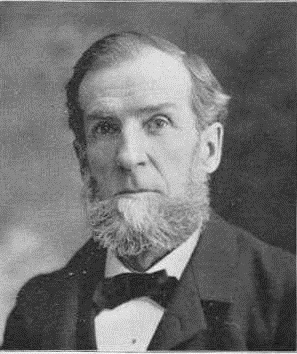
Historical · U.S. House · Ohio · District 4
Lewis Gunckel
Former U.S. Representative · Ohio District 4 · 1873–1875 · Republican
Lewis Gunckel represented Ohio's District 4 in the United States House of Representatives (1873–1875) for the Republican party. The page below collects sourced biographical facts, term history, committee roles, and provenance for Gunckel.
Bioguide ID: G000523
Key facts
- Full name
- Lewis Gunckel
- State
- Ohio
- District
- District 4
- Party
- Republican
- House service
- 1873–1875
- First House term
- 1873
- Status
- Left office
- Current term ends
- —
- Born
- 1826
- Bioguide ID
- G000523
- Committee assignments
- —
- Dataset version
- 1.20260606
Biographical narrative
858 words · sourced from the Wikipedia REST extract
Lewis Gunckel was a prominent American attorney and politician who served as a U.S. Representative for Ohio's 4th congressional district. A member of the Republican Party, Gunckel's political career was marked by his advocacy for Civil War veterans and their families. His tenure in the House of Representatives lasted from 1873 until 1875, after which he continued to engage in public service and legal practice until his death in 1903.
Early life and career
Lewis Gunckel was born on October 15, 1826, in Germantown, Ohio, a village established by his paternal grandfather, Philip Gunckel, in 1805. He was the son of Michael Gunckel and Barbara Shuey Gunckel. Michael Gunckel had a notable military background, having served in the War of 1812, where he achieved the rank of colonel. Following his military service, he became involved in local politics, representing his county in the Ohio legislature. Lewis's grandfather also had a significant political career, having served in the Ohio General Assembly and as an associate judge of the Circuit Court for Montgomery County.
Gunckel's educational journey began in local schools, after which he attended Miami University. He graduated from Farmer's College in Cincinnati, Ohio, in 1848. Following his graduation, he pursued a legal career, studying law in Dayton before attending the Cincinnati Law School, where he earned his degree in 1851. After being admitted to the Ohio bar the same year, Gunckel began practicing law in Dayton. He initially partnered with Hiram Strong in 1853, who remained his partner until his death during the Civil War. In 1869, Edward L. Rowe joined Gunckel, and their firm underwent several name changes over the years, becoming one of the oldest law firms in Ohio.
Gunckel's political involvement began in earnest when he joined the Whig Party upon reaching adulthood in 1847. Following the dissolution of the Whigs, he aligned himself with the newly formed Republican Party, becoming one of its early members in Montgomery County. He played a significant role in local Republican politics, presiding over the first Republican meeting in Montgomery County and serving as a delegate to the first Republican National Convention, which nominated John C. Frémont. His political activities also included serving as a Republican presidential elector in 1864, where he campaigned for Abraham Lincoln.
House tenure
In 1872, Gunckel was elected to represent Ohio's 4th congressional district in the United States House of Representatives. His term began in 1873 and lasted until 1875. During his time in Congress, Gunckel was involved in various legislative matters, particularly those concerning military and veterans' affairs, reflecting his longstanding commitment to supporting soldiers and their families. His background as a Civil War advocate informed his legislative priorities and actions while in office.
Gunckel's congressional service came during a period of significant change in the United States, as the nation was grappling with the aftermath of the Civil War and the challenges of Reconstruction. Although specific details regarding his legislative achievements in Congress are not extensively documented, his previous experience as a state senator and his advocacy for veterans likely influenced his contributions to discussions and decisions made during his tenure.
After completing his term in the House, Gunckel did not seek re-election. His time in Congress concluded on March 3, 1875. Following his departure from the House, he continued to engage in public service and legal practice, maintaining a presence in his community and contributing to various civic initiatives.
Legislative focus and committees
Throughout his political career, Gunckel was particularly focused on issues related to veterans and their families. His commitment to supporting those who served in the military was evident during his time in the Ohio Senate, where he played a crucial role in enacting legislation that provided relief and support for soldiers and their families during the Civil War. He authored a bill that granted voting rights to Ohio soldiers in the field, enabling many to participate in the democratic process while serving their country.
Gunckel's advocacy extended beyond state legislation. He was instrumental in the establishment of the National Soldiers' Home in Dayton, Ohio, which provided care for disabled veterans. His leadership in this initiative was recognized as a significant contribution to the welfare of veterans, as he served as the Resident Manager of the Central Home for a decade, overseeing the care and rehabilitation of disabled soldiers.
In addition to his work on veterans' issues, Gunckel was appointed by the Secretary of the Interior in 1871 to investigate fraud against Native American tribes, including the Cherokee, Creek, and Chickasaw. His findings led to reforms in the Indian service, highlighting his commitment to justice and accountability in government.
Gunckel's legislative focus and public service were characterized by a dedication to the welfare of others, particularly those who had served in the military. His efforts to support veterans and their families were a defining aspect of his career, reflecting the values he held throughout his life. After leaving Congress, Gunckel continued to be active in legal practice and civic affairs until his death on October 3, 1903. His legacy includes a commitment to public service and advocacy for those in need, particularly veterans and their families.
Notable legislation
Sponsored and co-sponsored legislation for Lewis Gunckel is pending operator curation. The biographical narrative above carries the same provenance trail until per-bill rows are written.
Sources
- [1]https://en.wikipedia.org/wiki/Lewis_B._GunckelWikipedia · retrieved 2026-06-06
Notable quotes
Sourced quotes for Lewis Gunckel are pending operator curation. Narrative-scope provenance remains attached below.
Sources
- [1]https://en.wikipedia.org/wiki/Lewis_B._GunckelWikipedia · retrieved 2026-06-06
Key positions
Curated policy positions for Lewis Gunckel are pending operator review. The biographical narrative above carries the same provenance trail until per-topic positions are written.
Sources
- [1]https://en.wikipedia.org/wiki/Lewis_B._GunckelWikipedia · retrieved 2026-06-06
Terms served
- 1873–1875U.S. House · Term 1 · Republican
Sources & provenance
Every attributable claim above carries a per-section [N] marker that resolves to the corresponding URL below. Each entry records the upstream provider, the canonical URL, and the timestamp at which the source was retrieved by the ingest pipeline.
Key facts
- https://bioguide.congress.gov/search/bio/G000523bioguide · retrieved 2026-06-06
- https://www.govtrack.us/congress/members/404868govtrack · retrieved 2026-06-06
Biographical narrative
- https://en.wikipedia.org/wiki/Lewis_B._Gunckelwikipedia · retrieved 2026-06-06
Find your representative
Every U.S. state elects representatives by district. Browse Ohio’s delegation, the full former-representative roster, or explore the role and term length.
Related on The Candidate
- Preceded by John McKinneyEarlier holder of the Ohio District 4 House seat · Democratic.Open
- Succeeded by Emanuel ShultzLater holder of the Ohio District 4 House seat · Republican.Open
- Aaron PerryFormer U.S. Representative · Ohio District 1 · RepublicanOpen
- Alexander DuncanFormer U.S. Representative · Ohio District 1 · DemocraticOpen
- Bellamy StorerFormer U.S. Representative · Ohio District 1 · WhigOpen
- Bellamy StorerFormer U.S. Representative · Ohio District 1 · RepublicanOpen