
Historical · U.S. House · Ohio · District 4
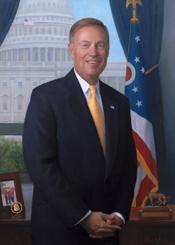
Michael Oxley
Former U.S. Representative · Ohio District 4 · 1981–2007 · Republican
Michael Oxley represented Ohio's District 4 in the United States House of Representatives (1981–2007) for the Republican party. The page below collects sourced biographical facts, term history, committee roles, and provenance for Oxley.
Bioguide ID: O000163
Key facts
- Full name
- Michael Oxley
- State
- Ohio
- District
- District 4
- Party
- Republican
- House service
- 1981–2007
- First House term
- 1981
- Status
- Left office
- Current term ends
- —
- Born
- 1944
- Bioguide ID
- O000163
- Committee assignments
- —
- Dataset version
- 1.20260605
Biographical narrative
893 words · sourced from the Wikipedia REST extract
Michael G. Oxley was an American politician and attorney who served as a U.S. Representative for Ohio's 4th congressional district. A member of the Republican Party, Oxley held office for a total of 13 terms, beginning in 1981 and concluding in 2007. He is known for his significant contributions to financial regulation, particularly as the House sponsor of the Sarbanes–Oxley Act, which was a response to corporate scandals in the early 2000s. Following his congressional career, he held several prominent positions in the private sector until his passing in 2016.
Early life and career
Michael Garver Oxley was born on February 11, 1944, in Findlay, Ohio. He pursued higher education at Miami University, where he earned a Bachelor of Arts degree in 1966. Oxley continued his studies at Ohio State University, obtaining a Juris Doctor degree in 1969. During his time at Miami University, he was an active member of the Alpha chapter of the Sigma Chi fraternity, which provided him with early leadership experiences.
After completing his law degree, Oxley began his professional career with the Federal Bureau of Investigation (FBI), where he worked from 1969 to 1972. His tenure at the FBI marked the beginning of his involvement in public service and politics. Following his time with the FBI, Oxley became increasingly engaged with the Ohio Republican Party, which laid the groundwork for his future political career.
Oxley entered elected office in 1973 when he was elected to the Ohio House of Representatives. He served in this capacity until 1981, gaining valuable legislative experience and establishing a reputation within the party. His work in the Ohio House helped to prepare him for a national political role, leading to his eventual election to the U.S. House of Representatives.
House tenure
Michael Oxley's congressional career began in June 1981 when he was elected in a special election to fill the vacancy left by the death of U.S. Representative Tennyson Guyer. He represented Ohio's 4th congressional district, which encompasses a portion of northwestern Ohio. Over the course of his 13 terms in office, Oxley became known for his expertise in financial and economic issues.
During his time in Congress, Oxley held several important leadership positions. He served as the chairman of the Committee on Financial Services, where he played a pivotal role in shaping legislation related to banking, securities, and insurance. His most notable legislative achievement was as the House sponsor of the Sarbanes–Oxley Act of 2002, a comprehensive piece of legislation that aimed to enhance corporate governance and accountability in the wake of high-profile corporate scandals, such as Enron and WorldCom. This act introduced significant reforms to financial reporting and auditing practices for publicly traded companies, reflecting Oxley's commitment to improving the integrity of the financial markets.
In addition to his work on the Sarbanes–Oxley Act, Oxley was involved in various other legislative initiatives. He sponsored a bill in 2006 that condemned media outlets for publishing information regarding a covert financial surveillance system. His efforts in Congress were characterized by a focus on financial regulation and oversight, which aligned with his professional background as an attorney and his experience in the financial sector.
Oxley's tenure in Congress came to an end when he announced his retirement on November 1, 2005, effective at the conclusion of his term in January 2007. He was succeeded by fellow Republican Jim Jordan, who continued to represent the district in the House.
Legislative focus and committees
Throughout his congressional career, Michael Oxley was primarily focused on issues related to financial services, corporate governance, and regulatory reform. His role as chairman of the Committee on Financial Services allowed him to influence key legislation that shaped the financial landscape of the United States. The Sarbanes–Oxley Act, which he sponsored, is often cited as a landmark piece of legislation that established stricter regulations for financial reporting and auditing, aimed at protecting investors and restoring public confidence in the financial markets.
Oxley's legislative priorities reflected a broader commitment to ensuring accountability and transparency within the financial sector. His work on the Financial Services Committee involved oversight of various financial institutions, including banks and securities firms, as well as addressing issues related to consumer protection in financial transactions.
In addition to his focus on financial services, Oxley was involved in various other legislative matters, demonstrating a willingness to engage with a wide range of issues affecting his constituents and the nation. His experience as a lawyer and his background in law enforcement contributed to his understanding of the complexities of regulatory frameworks and the importance of effective governance.
After leaving Congress, Oxley continued to influence the financial sector through his roles in the private sector. He was appointed as a nonexecutive vice chairman for NASDAQ and later became a partner at the law firm BakerHostetler in Washington, D.C. His expertise in financial regulation led him to work as a lobbyist for the Financial Industry Regulatory Authority, further solidifying his legacy in the field of financial services.
Michael G. Oxley passed away on January 1, 2016, after a battle with lung cancer. His contributions to American politics and financial regulation continue to be recognized, and his legacy is honored through various memorials, including the naming of the Findlay post office in his honor and the designation of a portion of U.S. Route 30 as the "Congressman Michael G. Oxley Memorial Highway."
Notable legislation
Sponsored and co-sponsored legislation for Michael Oxley is pending operator curation. The biographical narrative above carries the same provenance trail until per-bill rows are written.
Sources
- [1]https://en.wikipedia.org/wiki/Mike_OxleyWikipedia · retrieved 2026-06-05
Notable quotes
Sourced quotes for Michael Oxley are pending operator curation. Narrative-scope provenance remains attached below.
Sources
- [1]https://en.wikipedia.org/wiki/Mike_OxleyWikipedia · retrieved 2026-06-05
Key positions
Curated policy positions for Michael Oxley are pending operator review. The biographical narrative above carries the same provenance trail until per-topic positions are written.
Sources
- [1]https://en.wikipedia.org/wiki/Mike_OxleyWikipedia · retrieved 2026-06-05
Terms served
- 1981–1983U.S. House · Term 1 · Republican
- 1983–1985U.S. House · Term 2 · Republican
- 1985–1987U.S. House · Term 3 · Republican
- 1987–1989U.S. House · Term 4 · Republican
- 1989–1991U.S. House · Term 5 · Republican
- 1991–1993U.S. House · Term 6 · Republican
- 1993–1995U.S. House · Term 7 · Republican
- 1995–1997U.S. House · Term 8 · Republican
- 1997–1999U.S. House · Term 9 · Republican
- 1999–2001U.S. House · Term 10 · Republican
- 2001–2003U.S. House · Term 11 · Republican
- 2003–2005U.S. House · Term 12 · Republican
- 2005–2007U.S. House · Term 13 · Republican
Sources & provenance
Every attributable claim above carries a per-section [N] marker that resolves to the corresponding URL below. Each entry records the upstream provider, the canonical URL, and the timestamp at which the source was retrieved by the ingest pipeline.
Key facts
- https://bioguide.congress.gov/search/bio/O000163bioguide · retrieved 2026-06-05
- http://www.house.gov/oxleyhouse.gov · retrieved 2026-06-05
Biographical narrative
- https://en.wikipedia.org/wiki/Mike_Oxleywikipedia · retrieved 2026-06-05
Find your representative
Every U.S. state elects representatives by district. Browse Ohio’s delegation, the full former-representative roster, or explore the role and term length.
Related on The Candidate
- Preceded by William McCullochEarlier holder of the Ohio District 4 House seat · Republican.Open
- Aaron PerryFormer U.S. Representative · Ohio District 1 · RepublicanOpen
- Alexander DuncanFormer U.S. Representative · Ohio District 1 · DemocraticOpen
- Bellamy StorerFormer U.S. Representative · Ohio District 1 · WhigOpen
- Bellamy StorerFormer U.S. Representative · Ohio District 1 · RepublicanOpen
- Republican PartyFederal candidates and office holders on the Republican line.Open