
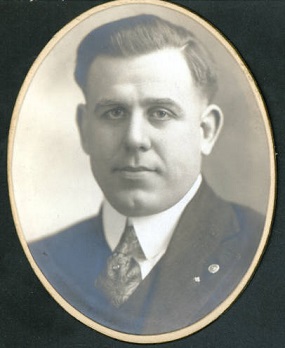
Historical · U.S. House · Ohio · District 4
Walter Albaugh
Former U.S. Representative · Ohio District 4 · 1937–1939 · Republican
Walter Albaugh represented Ohio's District 4 in the United States House of Representatives (1937–1939) for the Republican party. The page below collects sourced biographical facts, term history, committee roles, and provenance for Albaugh.
Bioguide ID: A000072
Key facts
- Full name
- Walter Albaugh
- State
- Ohio
- District
- District 4
- Party
- Republican
- House service
- 1937–1939
- First House term
- 1937
- Status
- Left office
- Current term ends
- —
- Born
- 1890
- Bioguide ID
- A000072
- Committee assignments
- —
- Dataset version
- 1.20260605
Biographical narrative
844 words · sourced from the Wikipedia REST extract
Walter Albaugh was an American lawyer and politician who served as a U.S. Representative for Ohio's 4th congressional district. A member of the Republican Party, he held office for a brief period from late 1938 to early 1939. His career in public service was preceded by a background in law and civil engineering, as well as military service during World War I. Following his congressional tenure, Albaugh returned to his legal practice and remained active in community service until his passing in 1942.
Early life and career
Walter Hugh Albaugh was born on January 2, 1890, in Phoneton, Ohio. He was the son of Frances (née Anderson) and Clifford Lincoln Albaugh, who was a prominent figure in the local community, serving as a bank president and nurseryman. Growing up in a family that valued education and public service, Albaugh was exposed to the principles of civic responsibility from an early age. He attended public schools in Bethel Township, where he completed his primary and secondary education.
After finishing high school, Albaugh embarked on a career as a civil engineer. From 1910 to 1911, he worked in this field, surveying fuel lands in both Ohio and West Virginia. This early professional experience likely contributed to his understanding of infrastructure and land use, which would inform his later political career. However, his aspirations led him to pursue a legal education. He enrolled at Ohio State University in Columbus, where he studied law and graduated from the law department in 1914. Upon completing his studies, he was admitted to the bar the same year and began practicing law in Troy, Ohio.
Albaugh's legal career was briefly interrupted by World War I. He enlisted in the United States Infantry and served as a private from May 28, 1918, until December 13, 1918. His military service provided him with firsthand experience of the challenges faced by soldiers and their families during wartime, which would later influence his perspectives as a public servant.
Following the war, Albaugh returned to Ohio and continued his legal practice. His commitment to public service was evident when he was elected to the Ohio House of Representatives, where he served from 1921 to 1925. This role marked the beginning of his political career, allowing him to engage with legislative processes and address the needs of his constituents.
House tenure
Walter Albaugh's tenure in the U.S. House of Representatives was relatively brief. He was elected as a Republican to the Seventy-fifth Congress to fill a vacancy created by the resignation of Frank L. Kloeb. Albaugh officially took office on November 8, 1938. During his short time in Congress, he participated in the legislative process, contributing to discussions and decisions that would impact his district and the nation.
Despite the limited duration of his congressional service, Albaugh's election was significant in that it reflected the political landscape of the time, as well as the dynamics within the Republican Party. His tenure lasted until January 3, 1939, when he concluded his term. Notably, he chose not to seek nomination for a subsequent full term in the 1938 elections, which indicated a shift in his career focus following his brief time in Washington, D.C.
After leaving Congress, Albaugh returned to his legal practice in Troy, Ohio. His decision to step away from the political arena did not diminish his commitment to community service. He remained active in various civic organizations, including the American Red Cross, where he contributed his time and expertise to support local initiatives and humanitarian efforts.
Legislative focus and committees
While specific details regarding Walter Albaugh's legislative focus during his time in Congress are not extensively documented, it can be inferred that his background in law and civil engineering likely influenced his interests in infrastructure, legal reform, and community development. As a member of the Republican Party during a period marked by significant economic challenges, including the Great Depression, Albaugh would have been engaged in discussions surrounding fiscal policy, public works, and the role of government in economic recovery.
His experience in the Ohio House of Representatives prior to his congressional service would have provided him with insights into state-level governance and the needs of his constituents. This background may have shaped his approach to legislative issues, emphasizing the importance of local concerns in national policy discussions.
In addition to his legislative responsibilities, Albaugh's involvement in the American Red Cross and other civic organizations demonstrated his commitment to public service beyond the confines of elected office. His role as secretary of the county executive committee in Miami County further illustrated his dedication to community engagement and leadership.
Walter Albaugh's life and career were characterized by a blend of legal expertise, military service, and a commitment to public welfare. His contributions to Ohio's political landscape, albeit brief, reflected the values of service and community that he upheld throughout his life. Following his passing on January 21, 1942, due to a stroke, he was interred in Memorial Park Cemetery in Dayton, Ohio, leaving behind a legacy of civic involvement and dedication to the legal profession.
Notable legislation
Sponsored and co-sponsored legislation for Walter Albaugh is pending operator curation. The biographical narrative above carries the same provenance trail until per-bill rows are written.
Sources
- [1]https://en.wikipedia.org/wiki/Walter_H._AlbaughWikipedia · retrieved 2026-06-05
Notable quotes
Sourced quotes for Walter Albaugh are pending operator curation. Narrative-scope provenance remains attached below.
Sources
- [1]https://en.wikipedia.org/wiki/Walter_H._AlbaughWikipedia · retrieved 2026-06-05
Key positions
Curated policy positions for Walter Albaugh are pending operator review. The biographical narrative above carries the same provenance trail until per-topic positions are written.
Sources
- [1]https://en.wikipedia.org/wiki/Walter_H._AlbaughWikipedia · retrieved 2026-06-05
Terms served
- 1937–1939U.S. House · Term 1 · Republican
Sources & provenance
Every attributable claim above carries a per-section [N] marker that resolves to the corresponding URL below. Each entry records the upstream provider, the canonical URL, and the timestamp at which the source was retrieved by the ingest pipeline.
Key facts
- https://bioguide.congress.gov/search/bio/A000072bioguide · retrieved 2026-06-05
- https://www.govtrack.us/congress/members/400731govtrack · retrieved 2026-06-05
Biographical narrative
- https://en.wikipedia.org/wiki/Walter_H._Albaughwikipedia · retrieved 2026-06-05
Find your representative
Every U.S. state elects representatives by district. Browse Ohio’s delegation, the full former-representative roster, or explore the role and term length.
Related on The Candidate
- Preceded by John CableEarlier holder of the Ohio District 4 House seat · Republican.Open
- Succeeded by Robert JonesLater holder of the Ohio District 4 House seat · Republican.Open
- Aaron PerryFormer U.S. Representative · Ohio District 1 · RepublicanOpen
- Alexander DuncanFormer U.S. Representative · Ohio District 1 · DemocraticOpen
- Bellamy StorerFormer U.S. Representative · Ohio District 1 · WhigOpen
- Bellamy StorerFormer U.S. Representative · Ohio District 1 · RepublicanOpen