
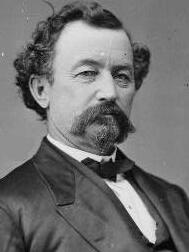
Historical · U.S. House · Ohio · District 5
William Mungen
Former U.S. Representative · Ohio District 5 · 1867–1871 · Democratic
William Mungen represented Ohio's District 5 in the United States House of Representatives (1867–1871) for the Democratic party. The page below collects sourced biographical facts, term history, committee roles, and provenance for Mungen.
Bioguide ID: M001079
Key facts
- Full name
- William Mungen
- State
- Ohio
- District
- District 5
- Party
- Democratic
- House service
- 1867–1871
- First House term
- 1867
- Status
- Left office
- Current term ends
- —
- Born
- 1821
- Bioguide ID
- M001079
- Committee assignments
- —
- Dataset version
- 1.20260606
Biographical narrative
909 words · sourced from the Wikipedia REST extract
William Mungen was a prominent figure in American politics during the nineteenth century, serving as a U.S. Representative from Ohio. He was a member of the Democratic Party and held office for two terms from 1867 to 1871. Mungen's career encompassed various roles, including that of a lawyer, educator, editor, and military officer. His contributions to both his local community and the nation reflect the complexities of the era in which he lived, particularly during the tumultuous years of the Civil War and the Reconstruction period that followed.
Early life and career
William Mungen was born on May 12, 1821, in Baltimore, Maryland. His family relocated to Ohio in 1830 when he was just nine years old. This move marked the beginning of his long association with the state, where he would eventually build a multifaceted career. Mungen received his early education in common schools, which laid the foundation for his future endeavors in teaching and law.
In his early career, Mungen took on the role of a schoolteacher, demonstrating his commitment to education and community service. His involvement in education was complemented by his work as an editor and publisher of the Findlay Democratic Courier, a local newspaper that played a significant role in disseminating information and political viewpoints in the region. His editorial work likely provided him with insights into the political landscape of the time and helped him develop the skills necessary for a career in politics.
Mungen's political aspirations began to take shape when he served as the auditor of Hancock County, Ohio, from 1846 to 1850. This position allowed him to gain valuable experience in public administration and finance. His political career continued to evolve when he was elected to the Ohio Senate, where he served during the years 1851 and 1852. During this time, he also pursued legal studies, culminating in his admission to the bar in 1853. Following this achievement, he commenced his legal practice in Findlay, Ohio, further solidifying his professional reputation.
In addition to his roles in education and law, Mungen was active in national politics as a delegate to the Democratic National Convention in 1856. This involvement indicated his growing influence within the Democratic Party and his commitment to shaping the political discourse of his time.
House tenure
William Mungen's congressional career began when he was elected as a Democrat to the United States House of Representatives in 1866. His first term commenced in 1867, during a period marked by significant national challenges, including the aftermath of the Civil War. Mungen served as a U.S. Representative for Ohio's 5th congressional district, a role that placed him at the center of legislative discussions and decisions that would impact the nation.
During his time in the House, Mungen was involved in various legislative matters that reflected the priorities and concerns of his constituents and the nation at large. His tenure coincided with the Reconstruction era, a time when the United States was grappling with the consequences of the Civil War and the integration of formerly enslaved individuals into society. As a member of the Democratic Party, Mungen's positions and votes were likely influenced by the prevailing attitudes of his party regarding these issues.
Mungen served two terms in the House, concluding his service on March 3, 1871. Notably, he chose not to seek renomination in 1870, which marked the end of his congressional career. His decision not to run again may have been influenced by various factors, including personal considerations or shifts in the political landscape.
Legislative focus and committees
Throughout his time in Congress, William Mungen's legislative focus was shaped by the pressing issues of his era. The Reconstruction period brought forth numerous challenges, including civil rights, economic recovery, and the reintegration of Southern states into the Union. As a representative from Ohio, Mungen was likely engaged in discussions surrounding these topics, advocating for policies that aligned with the interests of his constituents.
While specific details regarding the committees on which Mungen served are not provided, it is common for members of Congress to participate in committees that align with their professional backgrounds and the needs of their districts. Given Mungen's legal expertise and experience in public administration, he may have been involved in committees related to legal affairs, finance, or education. His editorial background could have also positioned him to contribute to discussions on media and communication policies.
Mungen's legislative contributions would have been influenced by the broader political dynamics of the time, including the tensions between the Democratic and Republican parties. The Democratic Party, during this period, was often associated with more conservative views on issues such as civil rights and Reconstruction policies. Mungen's alignment with the party would have shaped his approach to legislation and his interactions with colleagues across the aisle.
After concluding his congressional service, Mungen returned to his legal practice in Findlay, Ohio. He continued to engage with his community and contribute to the local legal landscape until his death on September 9, 1887. His interment at Maple Grove Cemetery in Findlay marked the end of a life dedicated to public service and community involvement.
William Mungen's career reflects the complexities of American politics in the nineteenth century, characterized by rapid change and significant social upheaval. His roles as a teacher, editor, lawyer, and legislator illustrate a commitment to public service that spanned various sectors and highlighted the interconnectedness of education, law, and politics during a pivotal time in U.S. history.
Notable legislation
Sponsored and co-sponsored legislation for William Mungen is pending operator curation. The biographical narrative above carries the same provenance trail until per-bill rows are written.
Sources
- [1]https://en.wikipedia.org/wiki/William_MungenWikipedia · retrieved 2026-06-06
Notable quotes
Sourced quotes for William Mungen are pending operator curation. Narrative-scope provenance remains attached below.
Sources
- [1]https://en.wikipedia.org/wiki/William_MungenWikipedia · retrieved 2026-06-06
Key positions
Curated policy positions for William Mungen are pending operator review. The biographical narrative above carries the same provenance trail until per-topic positions are written.
Sources
- [1]https://en.wikipedia.org/wiki/William_MungenWikipedia · retrieved 2026-06-06
Terms served
- 1867–1869U.S. House · Term 1 · Democratic
- 1869–1871U.S. House · Term 2 · Democratic
Sources & provenance
Every attributable claim above carries a per-section [N] marker that resolves to the corresponding URL below. Each entry records the upstream provider, the canonical URL, and the timestamp at which the source was retrieved by the ingest pipeline.
Key facts
- https://bioguide.congress.gov/search/bio/M001079bioguide · retrieved 2026-06-06
- https://www.govtrack.us/congress/members/408044govtrack · retrieved 2026-06-06
Biographical narrative
- https://en.wikipedia.org/wiki/William_Mungenwikipedia · retrieved 2026-06-06
Find your representative
Every U.S. state elects representatives by district. Browse Ohio’s delegation, the full former-representative roster, or explore the role and term length.
Related on The Candidate
- Preceded by Francis Le BlondEarlier holder of the Ohio District 5 House seat · Democratic.Open
- Succeeded by Charles LamisonLater holder of the Ohio District 5 House seat · Democratic.Open
- Aaron PerryFormer U.S. Representative · Ohio District 1 · RepublicanOpen
- Alexander DuncanFormer U.S. Representative · Ohio District 1 · DemocraticOpen
- Bellamy StorerFormer U.S. Representative · Ohio District 1 · WhigOpen
- Bellamy StorerFormer U.S. Representative · Ohio District 1 · RepublicanOpen