
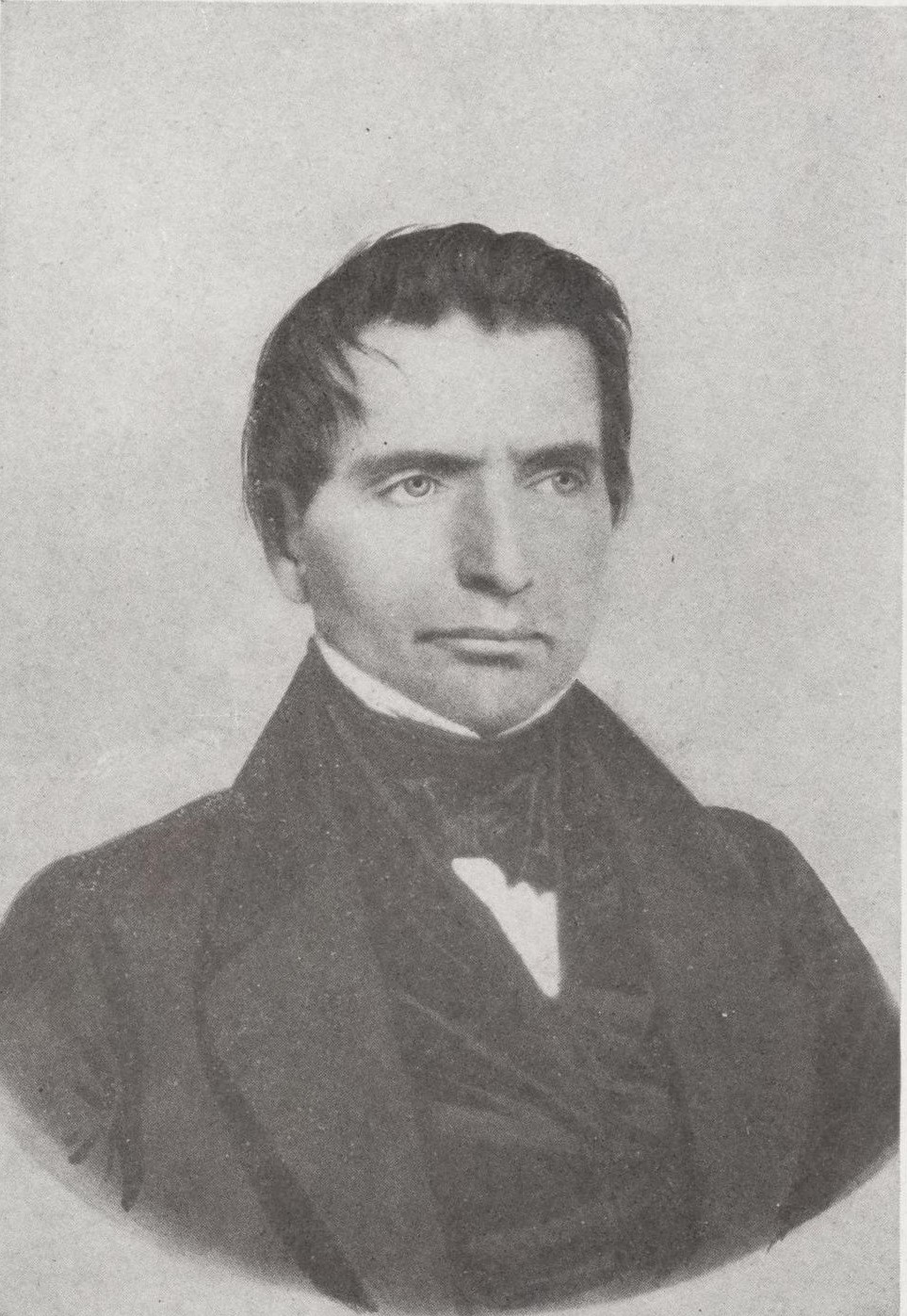
Historical · U.S. House · Ohio · District 6
Rodolphus Dickinson
Former U.S. Representative · Ohio District 6 · 1847–1851 · Democratic
Rodolphus Dickinson represented Ohio's District 6 in the United States House of Representatives (1847–1851) for the Democratic party. The page below collects sourced biographical facts, term history, committee roles, and provenance for Dickinson.
Bioguide ID: D000325
Key facts
- Full name
- Rodolphus Dickinson
- State
- Ohio
- District
- District 6
- Party
- Democratic
- House service
- 1847–1851
- First House term
- 1847
- Status
- Left office
- Current term ends
- —
- Born
- 1797
- Bioguide ID
- D000325
- Committee assignments
- —
- Dataset version
- 1.20260606
Biographical narrative
918 words · sourced from the Wikipedia REST extract
Rodolphus Dickinson was an American lawyer and politician who served as a U.S. Representative from Ohio during the late 1840s. A member of the Democratic Party, he represented Ohio's 6th congressional district in the Thirtieth and Thirty-first Congresses. His political career was marked by a commitment to public service, which included roles in local government and the judiciary. Dickinson's life and career were shaped by his early education, legal practice, and subsequent political endeavors, culminating in his service in the U.S. House of Representatives until his untimely death in 1849.
Early life and career
Rodolphus Dickinson was born on December 28, 1797, in Hatfield, Massachusetts. He received his early education in the public schools of his hometown, which laid the foundation for his future academic pursuits. From 1818 to 1821, he attended Williams College in Williamstown, Massachusetts, where he furthered his education and developed skills that would later serve him in his legal and political careers. After completing his studies, Dickinson turned his attention to the field of law, an area that would define much of his professional life.
Following his graduation from Williams College, Dickinson studied law under the guidance of Gustavus Swan in Columbus, Ohio. This legal apprenticeship was crucial in preparing him for a career in law, and he was subsequently admitted to the bar. He began his legal practice in Tiffin, Ohio, where he established himself as a competent attorney. His legal career was marked by a series of public service roles, reflecting his commitment to his community and the state of Ohio.
In 1824, Dickinson was appointed as the prosecuting attorney for Seneca County, a position he held until 1826. His legal expertise and reputation led to further appointments, including prosecuting attorney for Williams County in 1826 and for Sandusky County in 1827. These roles not only showcased his legal acumen but also provided him with valuable experience in the workings of local government and the judicial system. In 1826, he relocated to Lower Sandusky, Ohio, where he continued to build his career and engage with the local community.
In addition to his legal practice, Dickinson served on the Board of Public Works of Ohio from 1836 to 1845. This position allowed him to influence infrastructure development and public works projects within the state, further solidifying his role as a dedicated public servant. His involvement in these various capacities laid the groundwork for his eventual entry into politics at the national level.
House tenure
Rodolphus Dickinson's political career reached a significant milestone when he was elected as a Democrat to the Thirtieth Congress, beginning his term on March 4, 1847. He represented Ohio's 6th congressional district, a role that placed him at the center of national legislative discussions during a time of considerable change in the United States. His tenure in the House of Representatives was characterized by the political dynamics of the late 1840s, a period marked by debates over issues such as territorial expansion, the status of slavery, and the growing tensions between different regions of the country.
Dickinson served in the House until his death on March 20, 1849. His time in Congress was relatively brief, spanning just over two years. During this period, he participated in legislative activities and contributed to discussions that shaped the policies of the era. His role as a U.S. Representative allowed him to advocate for the interests of his constituents in Ohio, as well as engage with broader national issues.
Tragically, Dickinson's life was cut short while he was still in office. He passed away in Washington, D.C., and was initially interred there. However, he was later reinterred in Oakwood Cemetery in Fremont, Ohio, where he is remembered as a figure who contributed to the political landscape of his time. His death in office places him among the ranks of those who served their country until the end of their lives.
Legislative focus and committees
During his time in Congress, Rodolphus Dickinson was involved in various legislative matters, although specific details regarding the bills he supported or the committees on which he served are not extensively documented. As a member of the Democratic Party, he likely aligned with the party's positions on key issues of the day, which included matters related to westward expansion and the implications of slavery in newly acquired territories.
The late 1840s were a tumultuous time in American politics, with the nation grappling with the consequences of the Mexican-American War and the debates surrounding the extension of slavery into new states. Dickinson's role as a U.S. Representative placed him at the forefront of these critical discussions, and while the specifics of his legislative contributions remain less defined, it can be inferred that he engaged with the pressing issues of his time.
As a member of the House, Dickinson would have participated in the legislative process, which involved debating proposed laws, voting on various measures, and representing the interests of his constituents. His legal background likely informed his approach to legislative matters, enabling him to navigate the complexities of lawmaking effectively.
In summary, Rodolphus Dickinson's life was characterized by a commitment to public service, both as a lawyer and as a politician. His early education and legal career set the stage for his entry into politics, where he served as a U.S. Representative for Ohio's 6th congressional district. Although his time in Congress was cut short by his untimely death, his contributions to the political landscape of the era reflect the challenges and dynamics of mid-19th century America.
Notable legislation
Sponsored and co-sponsored legislation for Rodolphus Dickinson is pending operator curation. The biographical narrative above carries the same provenance trail until per-bill rows are written.
Sources
- [1]https://en.wikipedia.org/wiki/Rodolphus_DickinsonWikipedia · retrieved 2026-06-06
Notable quotes
Sourced quotes for Rodolphus Dickinson are pending operator curation. Narrative-scope provenance remains attached below.
Sources
- [1]https://en.wikipedia.org/wiki/Rodolphus_DickinsonWikipedia · retrieved 2026-06-06
Key positions
Curated policy positions for Rodolphus Dickinson are pending operator review. The biographical narrative above carries the same provenance trail until per-topic positions are written.
Sources
- [1]https://en.wikipedia.org/wiki/Rodolphus_DickinsonWikipedia · retrieved 2026-06-06
Terms served
- 1847–1849U.S. House · Term 1 · Democratic
- 1849–1851U.S. House · Term 2 · Democratic
Sources & provenance
Every attributable claim above carries a per-section [N] marker that resolves to the corresponding URL below. Each entry records the upstream provider, the canonical URL, and the timestamp at which the source was retrieved by the ingest pipeline.
Key facts
- https://bioguide.congress.gov/search/bio/D000325bioguide · retrieved 2026-06-06
- https://www.govtrack.us/congress/members/403445govtrack · retrieved 2026-06-06
Biographical narrative
- https://en.wikipedia.org/wiki/Rodolphus_Dickinsonwikipedia · retrieved 2026-06-06
Find your representative
Every U.S. state elects representatives by district. Browse Ohio’s delegation, the full former-representative roster, or explore the role and term length.
Related on The Candidate
- Preceded by Henry St. JohnEarlier holder of the Ohio District 6 House seat · Democratic.Open
- Succeeded by Andrew EllisonLater holder of the Ohio District 6 House seat · Democratic.Open
- Aaron PerryFormer U.S. Representative · Ohio District 1 · RepublicanOpen
- Alexander DuncanFormer U.S. Representative · Ohio District 1 · DemocraticOpen
- Bellamy StorerFormer U.S. Representative · Ohio District 1 · WhigOpen
- Bellamy StorerFormer U.S. Representative · Ohio District 1 · RepublicanOpen