
Historical · U.S. House · Ohio · District 6
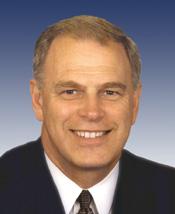
Ted Strickland
Former U.S. Representative · Ohio District 6 · 1993–2007 · Democratic
Ted Strickland represented Ohio's District 6 in the United States House of Representatives (1993–2007) for the Democratic party. The page below collects sourced biographical facts, term history, committee roles, and provenance for Strickland.
Bioguide ID: S001004
Key facts
- Full name
- Ted Strickland
- State
- Ohio
- District
- District 6
- Party
- Democratic
- House service
- 1993–2007
- First House term
- 1993
- Status
- Left office
- Current term ends
- —
- Born
- 1941
- Bioguide ID
- S001004
- Committee assignments
- —
- Dataset version
- 1.20260605
Biographical narrative
1,044 words · sourced from the Wikipedia REST extract
Theodore Strickland is an American politician and former U.S. Representative who served Ohio's 6th congressional district from 1993 to 2007. A member of the Democratic Party, Strickland's political career includes notable positions such as the 68th governor of Ohio from 2007 to 2011. He is recognized for his contributions to public service and his advocacy on various issues during his time in office. Strickland's career has been marked by both electoral victories and challenges, reflecting the dynamic political landscape of Ohio.
Early life and career
Ted Strickland was born on August 4, 1941, in Lucasville, Ohio, to Carrie (Carver) and Charles Orville Strickland. He was raised in a large family, being one of nine children. Strickland's early life in a rural setting influenced his values and aspirations. He graduated from Northwest High School in 1959, becoming the first member of his family to pursue higher education. Strickland attended Asbury College, where he earned a Bachelor of Arts degree in history with a minor in psychology in 1963.
Following his undergraduate studies, Strickland continued his education at the University of Kentucky, where he obtained a Master of Arts degree in guidance counseling in 1966. His commitment to education and personal development led him to earn a Master of Divinity from Asbury Theological Seminary in 1967. Strickland later returned to the University of Kentucky to complete his academic journey, earning a Ph.D. in counseling psychology in 1980.
Before entering politics, Strickland had a diverse career. He worked as a counseling psychologist at the Southern Ohio Correctional Facility in Lucasville, where he gained firsthand experience in the challenges faced by individuals within the criminal justice system. Additionally, he served as an administrator at a Methodist children's home and held a position as a professor of psychology at Shawnee State University. Strickland's background as an ordained minister in the United Methodist Church also played a significant role in shaping his worldview and approach to public service.
Strickland's early career laid the foundation for his later political endeavors. His experiences in education, mental health, and community service provided him with a unique perspective on the issues facing Ohioans. He was married to Frances Strickland, who is also an educational psychologist, further emphasizing the couple's commitment to education and public service.
House tenure
Strickland's political journey began with his attempts to secure a seat in the U.S. House of Representatives for Ohio's 6th congressional district. He first ran for the position in 1976, followed by additional campaigns in 1978 and 1980. However, he faced significant challenges, losing to long-time incumbent William H. Harsha and later to Harsha's successor, Bob McEwen. Despite these setbacks, Strickland remained committed to public service and continued to build his political profile.
In 1992, Strickland made a successful bid for the 6th District seat, running against McEwen once again. This election was notable as McEwen had experienced political difficulties due to his association with the House banking scandal. The redistricting that followed the 1990 census had altered the boundaries of the 6th District, which now encompassed a vast area from Lebanon in Warren County to Marietta in Washington County. This diverse district posed unique challenges for campaigning, as it included multiple media markets and lacked a central urban hub.
Strickland's campaign was bolstered by a combination of strategic outreach and the political climate of the time. Despite facing significant opposition from prominent figures such as Patrick J. Buchanan and Vice President Dan Quayle, who campaigned for McEwen, Strickland emerged victorious in the general election held on November 3, 1992. His narrow victory, with a margin of just over 1.4 percentage points, marked the beginning of his congressional career, as he took office in January 1993 during the 103rd Congress.
Strickland's initial term in the House was marked by the broader political shifts of the mid-1990s. In the 1994 elections, he was among the many Democrats who lost their seats during a Republican resurgence, narrowly losing to businessman Frank Cremeans. However, Strickland demonstrated resilience by reclaiming his seat in the 1996 election, returning to Congress in January 1997 as part of the 105th Congress. He faced a formidable challenge from Lieutenant Governor Nancy Hollister in 1998 but successfully retained his position.
Over the course of his congressional career, Strickland was re-elected multiple times, with his most notable victory occurring in 2004 when he ran unopposed. His tenure in the House was characterized by active participation in key committees, including the Energy and Commerce Committee and the Veterans' Affairs Committee. These roles allowed him to engage with critical issues affecting his constituents and the nation, contributing to his reputation as a dedicated public servant.
Legislative focus and committees
During his time in the U.S. House of Representatives, Strickland's legislative focus encompassed a range of issues, reflecting the diverse needs of his constituents in Ohio's 6th congressional district. His work on the Energy and Commerce Committee positioned him at the forefront of discussions related to energy policy, healthcare, and telecommunications. Strickland's involvement in these areas allowed him to advocate for policies that aimed to improve the quality of life for Ohioans and address pressing national concerns.
Strickland's commitment to veterans' affairs was also a significant aspect of his legislative agenda. Serving on the Veterans' Affairs Committee, he worked to ensure that veterans received the support and resources they needed after their service. This focus on veterans' issues resonated with many constituents, particularly in a district with a notable population of military families.
Throughout his congressional career, Strickland was known for his ability to connect with constituents and understand their concerns. His background in psychology and counseling informed his approach to public service, emphasizing the importance of listening to the needs of the community. Strickland's dedication to his constituents was evident in his efforts to address local issues and advocate for policies that would benefit the people of Ohio.
Strickland's tenure in the U.S. House of Representatives came to an end in January 2007, after serving a total of six terms. His legislative contributions and commitment to public service laid the groundwork for his subsequent political endeavors, including his successful campaign for governor of Ohio. Strickland's experiences in the House shaped his understanding of governance and public policy, influencing his approach as he transitioned to higher office.
Notable legislation
Sponsored and co-sponsored legislation for Ted Strickland is pending operator curation. The biographical narrative above carries the same provenance trail until per-bill rows are written.
Sources
- [1]https://en.wikipedia.org/wiki/Ted_StricklandWikipedia · retrieved 2026-06-05
Notable quotes
Sourced quotes for Ted Strickland are pending operator curation. Narrative-scope provenance remains attached below.
Sources
- [1]https://en.wikipedia.org/wiki/Ted_StricklandWikipedia · retrieved 2026-06-05
Key positions
Curated policy positions for Ted Strickland are pending operator review. The biographical narrative above carries the same provenance trail until per-topic positions are written.
Sources
- [1]https://en.wikipedia.org/wiki/Ted_StricklandWikipedia · retrieved 2026-06-05
Terms served
- 1993–1995U.S. House · Term 1 · Democratic
- 1997–1999U.S. House · Term 2 · Democratic
- 1999–2001U.S. House · Term 3 · Democratic
- 2001–2003U.S. House · Term 4 · Democratic
- 2003–2005U.S. House · Term 5 · Democratic
- 2005–2007U.S. House · Term 6 · Democratic
Sources & provenance
Every attributable claim above carries a per-section [N] marker that resolves to the corresponding URL below. Each entry records the upstream provider, the canonical URL, and the timestamp at which the source was retrieved by the ingest pipeline.
Key facts
- https://bioguide.congress.gov/search/bio/S001004bioguide · retrieved 2026-06-05
- http://www.house.gov/stricklandhouse.gov · retrieved 2026-06-05
Biographical narrative
- https://en.wikipedia.org/wiki/Ted_Stricklandwikipedia · retrieved 2026-06-05
Find your representative
Every U.S. state elects representatives by district. Browse Ohio’s delegation, the full former-representative roster, or explore the role and term length.
Related on The Candidate
- Preceded by Bob McEwenEarlier holder of the Ohio District 6 House seat · Republican.Open
- Succeeded by Charles WilsonLater holder of the Ohio District 6 House seat · Democratic.Open
- Aaron PerryFormer U.S. Representative · Ohio District 1 · RepublicanOpen
- Alexander DuncanFormer U.S. Representative · Ohio District 1 · DemocraticOpen
- Bellamy StorerFormer U.S. Representative · Ohio District 1 · WhigOpen
- Bellamy StorerFormer U.S. Representative · Ohio District 1 · RepublicanOpen