
Historical · U.S. House · Ohio · District 7
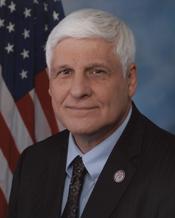
Bob Gibbs
Former U.S. Representative · Ohio District 7 · 2011–2023 · Republican
Bob Gibbs represented Ohio's District 7 in the United States House of Representatives (2011–2023) for the Republican party. The page below collects sourced biographical facts, term history, committee roles, and provenance for Gibbs.
Bioguide ID: G000563
Key facts
- Full name
- Bob Gibbs
- State
- Ohio
- District
- District 7
- Party
- Republican
- House service
- 2011–2023
- First House term
- 2011
- Status
- Left office
- Current term ends
- —
- Born
- 1954
- Bioguide ID
- G000563
- Committee assignments
- —
- Dataset version
- 1.20260603
Biographical narrative
973 words · sourced from the Wikipedia REST extract
Bob Gibbs is a former U.S. Representative who served Ohio's 7th congressional district from 2011 until 2023. A member of the Republican Party, Gibbs was involved in various legislative efforts during his tenure and held several leadership positions within the House. His political career was preceded by significant involvement in agriculture and local governance, reflecting his background and interests.
Early life and career
Bob Gibbs was born on June 14, 1954, in Peru, Indiana. In the 1960s, his family relocated to Cleveland, Ohio, where he completed his secondary education at Bay High School. Following high school, Gibbs pursued higher education at the Ohio State University Agricultural Technical Institute, graduating in 1974. After completing his education, he moved to Lakeville, Ohio, where he co-founded Hidden Hollow Farms, Ltd. Initially focused on swine production, the farm later transitioned to cultivating corn and soybeans.
Gibbs's involvement in agriculture extended beyond his own farming operations. He became a prominent figure in Ohio's agricultural community, serving as president of the Ohio Farm Bureau Federation, the state's largest agricultural organization. His leadership in the Farm Bureau began in 1985 when he joined its board of trustees. Over the years, he held various positions within agricultural organizations, including board member roles at the Farm Bureau Bank, the Ohio Livestock Coalition, the Ohio Cooperative Council, and the Ohio Farm Bureau Alliance. Additionally, Gibbs served as president of the Loudonville Farmers Equity Company and was active in local agricultural committees, including the Holmes County extension advisory committee and the Holmes County Farm Bureau.
House tenure
Gibbs's political career began in the Ohio General Assembly, where he was elected to the Ohio House of Representatives in 2002. He won his initial election against Democrat Tom Mason and successfully secured reelection in 2004, again defeating Mason. In 2006, he faced Democratic nominee James P. Riley and achieved a significant victory, garnering approximately 60% of the vote. In 2009, Gibbs sought a position in the Ohio Senate to fill a seat vacated by term-limited Senator Ron Amstutz.
In 2008, Gibbs won election to the Ohio Senate, beginning his term in 2009. He announced his candidacy for the 22nd district senate seat in August 2007 and faced no primary challenge after his expected opponent withdrew from the race. In the general election, he defeated Democratic nominee James E. Riley with nearly 59% of the vote. However, Gibbs's tenure in the Senate was cut short when he resigned in 2010 after winning election to the U.S. House of Representatives.
Gibbs was elected to the U.S. House in 2010, defeating Democratic incumbent Zack Space in a competitive race. He won the Republican primary in a crowded field and was certified the winner following a recount. In the general election held on November 2, he emerged victorious, securing nearly 14% more votes than Space and winning in 14 of the 16 counties within the district.
Following his initial election, Gibbs continued to be reelected to the House in subsequent elections, including a successful campaign in 2012 against Democratic nominee Joyce Healy-Abrams after redistricting. He faced no opposition in the 2014 election, was reelected in 2016 with a solid majority, and continued to win reelection in 2018 and 2020, defeating various Democratic challengers.
Gibbs's time in the House was marked by his involvement in several key legislative initiatives. He introduced the Reducing Regulatory Burdens Act of 2013, which aimed to limit the Environmental Protection Agency's authority regarding certain pesticide discharges. He also cosponsored a resolution to amend the U.S. Constitution to ban same-sex marriage in 2015. In December 2020, he was among a group of Republican representatives who signed an amicus brief supporting a lawsuit contesting the results of the 2020 presidential election. On January 6, 2021, Gibbs objected to the certification of the election results, citing allegations of voter fraud.
In April 2022, Gibbs announced that he would not seek reelection, attributing his decision to the complexities surrounding Ohio's congressional redistricting process. He expressed concerns about the lengthy and convoluted nature of the redistricting efforts and their impact on the state's governance.
Legislative focus and committees
During his tenure in the U.S. House of Representatives, Gibbs was involved in various legislative efforts that reflected his interests and the priorities of his constituents. He was particularly focused on issues related to agriculture, regulatory reform, and local governance. His background in farming and agriculture informed many of his policy positions, and he worked to advocate for the interests of the agricultural community in Ohio.
In addition to his legislative initiatives, Gibbs served on several committees during his time in the House. He was notably the chairman of the House Ways and Means Committee during his last term, a position that placed him at the forefront of discussions regarding taxation and fiscal policy. He also participated in committees related to agriculture and natural resources, financial institutions, real estate and securities, healthcare access and affordability, and insurance. These committee assignments allowed him to engage with a broad range of issues affecting his constituents and the nation.
Gibbs's legislative record included a mix of support for traditional Republican values, such as limited government and fiscal conservatism, as well as specific initiatives aimed at addressing the needs of his district. His involvement in the agricultural sector and local governance shaped his approach to policy-making, as he sought to balance the interests of his constituents with broader national concerns.
In summary, Bob Gibbs's career as a U.S. Representative was characterized by his commitment to agricultural issues, regulatory reform, and local governance. His background in farming and leadership roles within agricultural organizations informed his legislative priorities, while his committee assignments allowed him to influence key areas of policy. After serving six terms in Congress, Gibbs concluded his tenure in January 2023, leaving a legacy shaped by his experiences in both state and federal government.
Notable legislation
Sponsored and co-sponsored legislation for Bob Gibbs is pending operator curation. The biographical narrative above carries the same provenance trail until per-bill rows are written.
Sources
- [1]https://en.wikipedia.org/wiki/Bob_GibbsWikipedia · retrieved 2026-06-03
Notable quotes
Sourced quotes for Bob Gibbs are pending operator curation. Narrative-scope provenance remains attached below.
Sources
- [1]https://en.wikipedia.org/wiki/Bob_GibbsWikipedia · retrieved 2026-06-03
Key positions
Curated policy positions for Bob Gibbs are pending operator review. The biographical narrative above carries the same provenance trail until per-topic positions are written.
Sources
- [1]https://en.wikipedia.org/wiki/Bob_GibbsWikipedia · retrieved 2026-06-03
Terms served
- 2011–2013U.S. House · Term 1 · Republican
- 2013–2015U.S. House · Term 2 · Republican
- 2015–2017U.S. House · Term 3 · Republican
- 2017–2019U.S. House · Term 4 · Republican
- 2019–2021U.S. House · Term 5 · Republican
- 2021–2023U.S. House · Term 6 · Republican
Sources & provenance
Every attributable claim above carries a per-section [N] marker that resolves to the corresponding URL below. Each entry records the upstream provider, the canonical URL, and the timestamp at which the source was retrieved by the ingest pipeline.
Key facts
- https://bioguide.congress.gov/search/bio/G000563bioguide · retrieved 2026-06-03
- https://gibbs.house.govhouse.gov · retrieved 2026-06-03
Biographical narrative
- https://en.wikipedia.org/wiki/Bob_Gibbswikipedia · retrieved 2026-06-03
Find your representative
Every U.S. state elects representatives by district. Browse Ohio’s delegation, the full former-representative roster, or explore the role and term length.
Related on The Candidate
- Preceded by Dave HobsonEarlier holder of the Ohio District 7 House seat · Republican.Open
- Aaron PerryFormer U.S. Representative · Ohio District 1 · RepublicanOpen
- Alexander DuncanFormer U.S. Representative · Ohio District 1 · DemocraticOpen
- Bellamy StorerFormer U.S. Representative · Ohio District 1 · WhigOpen
- Bellamy StorerFormer U.S. Representative · Ohio District 1 · RepublicanOpen
- Republican PartyFederal candidates and office holders on the Republican line.Open