
Historical · U.S. House · Ohio · District 7
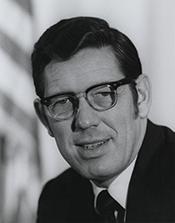
Clarence Brown Jr.
Former U.S. Representative · Ohio District 7 · 1965–1983 · Republican
Clarence Brown Jr. represented Ohio's District 7 in the United States House of Representatives (1965–1983) for the Republican party. The page below collects sourced biographical facts, term history, committee roles, and provenance for Jr..
Bioguide ID: B000910
Key facts
- Full name
- Clarence Brown Jr.
- State
- Ohio
- District
- District 7
- Party
- Republican
- House service
- 1965–1983
- First House term
- 1965
- Status
- Left office
- Current term ends
- —
- Born
- 1927
- Bioguide ID
- B000910
- Committee assignments
- —
- Dataset version
- 1.20260605
Biographical narrative
844 words · sourced from the Wikipedia REST extract
Clarence Brown Jr. was an American politician and publisher who served as a U.S. Representative for Ohio's 7th congressional district from 1965 to 1983. A member of the Republican Party, Brown was elected to nine consecutive terms in the House of Representatives. Following his congressional career, he held significant positions in the U.S. Department of Commerce during the Reagan administration. Brown's life spanned a range of experiences, from military service to leadership in the newspaper industry, reflecting a diverse career in public service and business.
Early life and career
Clarence James "Bud" Brown Jr. was born on June 18, 1927, in Columbus, Ohio. He was the son of Ethel and Clarence J. Brown, who himself served as a U.S. Representative. Growing up in a politically engaged family, Brown was exposed to the world of politics from an early age. He attended Western High School in Washington, D.C., where he likely developed an interest in public affairs. After completing high school, he pursued higher education at Duke University, graduating in 1947. He furthered his studies at Harvard Business School, earning a Master of Business Administration (M.B.A.) in 1949.
Brown's early career was marked by his involvement in the family business, the Brown Publishing Company, which he joined as a young man. He worked in the newspaper industry from his youth until 1953, when he took a hiatus to serve in the United States Navy. Brown participated in the V-12 Navy College Training Program during World War II and later served again during the Korean War from 1950 to 1953. After his military service, he returned to the family business, where he would eventually become president from 1965 to 1976 and later chairman of the board. Under his leadership, the company expanded its reach, operating a network of newspapers across the United States. However, the business faced challenges due to technological changes in the industry and ultimately ceased operations in 2010 after 90 years.
House tenure
Clarence Brown's political career began when he was elected to the 89th United States Congress in a special election held in 1965. This election was necessitated by the death of his father, Clarence J. Brown, who had previously held the same congressional seat. Brown's initial election marked the beginning of a lengthy tenure in the House of Representatives, where he was reelected to eight subsequent terms. His congressional service lasted until January 3, 1983, during which he represented the interests of Ohio's 7th district.
Throughout his time in Congress, Brown was involved in various legislative efforts and initiatives, reflecting the priorities and concerns of his constituents. His tenure coincided with significant political and social changes in the United States, including the civil rights movement, the Vietnam War, and economic shifts. Brown's political activities included participation in the Republican National Convention as a delegate in multiple years, including 1968, 1972, 1976, and 1984.
In 1982, Brown chose not to seek reelection to the House, opting instead to run for Governor of Ohio. However, he was unsuccessful in this bid, losing to Democrat Dick Celeste. Following his congressional career, Brown continued to serve in government, being appointed by President Ronald Reagan as Deputy Secretary of Commerce and later as Acting Secretary of Commerce from 1983 to 1988. His experience in both the legislative and executive branches of government provided him with a broad perspective on national policy and administration.
Legislative focus and committees
During his time in the House of Representatives, Clarence Brown was involved in a variety of legislative issues, reflecting the diverse needs of his constituents in Ohio's 7th district. While specific details regarding the bills he sponsored or supported are not provided, it is common for members of Congress to focus on issues pertinent to their districts, such as economic development, education, healthcare, and infrastructure.
In addition to his legislative duties, Brown's role as a member of various committees would have allowed him to influence policy in specific areas. Although the exact committees he served on are not detailed, members of Congress typically participate in committees that align with their interests and the needs of their constituents. These committees play a crucial role in reviewing legislation, conducting hearings, and overseeing government operations.
Brown's political career was characterized by his commitment to public service and his engagement with the Republican Party. His involvement in party politics extended beyond his congressional tenure, as he continued to participate in national conventions and other party activities. After leaving Congress, he served on the board of the Overseas Private Investment Corporation from 1988 to 1989 and held the position of president and chief executive officer of the United States Capitol Historical Society from 1992 to 1999.
Clarence Brown's life and career were marked by significant contributions to both the political landscape and the newspaper industry. His experiences in military service, business, and government provided him with a unique perspective that informed his work as a public servant. Brown passed away on January 26, 2022, at the age of 94, leaving behind a legacy of service in various capacities throughout his life.
Notable legislation
Sponsored and co-sponsored legislation for Clarence Brown Jr. is pending operator curation. The biographical narrative above carries the same provenance trail until per-bill rows are written.
Sources
- [1]https://en.wikipedia.org/wiki/Bud_Brown_(politician)Wikipedia · retrieved 2026-06-05
Notable quotes
Sourced quotes for Clarence Brown Jr. are pending operator curation. Narrative-scope provenance remains attached below.
Sources
- [1]https://en.wikipedia.org/wiki/Bud_Brown_(politician)Wikipedia · retrieved 2026-06-05
Key positions
Curated policy positions for Clarence Brown Jr. are pending operator review. The biographical narrative above carries the same provenance trail until per-topic positions are written.
Sources
- [1]https://en.wikipedia.org/wiki/Bud_Brown_(politician)Wikipedia · retrieved 2026-06-05
Terms served
- 1965–1967U.S. House · Term 1 · Republican
- 1967–1969U.S. House · Term 2 · Republican
- 1969–1971U.S. House · Term 3 · Republican
- 1971–1973U.S. House · Term 4 · Republican
- 1973–1975U.S. House · Term 5 · Republican
- 1975–1977U.S. House · Term 6 · Republican
- 1977–1979U.S. House · Term 7 · Republican
- 1979–1981U.S. House · Term 8 · Republican
- 1981–1983U.S. House · Term 9 · Republican
Sources & provenance
Every attributable claim above carries a per-section [N] marker that resolves to the corresponding URL below. Each entry records the upstream provider, the canonical URL, and the timestamp at which the source was retrieved by the ingest pipeline.
Key facts
- https://bioguide.congress.gov/search/bio/B000910bioguide · retrieved 2026-06-05
- https://www.govtrack.us/congress/members/401867govtrack · retrieved 2026-06-05
Biographical narrative
- https://en.wikipedia.org/wiki/Bud_Brown_(politician)wikipedia · retrieved 2026-06-05
Find your representative
Every U.S. state elects representatives by district. Browse Ohio’s delegation, the full former-representative roster, or explore the role and term length.
Related on The Candidate
- Preceded by Arthur AleshireEarlier holder of the Ohio District 7 House seat · Democratic.Open
- Succeeded by Dave HobsonLater holder of the Ohio District 7 House seat · Republican.Open
- Aaron PerryFormer U.S. Representative · Ohio District 1 · RepublicanOpen
- Alexander DuncanFormer U.S. Representative · Ohio District 1 · DemocraticOpen
- Bellamy StorerFormer U.S. Representative · Ohio District 1 · WhigOpen
- Bellamy StorerFormer U.S. Representative · Ohio District 1 · RepublicanOpen