
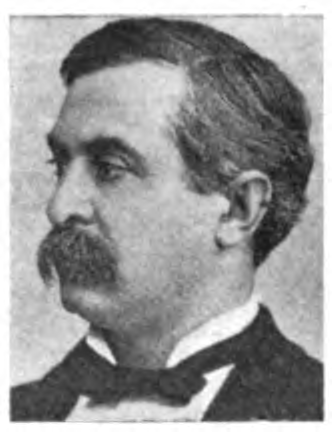
Historical · U.S. House · Ohio · District 7
George Wilson
Former U.S. Representative · Ohio District 7 · 1893–1897 · Republican
George Wilson represented Ohio's District 7 in the United States House of Representatives (1893–1897) for the Republican party. The page below collects sourced biographical facts, term history, committee roles, and provenance for Wilson.
Bioguide ID: W000583
Key facts
- Full name
- George Wilson
- State
- Ohio
- District
- District 7
- Party
- Republican
- House service
- 1893–1897
- First House term
- 1893
- Status
- Left office
- Current term ends
- —
- Born
- 1840
- Bioguide ID
- W000583
- Committee assignments
- —
- Dataset version
- 1.20260606
Biographical narrative
894 words · sourced from the Wikipedia REST extract
George Wilson was an American lawyer and politician who served as a U.S. Representative for Ohio's 7th congressional district from 1893 to 1897. A member of the Republican Party, Wilson's political career was preceded by significant military service during the Civil War and a robust engagement in local and state politics. His life and career were marked by a commitment to public service, both in the legal profession and in elected office.
Early life and career
George Wilson was born on February 22, 1840, in Brighton, Ohio. He received his early education in the common schools of the area, which laid the foundation for his future academic and professional pursuits. Wilson furthered his education by attending Antioch College, located in Yellow Springs, Ohio. This institution was known for its progressive educational practices and emphasis on liberal arts, which likely influenced Wilson's later career in law and politics.
Following his education, Wilson enlisted in the military during the Civil War. On August 8, 1862, he joined the Ninety-fourth Regiment of the Ohio Volunteer Infantry, where he began his military service as a second lieutenant. His dedication and leadership abilities were recognized, and he was subsequently promoted to first lieutenant on July 2, 1864, while serving with the First Regiment of the United States Veteran Volunteer Engineers. Wilson's military service concluded when he mustered out on October 1, 1865, after the war had ended. His experiences during this tumultuous period likely shaped his views on governance and civic responsibility.
After the war, Wilson pursued a career in law. He studied diligently and was admitted to the bar on August 7, 1866. He began practicing law in London, Ohio, where he established a reputation as a competent attorney. His legal career was complemented by his involvement in local governance. From 1866 to 1870, he served as the prosecuting attorney for Madison County, where he would have been responsible for representing the state in criminal prosecutions and providing legal counsel to local officials.
Wilson's political career continued to develop as he was elected to the Ohio House of Representatives, serving from 1871 to 1874. This role allowed him to engage directly with legislative processes at the state level. Following his tenure in the House, he advanced to the Ohio State Senate, where he served from 1877 to 1881. His time in the state legislature provided him with valuable experience in lawmaking and governance, further preparing him for his future role in Congress.
House tenure
George Wilson's congressional career began when he was elected as a Republican to the Fifty-third Congress, which commenced on March 4, 1893. He was subsequently re-elected to the Fifty-fourth Congress, serving until March 3, 1897. During his time in the House of Representatives, Wilson represented Ohio's 7th congressional district, which encompassed a diverse constituency. His election to Congress was indicative of his established political presence and the support he garnered from his community.
As a member of the House, Wilson participated in the legislative process, contributing to discussions and decisions on various national issues. While specific details of his legislative initiatives and voting record are not provided, it can be inferred that his background in law and experience in state politics would have informed his approach to federal legislation. His tenure coincided with a period of significant change in the United States, including economic challenges and shifts in social policy, which would have influenced the legislative priorities of Congress during the 1890s.
Wilson's time in Congress concluded on March 3, 1897, after which he returned to his legal practice in London, Ohio. His departure from the House marked the end of his formal legislative career, but he remained active in public service and continued to engage with political matters at the local level.
Legislative focus and committees
While specific details regarding the committees on which George Wilson served during his congressional tenure are not available, it is common for members of Congress to align their committee work with their professional backgrounds and the interests of their constituents. Given Wilson's legal expertise and experience as a prosecutor, it is likely that he would have been involved in committees related to legal and judicial matters, as well as those addressing issues pertinent to his district.
In addition to his legislative responsibilities, Wilson's political activities extended beyond Congress. He served as a delegate to the 1896 Republican National Convention, where he would have participated in shaping the party's platform and supporting its candidates. His involvement in the convention underscores his continued commitment to the Republican Party and its principles.
Wilson also held local office as mayor of New London, further demonstrating his dedication to public service. In this role, he would have been responsible for overseeing the administration of local government and addressing the needs and concerns of his constituents. Additionally, he resumed his position as prosecuting attorney for Madison County, reinforcing his legal career and connection to the community.
George Wilson passed away on November 25, 1909, in London, Ohio. His contributions to public service, both as a lawyer and a politician, left a lasting impact on his community and the state of Ohio. He was interred in Kirkwood Cemetery, where he rests alongside other notable figures from the region. Wilson's life reflects a commitment to civic duty and the pursuit of justice, embodying the values of service that characterize many elected officials.
Notable legislation
Sponsored and co-sponsored legislation for George Wilson is pending operator curation. The biographical narrative above carries the same provenance trail until per-bill rows are written.
Sources
- [1]https://en.wikipedia.org/wiki/George_W._Wilson_(politician)Wikipedia · retrieved 2026-06-06
Notable quotes
Sourced quotes for George Wilson are pending operator curation. Narrative-scope provenance remains attached below.
Sources
- [1]https://en.wikipedia.org/wiki/George_W._Wilson_(politician)Wikipedia · retrieved 2026-06-06
Key positions
Curated policy positions for George Wilson are pending operator review. The biographical narrative above carries the same provenance trail until per-topic positions are written.
Sources
- [1]https://en.wikipedia.org/wiki/George_W._Wilson_(politician)Wikipedia · retrieved 2026-06-06
Terms served
- 1893–1895U.S. House · Term 1 · Republican
- 1895–1897U.S. House · Term 2 · Republican
Sources & provenance
Every attributable claim above carries a per-section [N] marker that resolves to the corresponding URL below. Each entry records the upstream provider, the canonical URL, and the timestamp at which the source was retrieved by the ingest pipeline.
Key facts
- https://bioguide.congress.gov/search/bio/W000583bioguide · retrieved 2026-06-06
- https://www.govtrack.us/congress/members/411738govtrack · retrieved 2026-06-06
Biographical narrative
- https://en.wikipedia.org/wiki/George_W._Wilson_(politician)wikipedia · retrieved 2026-06-06
Find your representative
Every U.S. state elects representatives by district. Browse Ohio’s delegation, the full former-representative roster, or explore the role and term length.
Related on The Candidate
- Preceded by William HaynesEarlier holder of the Ohio District 7 House seat · Democratic.Open
- Succeeded by Walter WeaverLater holder of the Ohio District 7 House seat · Republican.Open
- Aaron PerryFormer U.S. Representative · Ohio District 1 · RepublicanOpen
- Alexander DuncanFormer U.S. Representative · Ohio District 1 · DemocraticOpen
- Bellamy StorerFormer U.S. Representative · Ohio District 1 · WhigOpen
- Bellamy StorerFormer U.S. Representative · Ohio District 1 · RepublicanOpen