
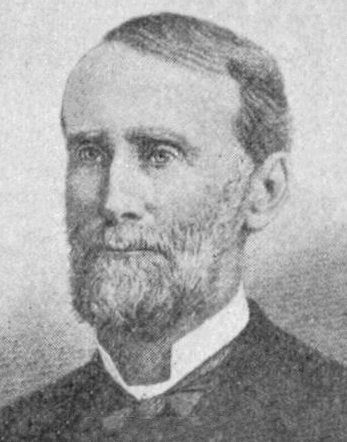
Historical · U.S. House · Ohio · District 7
John Leedom
Former U.S. Representative · Ohio District 7 · 1881–1883 · Democratic
John Leedom represented Ohio's District 7 in the United States House of Representatives (1881–1883) for the Democratic party. The page below collects sourced biographical facts, term history, committee roles, and provenance for Leedom.
Bioguide ID: L000210
Key facts
- Full name
- John Leedom
- State
- Ohio
- District
- District 7
- Party
- Democratic
- House service
- 1881–1883
- First House term
- 1881
- Status
- Left office
- Current term ends
- —
- Born
- 1847
- Bioguide ID
- L000210
- Committee assignments
- —
- Dataset version
- 1.20260606
Biographical narrative
952 words · sourced from the Wikipedia REST extract
John Leedom was a U.S. Representative from Ohio, serving in the House of Representatives from 1881 to 1883. A member of the Democratic Party, Leedom's political career was marked by his commitment to public service and his involvement in local governance prior to his election to Congress. His tenure in the House was brief, and he later held a significant position as Sergeant at Arms of the House of Representatives. Leedom's life and career reflect the political landscape of late 19th-century America, particularly in the context of Ohio's evolving political dynamics.
Early life and career
John Leedom was born on December 20, 1847, in Adams County, Ohio. His early education took place in local common schools, where he laid the foundation for his future endeavors. After completing his primary education, he graduated from Smith's Mercantile College located in Portsmouth, Ohio, in 1863. This institution was known for its focus on practical business education, which likely equipped Leedom with skills that would serve him in various capacities throughout his career.
Following his graduation, Leedom transitioned into a teaching role within the public schools of Portsmouth. This experience in education not only highlights his commitment to community service but also reflects the values of the time, where teaching was a respected profession and an important avenue for contributing to society. In addition to his teaching responsibilities, Leedom engaged in agricultural pursuits, which were common in rural Ohio during this period. This dual focus on education and agriculture would have provided him with a broad understanding of the needs and concerns of his constituents.
Leedom's political career began to take shape in the mid-1870s when he was elected as the clerk of the court of common pleas for Adams County in 1874. His successful election to this position indicated a growing recognition of his capabilities and trustworthiness within the community. He was subsequently reelected to the same office in 1877, further solidifying his standing in local politics. In 1879, Leedom expanded his political involvement by serving as a member of the Democratic State Central Committee, a role that would have allowed him to influence party strategy and candidate selection at the state level.
House tenure
Leedom's congressional career began when he was elected as a Democrat to the Forty-seventh Congress, which convened on March 4, 1881. His election to the House of Representatives marked a significant step in his political journey, as he transitioned from local governance to a national platform. During his time in Congress, Leedom represented Ohio's 7th congressional district, a region that was undergoing various social and economic changes during the late 19th century.
His term in the House lasted until March 3, 1883, when he concluded his service. While in office, Leedom participated in the legislative processes of the time, contributing to discussions and decisions that would shape the future of his district and the nation. However, his tenure was relatively short-lived, as he was not successful in his bid for reelection to the Forty-eighth Congress in 1882. This defeat marked the end of his time as a member of the House of Representatives, but it did not signify the end of his involvement in public service.
Following his congressional career, Leedom took on the role of Sergeant at Arms of the House of Representatives, serving from 1884 to 1890. This position is responsible for maintaining order and decorum in the House, as well as overseeing the security of the chamber and its members. Leedom's appointment to this role indicates a continued trust in his abilities and a recognition of his experience in legislative affairs. His work as Sergeant at Arms would have involved significant interaction with members of Congress and a deep understanding of the legislative process.
Legislative focus and committees
While specific details about the legislation Leedom supported during his time in Congress are not extensively documented, his background in education and local governance likely influenced his legislative priorities. As a representative from Ohio, he would have been attuned to the needs of his constituents, which included issues related to agriculture, education, and local infrastructure. The late 19th century was a time of significant change in the United States, with industrialization and urbanization reshaping the economic landscape. Leedom's experiences in both teaching and agriculture may have informed his perspectives on these developments.
During his time in the House, Leedom would have participated in various committees, although specific committee assignments are not detailed in the available records. Committees play a crucial role in the legislative process, as they are responsible for reviewing proposed legislation, conducting hearings, and making recommendations to the full House. Leedom's involvement in these committees would have provided him with opportunities to advocate for the interests of his district and to engage with broader national issues.
After leaving Congress, Leedom's contributions to public service continued, particularly through his role as Sergeant at Arms. This position allowed him to remain connected to the legislative process and to support the functioning of the House. His tenure in this role lasted until 1890, after which he returned to Ohio, where he continued to be involved in local affairs until his death on March 18, 1895, in Toledo, Ohio. He was interred in the Odd Fellows Cemetery in Manchester, Ohio, marking the end of a life dedicated to public service and community engagement.
In summary, John Leedom's life and career reflect the complexities of American politics during the late 19th century. His journey from local educator to U.S. Representative illustrates the pathways available to individuals seeking to influence their communities and the nation. Although his time in Congress was brief, his subsequent role as Sergeant at Arms underscores his ongoing commitment to public service and the legislative process.
Notable legislation
Sponsored and co-sponsored legislation for John Leedom is pending operator curation. The biographical narrative above carries the same provenance trail until per-bill rows are written.
Sources
- [1]https://en.wikipedia.org/wiki/John_P._LeedomWikipedia · retrieved 2026-06-06
Notable quotes
Sourced quotes for John Leedom are pending operator curation. Narrative-scope provenance remains attached below.
Sources
- [1]https://en.wikipedia.org/wiki/John_P._LeedomWikipedia · retrieved 2026-06-06
Key positions
Curated policy positions for John Leedom are pending operator review. The biographical narrative above carries the same provenance trail until per-topic positions are written.
Sources
- [1]https://en.wikipedia.org/wiki/John_P._LeedomWikipedia · retrieved 2026-06-06
Terms served
- 1881–1883U.S. House · Term 1 · Democratic
Sources & provenance
Every attributable claim above carries a per-section [N] marker that resolves to the corresponding URL below. Each entry records the upstream provider, the canonical URL, and the timestamp at which the source was retrieved by the ingest pipeline.
Key facts
- https://bioguide.congress.gov/search/bio/L000210bioguide · retrieved 2026-06-06
- https://www.govtrack.us/congress/members/406713govtrack · retrieved 2026-06-06
Biographical narrative
- https://en.wikipedia.org/wiki/John_P._Leedomwikipedia · retrieved 2026-06-06
Find your representative
Every U.S. state elects representatives by district. Browse Ohio’s delegation, the full former-representative roster, or explore the role and term length.
Related on The Candidate
- Preceded by Lawrence NealEarlier holder of the Ohio District 7 House seat · Democratic.Open
- Succeeded by James CampbellLater holder of the Ohio District 7 House seat · Democratic.Open
- Aaron PerryFormer U.S. Representative · Ohio District 1 · RepublicanOpen
- Alexander DuncanFormer U.S. Representative · Ohio District 1 · DemocraticOpen
- Bellamy StorerFormer U.S. Representative · Ohio District 1 · WhigOpen
- Bellamy StorerFormer U.S. Representative · Ohio District 1 · RepublicanOpen