
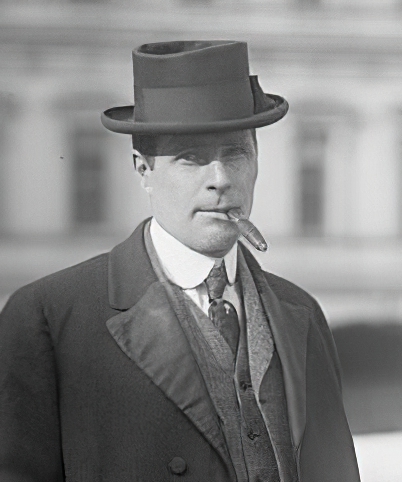
Historical · U.S. House · Ohio · District 8
John Key
Former U.S. Representative · Ohio District 8 · 1913–1919 · Democratic
John Key represented Ohio's District 8 in the United States House of Representatives (1913–1919) for the Democratic party. The page below collects sourced biographical facts, term history, committee roles, and provenance for Key.
Bioguide ID: K000157
Key facts
- Full name
- John Key
- State
- Ohio
- District
- District 8
- Party
- Democratic
- House service
- 1913–1919
- First House term
- 1913
- Status
- Left office
- Current term ends
- —
- Born
- 1871
- Bioguide ID
- K000157
- Committee assignments
- —
- Dataset version
- 1.20260606
Biographical narrative
908 words · sourced from the Wikipedia REST extract
John Key was an American politician who served as a U.S. Representative from Ohio's 8th congressional district. A member of the Democratic Party, he held office for three consecutive terms from 1913 until 1919. His tenure in Congress was marked by his role as chairman of the Committee on Pensions, where he influenced legislation related to veterans' benefits and pensions. After leaving Congress, Key transitioned to a career in the petroleum industry and later served as an inspector of Federal prisons until his retirement. He was born on December 30, 1871, in Marion, Ohio, where he eventually passed away on March 4, 1954.
Early life and career
John Key was born in Marion, Ohio, where he spent his formative years. He received his education through the public school system, which laid the groundwork for his future endeavors. After completing his schooling, Key learned the printer's trade, a skill that would serve him well in his early career. His work as a printer provided him with insights into the world of communication and media, which would later be beneficial in his political career.
From 1897 to 1903, Key worked as a city letter carrier, a role that allowed him to engage with the community and understand the needs and concerns of the citizens he served. This experience in public service likely contributed to his interest in politics and governance. Following his tenure as a letter carrier, he was elected Recorder of Marion County, a position he held from 1903 to 1908. As Recorder, Key would have been responsible for maintaining public records and documents, further solidifying his connection to local governance.
In 1908, Key transitioned to a role in the political sphere as Secretary to Representative Carl C. Anderson of Ohio. This position provided him with firsthand experience in the workings of Congress and the legislative process, which would prove invaluable when he later sought election to the House of Representatives. His time as Anderson's secretary allowed him to build relationships and gain insights into the political landscape of Ohio and the nation.
House tenure
John Key's political career took a significant turn when he was elected as a Democrat to the Sixty-third Congress, beginning his first term on March 4, 1913. He was subsequently re-elected to the Sixty-fourth and Sixty-fifth Congresses, serving until March 3, 1919. Throughout his time in Congress, Key was actively involved in various legislative initiatives and discussions, particularly focusing on issues related to veterans and pensions.
During his tenure, Key served as chairman of the Committee on Pensions, a role that underscored his commitment to supporting those who had served in the military. The Committee on Pensions was responsible for overseeing legislation related to veterans' benefits, including pensions, disability compensation, and other forms of assistance for former service members. As chairman, Key played a crucial role in shaping policies that aimed to improve the lives of veterans and their families, reflecting the broader societal recognition of the sacrifices made by those in military service.
Key's legislative efforts were particularly relevant during a time when the United States was experiencing significant changes, including the aftermath of World War I. The challenges faced by returning veterans were a pressing concern, and Key's leadership on the Committee on Pensions positioned him as a key figure in addressing these issues. His work in this capacity demonstrated a commitment to ensuring that veterans received the support and recognition they deserved.
Despite his contributions and leadership in Congress, Key faced challenges in his political career. In 1918, he sought re-election for the Sixty-sixth Congress but was unsuccessful in his bid. This defeat marked the end of his time in the House of Representatives, concluding a significant chapter in his political journey.
Legislative focus and committees
Throughout his congressional tenure, John Key's primary focus was on issues related to veterans and pensions, reflecting his role as chairman of the Committee on Pensions. This committee was instrumental in addressing the needs of veterans, particularly in the wake of World War I, when many service members returned home and required assistance. Key's leadership in this area highlighted the importance of providing adequate support for those who had served the nation, ensuring that they received the benefits they had earned.
In addition to his work on pensions, Key's experience as a city letter carrier and Recorder of Marion County likely informed his understanding of local governance and community needs. His background in public service may have influenced his approach to legislation, emphasizing the importance of addressing the concerns of constituents and advocating for their interests in Congress.
After leaving Congress in 1919, Key transitioned to a career in the petroleum industry, where he continued to engage with the business sector. This shift allowed him to explore new opportunities and contribute to the economic landscape of the region. In 1934, he took on a new role as an inspector of Federal prisons, a position he held until his retirement in 1941. This role involved overseeing the operations of federal correctional facilities, further demonstrating his commitment to public service in various capacities.
John Key passed away on March 4, 1954, in Marion, Ohio. His contributions to public service, both in Congress and beyond, left a lasting impact on the community he served. He was interred in Marion Cemetery, where he is remembered for his dedication to the people of Ohio and his efforts to support veterans during a pivotal time in American history.
Notable legislation
Sponsored and co-sponsored legislation for John Key is pending operator curation. The biographical narrative above carries the same provenance trail until per-bill rows are written.
Sources
- [1]https://en.wikipedia.org/wiki/John_A._KeyWikipedia · retrieved 2026-06-06
Notable quotes
Sourced quotes for John Key are pending operator curation. Narrative-scope provenance remains attached below.
Sources
- [1]https://en.wikipedia.org/wiki/John_A._KeyWikipedia · retrieved 2026-06-06
Key positions
Curated policy positions for John Key are pending operator review. The biographical narrative above carries the same provenance trail until per-topic positions are written.
Sources
- [1]https://en.wikipedia.org/wiki/John_A._KeyWikipedia · retrieved 2026-06-06
Terms served
- 1913–1915U.S. House · Term 1 · Democratic
- 1915–1917U.S. House · Term 2 · Democratic
- 1917–1919U.S. House · Term 3 · Democratic
Sources & provenance
Every attributable claim above carries a per-section [N] marker that resolves to the corresponding URL below. Each entry records the upstream provider, the canonical URL, and the timestamp at which the source was retrieved by the ingest pipeline.
Key facts
- https://bioguide.congress.gov/search/bio/K000157bioguide · retrieved 2026-06-06
- https://www.govtrack.us/congress/members/406321govtrack · retrieved 2026-06-06
Biographical narrative
- https://en.wikipedia.org/wiki/John_A._Keywikipedia · retrieved 2026-06-06
Find your representative
Every U.S. state elects representatives by district. Browse Ohio’s delegation, the full former-representative roster, or explore the role and term length.
Related on The Candidate
- Preceded by Ralph ColeEarlier holder of the Ohio District 8 House seat · Republican.Open
- Succeeded by Raymond ColeLater holder of the Ohio District 8 House seat · Republican.Open
- Aaron PerryFormer U.S. Representative · Ohio District 1 · RepublicanOpen
- Alexander DuncanFormer U.S. Representative · Ohio District 1 · DemocraticOpen
- Bellamy StorerFormer U.S. Representative · Ohio District 1 · WhigOpen
- Bellamy StorerFormer U.S. Representative · Ohio District 1 · RepublicanOpen