
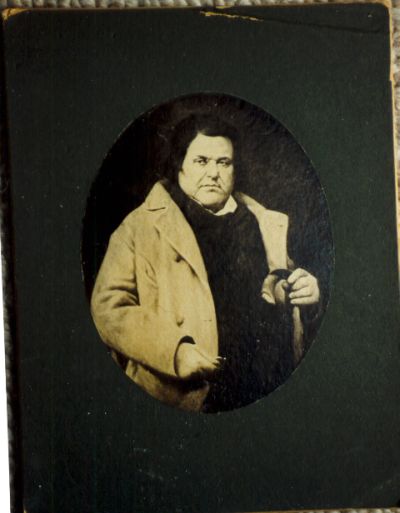
Historical · U.S. House · Ohio · District 8
William Stanbery
Former U.S. Representative · Ohio District 8 · 1827–1833 · Anti Jacksonian
William Stanbery represented Ohio's District 8 in the United States House of Representatives (1827–1833) for the Anti Jacksonian party. The page below collects sourced biographical facts, term history, committee roles, and provenance for Stanbery.
Bioguide ID: S000788
Key facts
- Full name
- William Stanbery
- State
- Ohio
- District
- District 8
- Party
- Anti Jacksonian
- House service
- 1827–1833
- First House term
- 1827
- Status
- Left office
- Current term ends
- —
- Born
- 1788
- Bioguide ID
- S000788
- Committee assignments
- —
- Dataset version
- 1.20260606
Biographical narrative
966 words · sourced from the Wikipedia REST extract
William Stanbery was an American attorney and politician who served as a U.S. Representative for Ohio's 8th congressional district from 1827 to 1833. Initially elected as a Jacksonian, he later aligned with the Anti-Jacksonian faction, reflecting the shifting political landscape of the time. His tenure in Congress was marked by notable events, including a physical altercation with fellow politician Sam Houston. Stanbery's contributions to American politics occurred during a period of significant change and development in the United States, particularly in the context of the early 19th century.
Early life and career
William Stanbery was born on August 10, 1788. Details regarding his early life and education are not extensively documented, but it is known that he pursued a career in law, which would lay the foundation for his future in politics. Stanbery's legal background likely equipped him with the skills necessary for navigating the complexities of legislative processes and public service.
In 1809, he married Mary Shipley in New York City, and together they had seven children. This family life would have influenced his perspectives and priorities as a public servant. The Stanbery family was connected to prominent figures in American politics; notably, Stanbery's half-brother, Henry Stanbery, served as the United States Attorney General under President Andrew Johnson. This familial connection may have provided William Stanbery with insights into the workings of government and the legal system, further shaping his political career.
Stanbery's political career began in earnest when he was elected to the U.S. House of Representatives in 1827. He filled a vacancy caused by the death of the previous representative, William Wilson. His election as a Jacksonian reflected the political climate of the time, as the Jacksonian movement was gaining momentum across the nation. This movement was characterized by its advocacy for the rights of the "common man" and a more democratic approach to governance, which resonated with many voters in Ohio.
House tenure
William Stanbery's first term in the House of Representatives began in 1827, marking the start of his three consecutive terms in Congress. He was reelected in 1828, demonstrating his ability to connect with constituents and maintain their support. His political alignment shifted during his tenure; while he initially identified as a Jacksonian, he later became associated with the Anti-Jacksonian faction by 1830. This shift may have been influenced by the evolving political landscape and the growing divisions within the Democratic-Republican Party, which eventually led to the formation of new political parties in the United States.
During his time in the House, Stanbery participated in various legislative discussions and debates, contributing to the development of policies that would shape the nation. His tenure coincided with significant events in American history, including debates over issues such as states' rights, economic policy, and the expansion of suffrage. The political dynamics of the era were complex, as factions within the government vied for power and influence.
One notable incident during Stanbery's time in Congress involved a physical confrontation with Sam Houston, a fellow politician who would later become a prominent figure in Texas history. The altercation occurred on Pennsylvania Avenue, highlighting the intense emotions and rivalries that characterized political life in the early 19th century. Following the incident, Houston faced reprimand from the House of Representatives, illustrating the consequences of such confrontations in the political arena.
Stanbery's congressional career came to an end on March 3, 1833, when he completed his last term. His departure from the House marked the conclusion of a significant chapter in his political life, but it did not signify the end of his involvement in public affairs. The experiences and relationships he cultivated during his time in Congress would likely have continued to influence his perspectives and engagements in the years that followed.
Legislative focus and committees
While specific details regarding the legislation Stanbery championed or the committees on which he served are not extensively documented, it can be inferred that his legal background and political affiliations played a role in shaping his legislative focus. As a member of the House, he would have been involved in discussions surrounding key issues of the day, including economic policies, land distribution, and the rights of citizens.
The early 19th century was a period of significant transformation in the United States, with rapid westward expansion, the rise of new political ideologies, and ongoing debates about the role of government. Stanbery's alignment with the Jacksonian and later Anti-Jacksonian factions suggests that he was engaged with the prevailing political debates of his time, particularly those related to democracy and the balance of power between the federal government and the states.
The Anti-Jacksonian movement, which emerged as a response to the policies of President Andrew Jackson, was characterized by its support for a more restrained government and a focus on the interests of property owners and the elite. Stanbery's shift to this faction may have reflected his own beliefs about governance and the direction of the country. His involvement in legislative matters would have required him to navigate these complex political waters, balancing the interests of his constituents with the broader national agenda.
In summary, William Stanbery's tenure as a U.S. Representative from Ohio was marked by significant political developments and personal experiences that shaped his career. His early life as an attorney, his family connections, and his participation in the evolving political landscape of the early 19th century all contributed to his role in Congress. Although specific legislative achievements and committee assignments are not detailed, his engagement in the political discourse of his time is evident. Stanbery's legacy is intertwined with the broader narrative of American politics during a formative period in the nation's history. He passed away on January 23, 1873, leaving behind a family and a political legacy that would continue to resonate in the years to come.
Notable legislation
Sponsored and co-sponsored legislation for William Stanbery is pending operator curation. The biographical narrative above carries the same provenance trail until per-bill rows are written.
Sources
- [1]https://en.wikipedia.org/wiki/William_StanberyWikipedia · retrieved 2026-06-06
Notable quotes
Sourced quotes for William Stanbery are pending operator curation. Narrative-scope provenance remains attached below.
Sources
- [1]https://en.wikipedia.org/wiki/William_StanberyWikipedia · retrieved 2026-06-06
Key positions
Curated policy positions for William Stanbery are pending operator review. The biographical narrative above carries the same provenance trail until per-topic positions are written.
Sources
- [1]https://en.wikipedia.org/wiki/William_StanberyWikipedia · retrieved 2026-06-06
Terms served
- 1827–1829U.S. House · Term 1 · Jackson
- 1829–1831U.S. House · Term 2 · Jackson
- 1831–1833U.S. House · Term 3 · Anti Jacksonian
Sources & provenance
Every attributable claim above carries a per-section [N] marker that resolves to the corresponding URL below. Each entry records the upstream provider, the canonical URL, and the timestamp at which the source was retrieved by the ingest pipeline.
Key facts
- https://bioguide.congress.gov/search/bio/S000788bioguide · retrieved 2026-06-06
- https://www.govtrack.us/congress/members/410254govtrack · retrieved 2026-06-06
Biographical narrative
- https://en.wikipedia.org/wiki/William_Stanberywikipedia · retrieved 2026-06-06
Find your representative
Every U.S. state elects representatives by district. Browse Ohio’s delegation, the full former-representative roster, or explore the role and term length.
Related on The Candidate
- Succeeded by Jeremiah McLeneLater holder of the Ohio District 8 House seat · Jackson.Open
- Aaron PerryFormer U.S. Representative · Ohio District 1 · RepublicanOpen
- Alexander DuncanFormer U.S. Representative · Ohio District 1 · DemocraticOpen
- Bellamy StorerFormer U.S. Representative · Ohio District 1 · WhigOpen
- Bellamy StorerFormer U.S. Representative · Ohio District 1 · RepublicanOpen
- Representatives from OhioEvery former U.S. Representative who has represented Ohio.Open